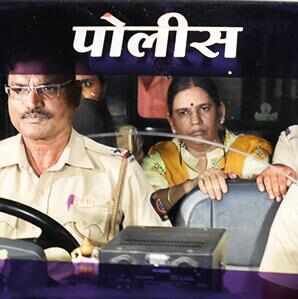
MUMBAI: The state government on Thursday opposed a petition filed by the 2018 Elgar Parishad case accused Sudha Bharadwaj for default bail and cited a judgment to argue that a special trial judge under the National Investigation Agency Act (NIA) would come into the picture only when the agency starts investigating a case.
In this case, the NIA stepped in last January and took over the investigation from the Pune police, and the Pune sessions court had taken cognisance of the chargesheet against Bharadwaj in 2018.
Advocate general Ashutosh Kumbhakoni in his submissions argued that saying all scheduled offences will only go before a special NIA court will render a court as defined in the anti-terror law Unlawful Activities (Prevention) Act nugatory. He said there was no need for a special court to be constituted at that time.
“My submission is this: the case of the petitioner is fallacious,” said Kumbhakoni before a bench of Justice S S Shinde and Justice N J Jamadar.
He cited provisions of the NIA Act and the UAPA including the definitions of the words ‘court’ under the special laws to show that in this case the sessions court under the provisions of the CrPC was sufficient at this pre-trial stage. He said the only question right now was whether a pre-trial proceeding could go before a special court. Citing Section 167 of the CrPC, which deals with the investigation stage, he said that at this point no one can predict if the matter is going to trial.
He said Section 11 and Section 22 relied on and cited by Bharadwaj on setting up a special court under NIA have the word “trial”. He said that under Section 2(d) of the UAPA, court “includes a special court … .’’
On July 8 the high court had said the state could produce any additional documents if it wanted to after observing that its records matched with an RTI reply cited by her lawyer Yug Chaudhry that the Pune sessions court judge, K D Vadane, who granted an extension of time to the police to file its chargesheet and who took cognisance of it, was not a special judge under the act.
Bharadwaj, an activist and lawyer accused of alleged Maoist links, had petitioned the high court to seek default bail on the grounds that the judge was not designated a special judge under the NIA, as was necessary since the special anti-terror law was invoked against her and other co-accused at the relevant time. Chaudhry had submitted that in cases of scheduled offences such as those under the UAPA, a sessions judge has no power to take cognisance, only a special court would have jurisdiction and it has to be set up by the state or Centre.
It was submitted on behalf of the PIL Petitioner Ratan Soli Luth that the PIL seeks setting aside of the “inaction” of the Governor in failing to make nominations of the 12 MLCs to the Legislative Assembly of the State of Maharashtra pursuant to the advise of the Council of Ministers of the State submitted to him in November, 2020 and a declaration that the Governor is bound by the decision of the Council of Ministers for such nominations of MLCs under the Constitution
For Luth, counsel Aspi Chinoy with Mukul Taly read from paragraphs 10 to 12 of the Affidavit of the Government which says that the Governor has no discretion in these matters. Chinoy also cited several judgments of the Apex Court to support his submissions.
The governor has so far in “breach of his Constitutional obligation” till date not nominated these members said the PIL. It said that despite two reminders on March 1 and 2, 2021, Koshyari “failed to nominate the 12 persons” for the last six months. Luth’s counsel, Mukul Taly and Gaurav Srivastav, had said that by failing to act on such nomination, the legislative council as well as the citizens of Maharashtra are deprived of such nominated councillors who have special knowledge and practical experience in fields of literature, science, art, cooperative movement and social service.
The secretary of Parliamentary affairs also said in the affidavit that
“term of all 12 such Members, nominated earlier ended only on account of the efflux of time. Some of these positions out of 12 positions in the Legislative Council of Maharashtra are vacant since 6th June 2020 and the remaining since 15th June 2020.”
“The session of the Assembly was going to be convened and the Legislative Council needed to have the benefit, at the earliest, of the special knowledge and/or the practical experience of those persons, from various fields…” it added that the Even the larger public interest requires that the citizenry benefits from the “healthy traditions” .
The affidavit said, “power of the Governor to make these nominations does not fall in the category of the ‘discretionary powers’ “ but he has “to exercise this power of nomination strictly in accordance with the aid and advice of the Council of Ministers.