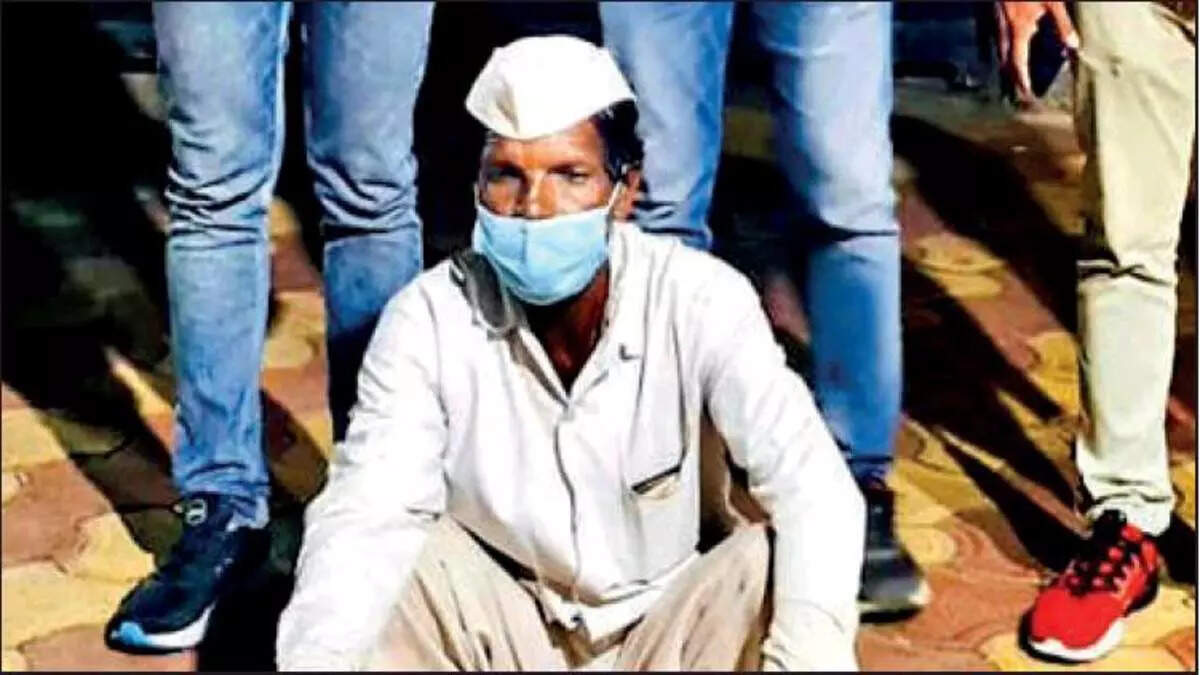
PUNE: Ankush Manik Gaikwad, suspected to be part of a gang that had committed a dacoity at a house in Daund taluka in December 1980, managed to evade police for the past 41 years.
But luck finally ran out on him on Wednesday when a team from the Pune rural police swooped down on him at his native village Khadki in Karmala taluka of Solapur district, catching him unawares. The dacoity incident was his only brush against the law and the passage of time had eroded his memory about the case, said police officials.
“Gaikwad was visibly shocked when our team zeroed in on him and mentioned the 1980 dacoity,” Pune rural police’s local crime branch inspector Ashok Shelke told TOI. “His first words were that even he had forgotten about the incident,” said Shelke. “The fact that his name did not figure in any criminal cases in Pune and Solapur districts before or after the 1980 dacoity perhaps made the task of tracing him all the more difficult for the police,” the officer added.
Gaikwad was a sprightly 18-year-old lad when the police suspected him to be a part of a nine-member gang that committed a dacoity at a house in Yavat under Daund taluka, off the Pune-Solapur highway, around 45km from here.
The Pune rural police had then managed to arrest six of his associates, but Gaikwad and two others managed to evade the police all these years. “Gaikwad (now 59) confessed to his involvement in the dacoity but maintained that he had not been involved in any other crime since then,” said Shelar.
The LCB officials are now busy rummaging through old case files and documents to establish Gaikwad’s role in the dacoity and ascertain as to what happened after the six previously arrested men were charged in the case. A search is on for his two other aides who are still on the run, said an LCB official.
Pune rural superintendent of police Abhinav Deshmukh told TOI, “Many criminals change their identities and looks and locations. However, in this case, the accused did not do anything of that sort. He did not commit any crime after the 1980 incident and, hence, may have gone off the police radar. Often the investigating officers change on account of transfers and new postings, and those who replace them sometimes do not take interest in old cases.”
“We have now prepared a list of 800 criminals against whom the courts have issued warrants or proclamation orders and they have evaded arrests so far,” Deshmukh said.
Gaikwad’s name figured prominently in this list of 800, and the rural police focussed afresh on nabbing him as part of a month-long special drive.
“His home is strategically located at the end of Khadki village and every time he would get the wind of police movement, he would slip into nearby agricultural fields or forest areas,” said inspector Shelke.
The long arm of the law finally caught up with him. “This time, we deployed our men in plain clothes to survey the village and seek information about his movement. Our team learnt from local villagers that Gaikwad had gone to a nearby grassland where we went and picked him up.”