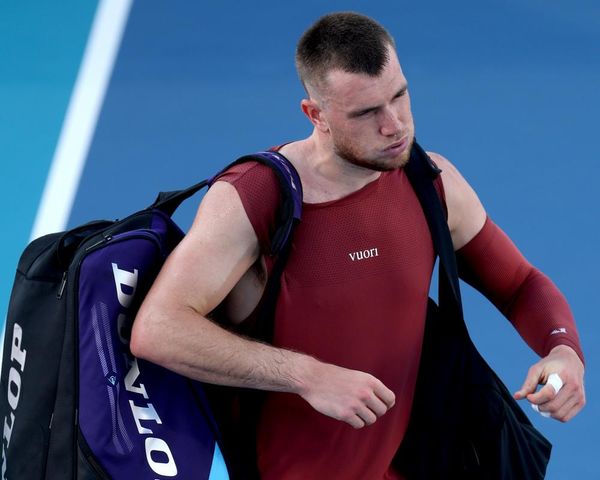
Magnus Carlsen’s uneven 2015 results took another hit this week when he lost twice in three games at the European teams in Reykjavik.
Norway’s 24-year-old world champion was beaten as White by Levon Aronian of Armenia and then by Yannick Pelletier of Switzerland, who is rated nearly 300 points weaker. He has now had more defeats in a calendar year than any previous world champion while his own rating has tumbled nearly 60 points from its 2889 peak of April 2014. He is still comfortably ranked No1, though, as none of his elite rivals has been consistent enough recently to mount a challenge.
Clearly Carlsen was taking a risk in playing for a Norway team which is ranked 11th in Reykjavik, since he also had problems at the 2014 Olympiad, a similar event. His next tournament is the London Classic, starting on 4 December at Kensington Olympia, which will test whether he can bounce back against a field of elite grandmasters. In a higher sense Carlsen’s status as an all-time legend is already damaged. Neither Bobby Fischer nor Garry Kasparov in his pomp had such a prolonged spell of inconsistent results.
England’s hopes as No5 seeds in a field of 36 will depend on a strong finish this weekend. After six of the nine rounds Russia led with 11/12, followed by France 10 and Azerbaijan 9. England were 11th with seven points, still with an outside medal chance. Gawain Jones, with 4/5, has been the team’s high scorer, while in the women’s championship the England No1, Jovanka Houska, had the best percentage of all, 5.5/6.
The final two rounds at Reykjavik can be followed live and free on the internet this weekend (3pm start on Saturday, 11am on Sunday).
There has been criticism that the European and Olympiad team events receive a disproportionate share of the English Chess Federation’s international budget despite years of disappointing results. English teams in the European Club Cup – the chess version of the Champions League – and over-50 senior events, where England is very strong and could be internationally dominant, are scantily funded. After Reykjavik, this debate is sure to continue.
Michael Adams produced the stellar England performance so far when beating the world No8, Aronian, It was Adams’s first win over him and his best game with the white pieces against the Berlin Wall 1 e4 e5 2 Nf3 Nc6 3 Bb5 Nf6 4 0-0 Nxe4 5 d4 Nd6 6 Bxc6 dxc6 7 dxe5 Nf5 8 Qxd8+ Kxd8.
The Berlin has been popular ever since Vlad Kramnik used it to capture Kasparov’s world crown in 2000. There are GM advocates for both sides and some, including Adams, play it with either colour. The Cornishman, who celebrated his 44th birthday with this victory, was a secret Carlsen aide in the 2014 world title match, so it is certain that they analysed the Berlin together.
Adams’s key move was the subtle 19 Red1! in a position where an earlier 2015 game went 19 b4. Aronian might have tried 25...f6, since as played Black’s position became passive, and Adams justified his ‘spider’ nickname by weaving his strategic web until Black had to concede decisive material.
Michael Adams v Levon Aronian
1 e4 e5 2 Nf3 Nc6 3 Bb5 Nf6 4 O-O Nxe4 5 d4 Nd6 6 Bxc6 dxc6 7 dxe5 Nf5 8 Qxd8+ Kxd8 9 h3 Ke8 10 Nc3 h5 11 Ne2 Be7 12 Bg5 Be6 13 Nf4 Bd5 14 Nxd5 cxd5 15 Rad1 c6 16 Rfe1 h4 17 Rd3 Rh5 18 Bxe7! Kxe7 19 Red1! Rd8 20 c4 d4 21 b4 b6 22 Kf1 c5 23 bxc5 bxc5 24 Ra3 Rd7 25 Ne1 Rh6?! 26 Nd3 Rc6 27 Rb1 Rdc7 28 Nf4 Rd7 29 Rb8 g5 30 Nd5+ Ke6 31 Re8+ Ne7 32 Ke2 Rb6 33 Kd3 Rb2 34 Ra6+ Rb6 35 Nxb6 axb6 36 Rxb6+ Kxe5 37 Rc6 Kf5 38 Rxc5+ Kf6 39 Rb8 Ng6 40 Rb6+ Ke7 41 Rxg5 Nf4+ 42 Ke4 1-0
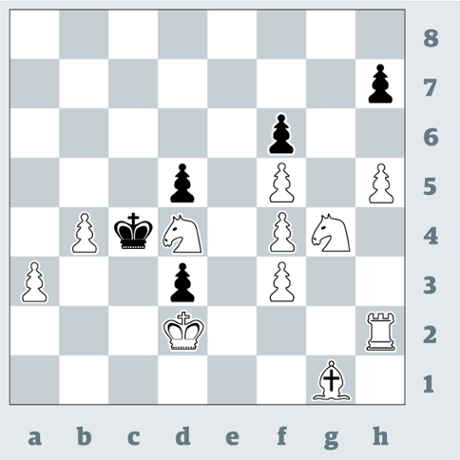
3417 1 Rh4 h6 2 Bh2 Kxd4 3 Ne5 fxe5 4 fxe5 mate.