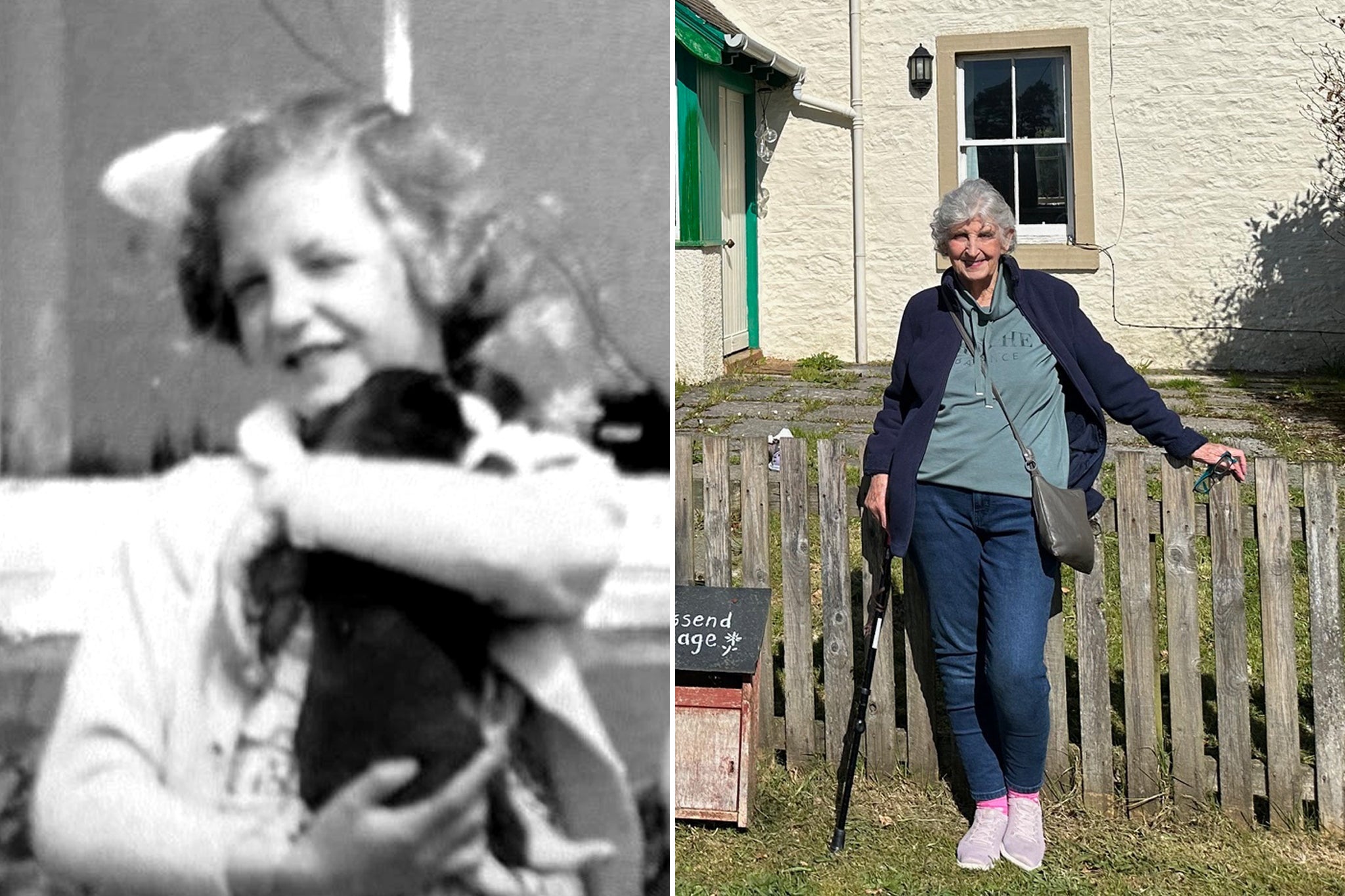
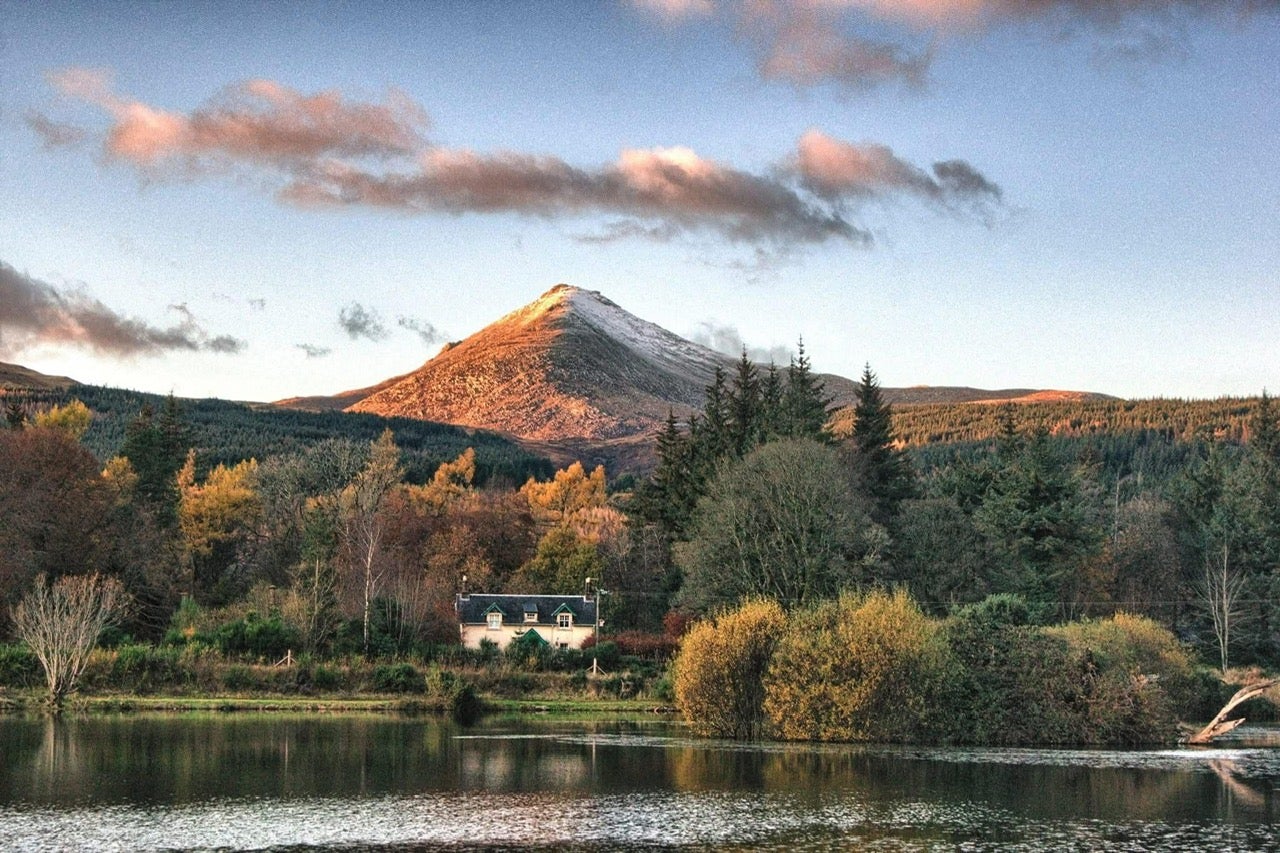
I’m standing with my mother on a grassy lane outside the house she grew up in, the sun dazzling on a rare, flawless Scottish spring morning. Mossend – a neat Victorian estate cottage just outside the main town of Brodick – sits modestly back from the road. It’s hidden by fields of dozing cows and framed by the hulking presence of Goat Fell. The wooden window frames have recently been repainted a confident racing green, but otherwise, it looks exactly as it must have done when my mother, Kathleen, lived here as a child in the 1950s.
She points out the frayed remains of a rope swing her father made for her more than 60 years ago, still looped around the thick branch of a slightly stooped oak tree beside the house. Time has softened the knot and weathered the rope, but it remains tied. So too does my mum, in a way – tethered to this place by memory, by family, by the quiet, insistent pull of Arran.
Back down the track and across the road is the old dairy, where my mum would cycle to collect the daily milk, still warm from the cows. Today it’s home to Arran Aromatics and a temptingly stocked cheese shop, but the stillness remains. It’s a snapshot of the free-range childhood she describes: days spent outside, roaming fields and beaches with friends and siblings, mud on boots, salt on skin. That life still exists here, if you know where to look – and if you’re prepared to slow down enough to notice it.
Read more: I’ve found a no-fly, affordable way to ski without leaving the UK
Arran is often described as “Scotland in miniature”, a neat shorthand for its improbable variety of landscapes – highland peaks, fertile lowlands, dramatic coastline – compressed into a single, easily navigable island. It can also feel like Glasgow in miniature. Glaswegians have been holidaying here for centuries, particularly during the traditional Fair Fortnight when factories emptied and families crossed the water in search of fresh air and freedom. Close enough to reach easily, far enough to feel like escape. They’re still coming, in their excitable droves.
Read more: My journey to the Scottish island that looks like the Maldives
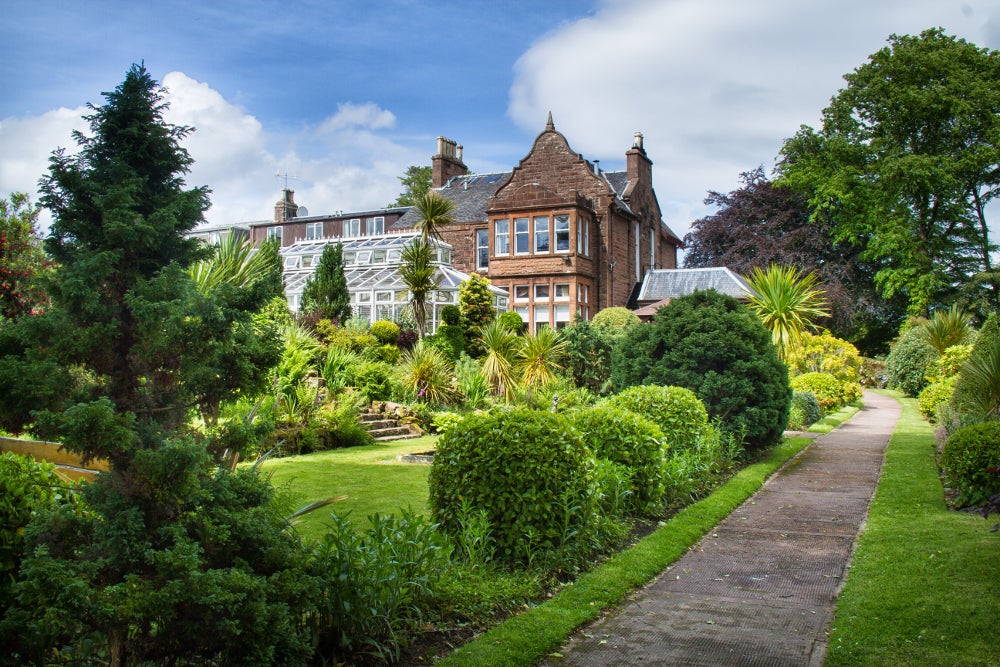
On a sunny afternoon on the balcony of the Auchrannie Resort – the island’s best hotel and our well-appointed sanctuary for the stay – the gallus Glasgow crowd is out in force: multi-generational families, couples, bunches of friends, all contributing to the high-octane bustle and easy, good-natured banter.
The original Victorian house has been joined in the last 20 or so years by a larger modern complex housing most of the accommodation, a generous spa and pool, and several restaurants. Our rooms are in the newer wing: calm and comfortable, with thoughtful Scottish touches – birch-forest wallpaper, subtle stag motifs – and a soothing palette that echoes the hills and woods outside.
In the Brambles brasserie, the food is confident and unfussy, rooted in local produce. There are plump scallops with cauliflower and brown butter, lamb that tastes unmistakably of the fields we’ve been walking past all afternoon, and desserts that arrive with just enough indulgence to feel celebratory without tipping into excess.
Later, we drift into the old house for post-dinner drinks in the drawing room, where a fire crackles and an impressively eclectic, Scotch-forward whisky selection glints behind the counter. The barman, Lucas, is from Canada, and he tells me Arran reminds him of British Columbia: mountains rising straight from the sea, clean light, a sense of scale that makes you feel simultaneously small and exhilarated. He’s not wrong.
The spa deserves its own moment. Softly lit and hushed, with pools that steam invitingly and treatment rooms that smell faintly of pine and sea salt – it feels less like a hotel add-on and more like a place where you could lose a whole afternoon. Robe-clad and slightly dozy, you emerge feeling as if the island itself has done some quiet recalibrating.
Getting around Arran is straightforward by car and even better by bike (so my more energetic pals tell me). We drive north from Brodick along the coastal road, passing through the charming village of Corrie before reaching Sannox, where the road suddenly turns inland and begins a dramatic climb into the mountains. Cyclists puff steadily uphill, pausing to admire the vast sweep of the valley opening ahead. At the bottom sits Lochranza, home to the Arran Distillery, founded in 1995 and widely credited with kickstarting the island’s modern whisky revival. A dram here comes with views of the ruined Lochranza Castle across the water – whisky with a splash of history on the side, just how I like mine.
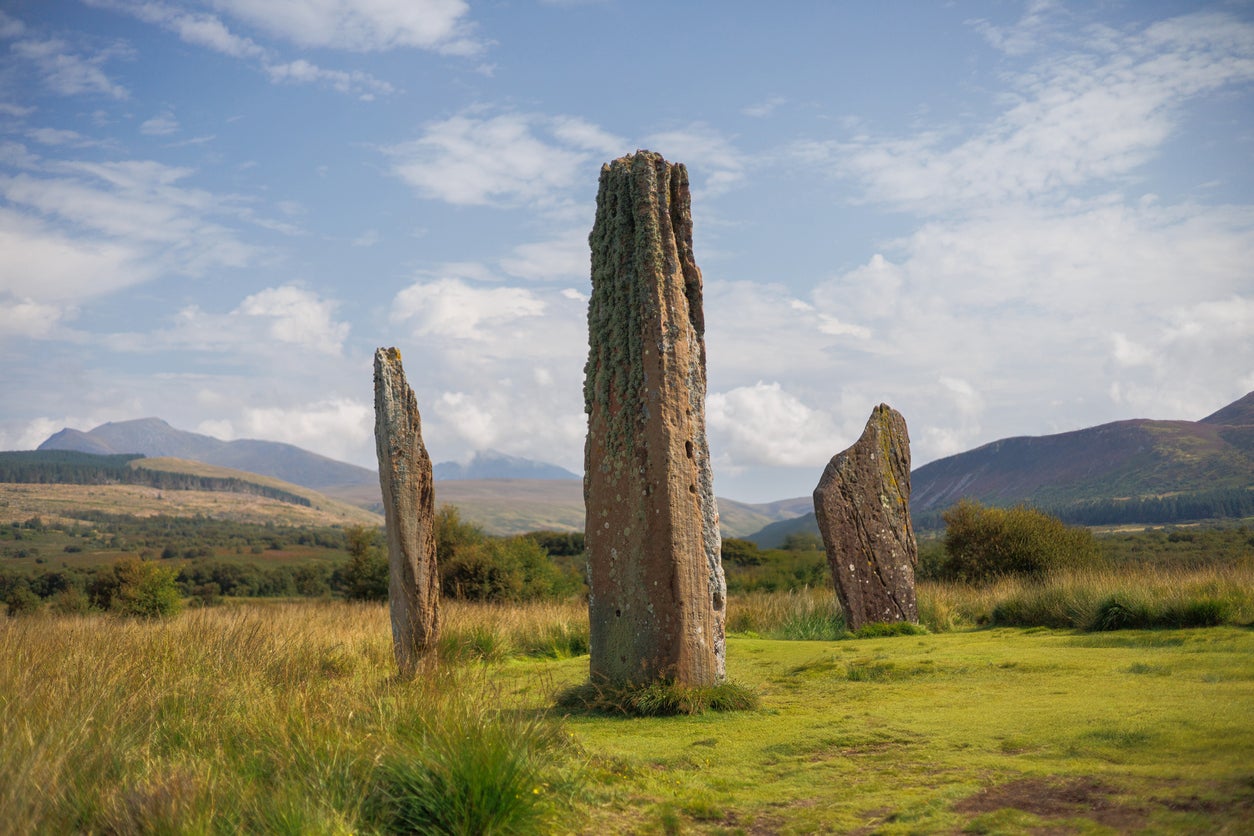
The following day takes us west to the Machrie Moor standing stones, six stone circles scattered across a windswept and faintly desolate expanse. Dating back more than 4,000 years, they’re thought to have been ceremonial sites, aligned with the surrounding mountains. Whatever their original purpose, they have a magnetic pull: stones emerging suddenly through the grass as if summoned, ancient and elemental against the wide sky. Later, we head south to Lamlash, gazing across the water to Holy Isle, its spiritual retreat shimmering gently offshore. Lunch is a gloriously groaning plate of langoustines at the Drift Inn – sweet, messy, finger-licking perfection.
Read more: A sauna culture is transforming how people explore Scotland’s wilds
Island life, though, runs on a timetable not entirely of its own making. The CalMac ferry is the umbilical cord linking Arran to the mainland – essential, fragile and often under strain. When it works, as it does for us, the crossing is magnificent: calm seas, big skies, the island rising slowly into view like a promise. When it doesn’t, businesses and locals feel it keenly. A jeweller I meet in one of the attractive Alpine-style trading huts on the edge of Brodick tells me missed sailings can mean missed deliveries, missed customers, missed days. “You learn patience,” he shrugs. “Or you leave.”
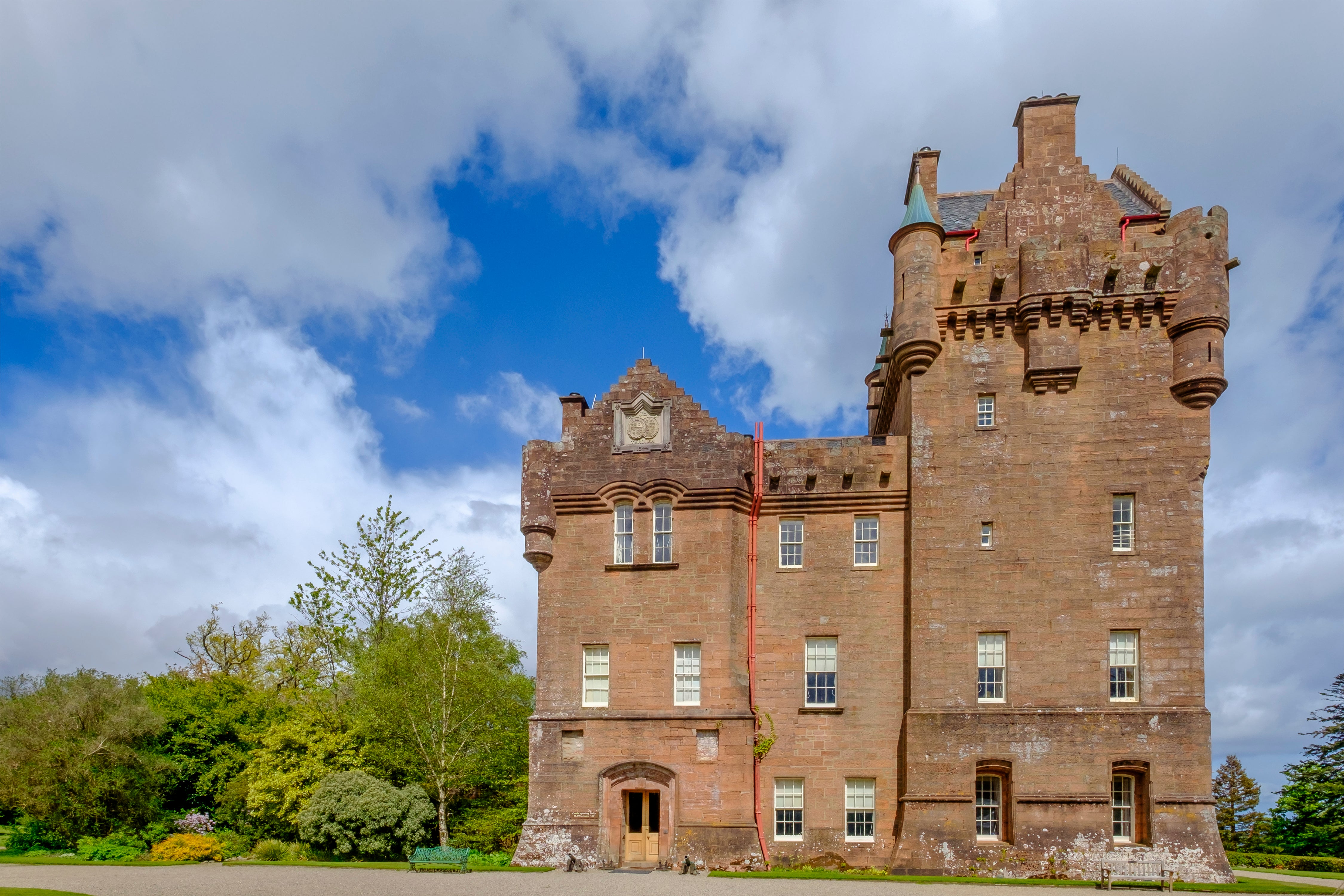
Arran punches well above its weight culturally and historically. With just over 5,000 residents – a blissfully low population density – it boasts nine listed historical sites, including the imposing Brodick Castle, once home to the Dukes of Hamilton and later the Dukes of Montrose. Three lighthouses, including Pladda at the southern tip, stand sentinel over busy shipping lanes – a reminder that this apparent tranquillity exists alongside constant movement.
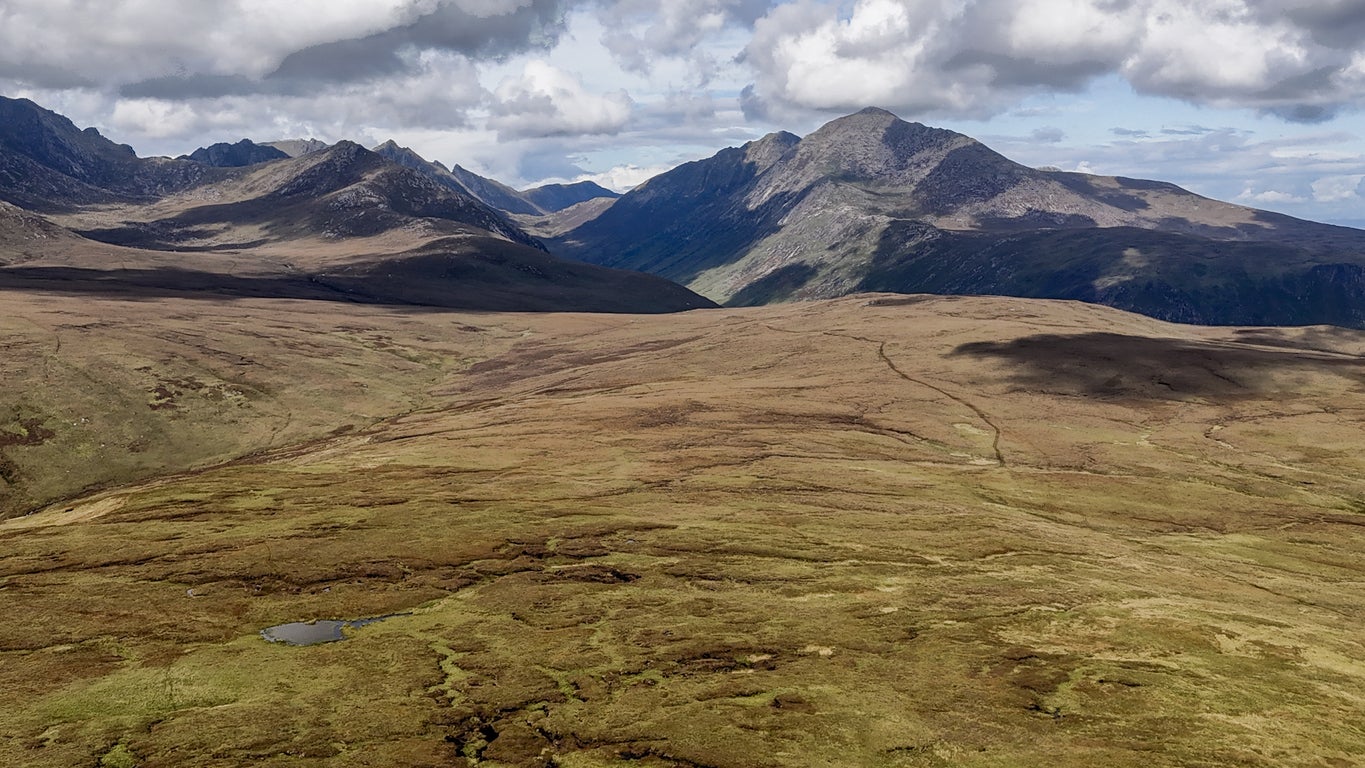
Golfers are spoiled here, with seven courses in total. The standout is the quirky 12-hole links at Shiskine, where firm sandy turf and sweeping views over Blackwaterfoot make for a joyous, slightly eccentric round. I leave my clubs at home this time, opting instead for a power hike up Goat Fell.
Read more: The best hotels on the Isle of Skye, reviewed
Dinner is booked for 7pm. I set off at 3pm, passing a sign advising walkers to allow four to five hours. Yikes. Armed with a handful of nuts and half a chocolate bar, I tighten my rucksack and get going. The path climbs steadily, views over Brodick Bay widening with every step. The final ascent is steep and stony, and everyone I pass coming down seems faintly amused by my upward determination. I make the summit, linger long enough to marvel, and make it back to the car park in just under three hours. A belter of a walk – and dinner, thankfully, is still waiting.
If Goat Fell feels too ambitious, the Arran Coastal Way offers a gentler, if longer, alternative: a 65-mile circular route tracing the island’s perimeter in manageable sections. Elsewhere, the COAST Discovery Centre reveals the rich marine life of the surrounding waters, while the Arran Geopark showcases the island’s globally significant geology – another reminder of how much is packed into this small place.
My grandfather, James Beveridge, died when my mother was just 17, so I never met him. He was the estate forester, working for the Duke and Duchess of Montrose from their home in Brodick Castle, before the National Trust for Scotland took over stewardship of the estate in the 1950s. My mother remembers the Duchess, Mary, knocking at the back door of their cottage for a blether (what’s known to Scots as a friendly chat), and occasionally to borrow a pint of milk. On Arran, hierarchy always seems gently flattened by proximity.
Read more: The best hotels in Perth, reviewed by an expert
On our final night, we sit outside the Ormidale Hotel in Brodick for a drink as the light fades and birds chatter in the trees. A man emerges from the woods carrying a guitar case, nods hello, and disappears inside. Soon, more musicians follow. We’ve stumbled upon the hotel’s Sunday folk session – all players welcome, just slide in and take a turn. Inside, past the orangey glow of the big bay window and the pints on wooden tables, friends and strangers trade reels, laments and laughter. Someone produces a harp. I order one last dram. It would be rude not to.
When I step back outside, it’s fully dark, but the music carries on behind me, floating into the trees as I walk away. Arran has that effect: it seeps in quietly, then stays with you.
How to get there
Return foot passenger ferries from Ardrossan to Brodick with Caledonian MacBrayne cost from around £16 per adult, with car fares starting from approximately £60 return.
Return rail travel from London King’s Cross to Glasgow Central with LNER starts from around £80 return, when booked in advance.
Where Gordon stayed
Rooms at the Auchrannie Resort start from around £160 per night for two on a B&B basis, depending on season and room type.
If you’re keen to book a trip, you can find more information and inspiration at Visitarran.com and Visitscotland.com.
Gordon was hosted by the Auchrannie Resort during his stay
This unsung Scottish city boasts acclaimed festivals and year-round thrills
Why the Caledonian Sleeper train is Britain’s contender for world’s greatest rail journey
The best hotels in Edinburgh to make the most of the city
Introducing dystopia tourism – my city break in Broken Hill
I’ve found a no-fly affordable way to ski without leaving the UK
A Scottish destination expert picks the best hotels in Perth