Like most blocks in Bushwick, New York, Evergreen Street is blanketed in street art and graffiti. But this month, an incongruous new mural appeared, towering over the street corner. Painted on the side of Formosa, a popular Taiwanese dumpling joint, the image of a blond woman stretches across two stories and an entire apartment block, her right eyebrow fractured by bedroom windows.
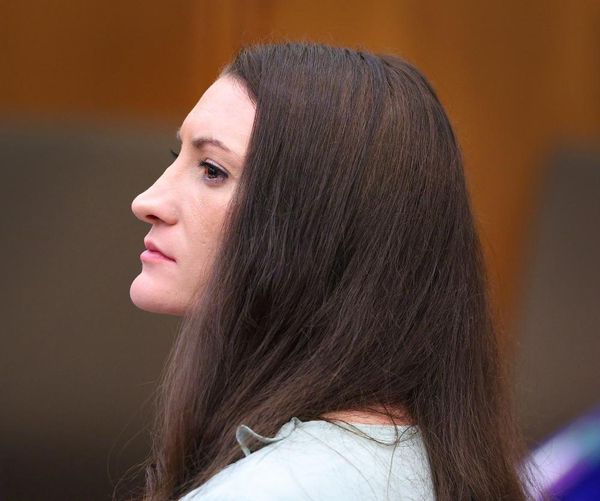
The mural is one of a number that have been painted across the US depicting Iryna Zarutska, a 23-year-old Ukrainian refugee who was killed last year while riding the light rail in Charlotte, North Carolina. Zarutska was traveling home from her job at a local pizzeria when she was stabbed from behind three times.
Her suspected killer, Decarlos Brown Jr, lived with serious mental health issues – his mother told the Charlotte Observer that he believed he was being controlled by a chip in his head. Brown Jr had spent five years in jail on an armed robbery charge, and had been arrested 14 times.
The killing was captured on a surveillance video which shows Zarutska, wearing the uniform of the pizza shop she worked at, staring at her phone when Brown appears to stab her from behind. The gruesome footage quickly went viral. Conservative circles took up Zarutska’s murder as an example of what they consider to be rampant violence in US cities. Leading Maga figures used nakedly racist, dehumanizing language to describe Brown.
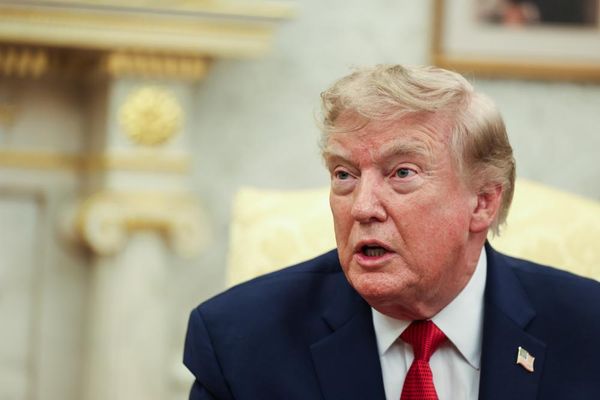
Chief among them was Donald Trump. On Truth Social he called for a “quick” trial followed by “THE DEATH PENALTY” for Brown, who he called an “ANIMAL”. Elon Musk took on the cause as well, claiming that mainstream media was burying coverage of Zarutska’s death because she was white. JD Vance called the killing “a disgrace” and blamed “soft-on-crime” policies. Andrew Tate, the manosphere TikToker accused of violent rape by multiple women, said that “if you’re a pretty girl in Memphis, Tennessee … you can’t go outside” for fear of being brutally murdered.
Then, after Eoghan McCabe, the Trump-supporting CEO of an AI-customer service platform called Intercom, posted on X that he was pledging “$500k in $10k grants to paint murals of the face of Iryna Zarutska in prominent US city locations”, Musk replied saying he would give $1m to the project.
McCabe’s campaign raised over $104,000 in donations on GiveSendGo, which bills itself as a “Christian” alternative to sites like GoFundMe. The website has hosted crowdfunding requests for the Proud Boys, January 6 rioters and multiple employees who were fired after going viral for being racist at work.
It is unclear if the money Tate pledged went through. Katie Brenske Tolstedt, McCabe’s chief of staff, wrote in an email to the Guardian that the project was “funded by Elon Musk ($1m), Eoghan McCabe ($500k), and a long list of smaller donors ($200k)”.
McCabe declined an interview request, but sent a statement that read: “our murals aim to memorialize the story of an innocent young woman who was killed in a horrific, senseless crime.”
So far, the art has popped up on walls across the country, from Bushwick to Washington DC to Miami and Los Angeles. In Washington DC, Zarutska’s mural covers the side of a red-brick building and white lilies surround her long, tousled hair. In Miami, she stares off into the distance with a blank, unreadable expression. In downtown Los Angeles, she takes up eight stories, her name written in girly cursive below her face.
Some residents are not happy with it. One graphic artist who lives near the Bushwick mural told the New York Post: “This woman – it’s unfortunate what happened to her – but how do you connect her to Bushwick? A lot of people around here don’t like [Elon Musk] so maybe this is his way to use his money to stick it to us.” In the week since the mural went up, graffiti saying “Fuck Trump” had been added to the lower third of the wall.
The mural was painted by Ben Keller, a Connecticut-based artist who has painted murals of Elon Musk and Jeff Bezos. According to his Instagram post, Keller collaborated on the Zarutska project with a local artist who goes by the handle @hoacs. Neither one responded to a request for comment but Keller posted on Instagram that the work was intended to “[honor] the life of Iryna Zarutska”.
Memorial murals have long been a familiar sight in cities. Stefano Bloch, an associate professor at the University of Arizona who studies public art, mentioned a longstanding tribute to Aaron “SK8” Anderson, a nascent leader in the 1990s Los Angeles graffiti scene. After Anderson was hit by a train and killed in 1993, his compatriots painted his portrait and the words “Rest in Power” on the side of a building in the Melrose neighborhood.
“[That mural] has stayed up for over 20 years,” Bloch said. “These memorials just kind of pop up and they’re respected, they sometimes last for decades.”
To Bloch, the airbrushed, privately funded Zarustka murals are “a hijacking of the moral aesthetic” of spray-painted memorials.
“The whole point of murals was to elevate voices that otherwise wouldn’t or couldn’t be heard,” Bloch said. “This project doesn’t have that same grassroots spirit. This is a top-down process of mural making, which really subverts the point.”
One artist who goes by the pseudonym Rod Man painted a mural for Zarutska on a bridge near his home in Pensacola, Florida. He said he did so on his own, with no backing or support from McCabe. “I did it out of compassion,” said Rod Man, who is 66. He added he “does not see a connection at all” between Zarutska’s death and rightwing ideologies. “Who could have beef with this victim?” he asked. “It’s not political in nature.”
Critics of McCabe’s project do not dispute that Zarutska’s death was a tragedy. She was a woman who had overcome hardship and had big plans for her future. She cooked katleti (meat patties with herbs), piroshki and borscht from recipes passed down by her mother. She loved animals and wanted to be a veterinary technician. She lived with her boyfriend, who was teaching her to drive; she had a driving test scheduled for October that she would not live to take.
But those elements of her humanity are largely absent from the way Musk, Tate, Trump and others have exploited her death. They are also missing from these outsourced artworks, which spray paint a textureless blond woman in communities hundreds of miles from her home.
Bloch called the image itself of Zarutska “a glamour shot” and a “paint by numbers” mural that lacks the outsider ethos of street art. “They’re trying to beautify a building with the image of somebody who has been tragically murdered. And that feels cheap,” he said. “It’s a sterile attempt to harness this really radical energy. It really looks more like an advertisement.”
Fox News compared the Zarutska murals to the George Floyd memorials that were painted after his police murder in 2020. But most of those murals, including a striking black-and-white depiction painted at the site of his death by local artist Peyton Scott Russell, were put up and paid for by the artists themselves.
RJ Rushmore, a curator and cultural critic of street art, compares the Bushwick mural to “marking territory”.
“It’s claiming space and weaponizing the memory of a person who was a human being,” he said. “I don’t think the art is saying much other than that.”