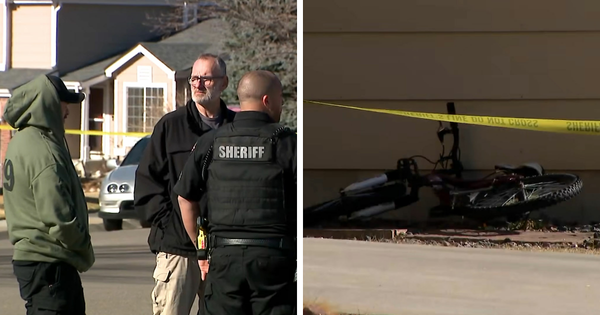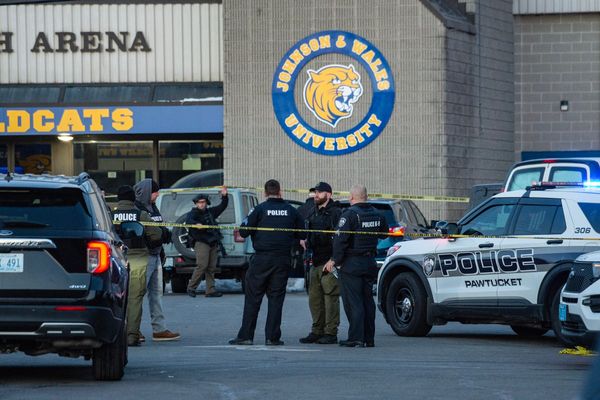
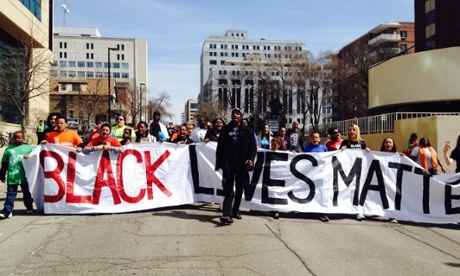
Protesters gathered in Madison, Wisconsin, on Monday to express their concerns over the investigation into the shooting last month of Tony Robinson, an unarmed 19-year-old. The protest came after police released redacted footage of a fatal shooting from 2007 which involved the same police officer.
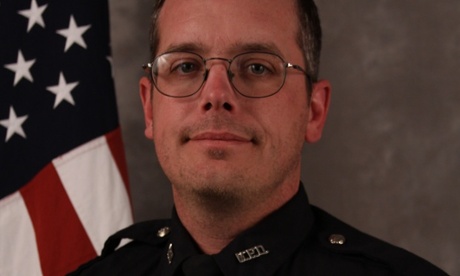
Officer Matt Kenny shot Robinson dead on 6 March. Kenny forced entry into an apartment the teenager was staying in, after a number of 911 calls reported that Robinson was behaving erratically and was alleged to have assaulted a pedestrian.
At least one of those calls was made by a concerned friend who lived at the apartment where Robinson was killed. Robinson had taken a large amount of hallucinogenic mushrooms in the hours before his death.
“We do know that Tony was unarmed and was shot at least seven times in the chest and head by officer Kenny,” said a spokesman for the Robinson family, Jerome Flowers, to a small crowd on the steps of the Dane County courthouse on Monday. “This was neither reasonable nor necessary.”
In fact, the number of shots fired in the incident is not known. On Monday the Robinson family attorney, John Cates, said between six and eight shots had hit the teenager. Madison police spokesperson Joel DeSpain told the Guardian by email that the department did not know how many times Robinson was shot.
Madison police have said he was hit in the head, torso and right upper extremity.

Flowers called on the district attorney, Ismael Ozanne, to indict Kenny, and asked that Ozanne meet the Robinson family before making a final decision.
The Associated Press reported that the released video of a 2007 fatal incident involving Kenny, depicting the shooting of Ronald Brandon, does not show the actual shooting. Instead it appears to show the 48-year-old pointing a gun at officers before he is killed. The firearm was later discovered to be a pellet gun and the incident was described as a “suicide by cop”.
Kenny was exonerated of responsibility by investigators and later given a medal of valor.
The disclosure, resulting from a public records request by the AP, followed the release of hundreds of pages of background documents in the Robinson case, detailing the teenager’s previous contacts with police as well as Kenny’s use-of-force records since 2011.
Robinson’s death has sparked outrage in Madison, with protesters demanding that Kenny be indicted. No decision has been announced. The Wisconsin department of justice’s division of criminal investigation (DCI) has handed its findings on the case to the Dane County district attorney.
Local activists have criticised the impartiality of that investigation. On Saturday, the Guardian reported that one of the investigators was previously a member of the Madison police.
On Monday, Flowers claimed that the Madison police department got to choose who they wanted to see oversee their investigation.
“We know the division of criminal investigation has worked in partnership with [Madison police] on every step of the investigation. We know that the division of criminal investigation is staffed with retired law enforcement officers.”
Asked about these allegations, DeSpain replied: “DCI chooses who investigates the case, not us.”
Flowers said that while this complied with Wisconsin state law, it did not represent “an independent investigation, by any ethical or moral standards”. He also questioned why Madison police had released documents on Friday that did not concern Robinson or the investigation into his death.
DeSpain told the Guardian the records released had been requested by the media.
Friday’s document release revealed 11 – mostly minor – use-of-force incidents on Kenny’s record. They also revealed a number of contacts Robinson had with police, including police call-outs over custody disputes between Robinson’s parents.