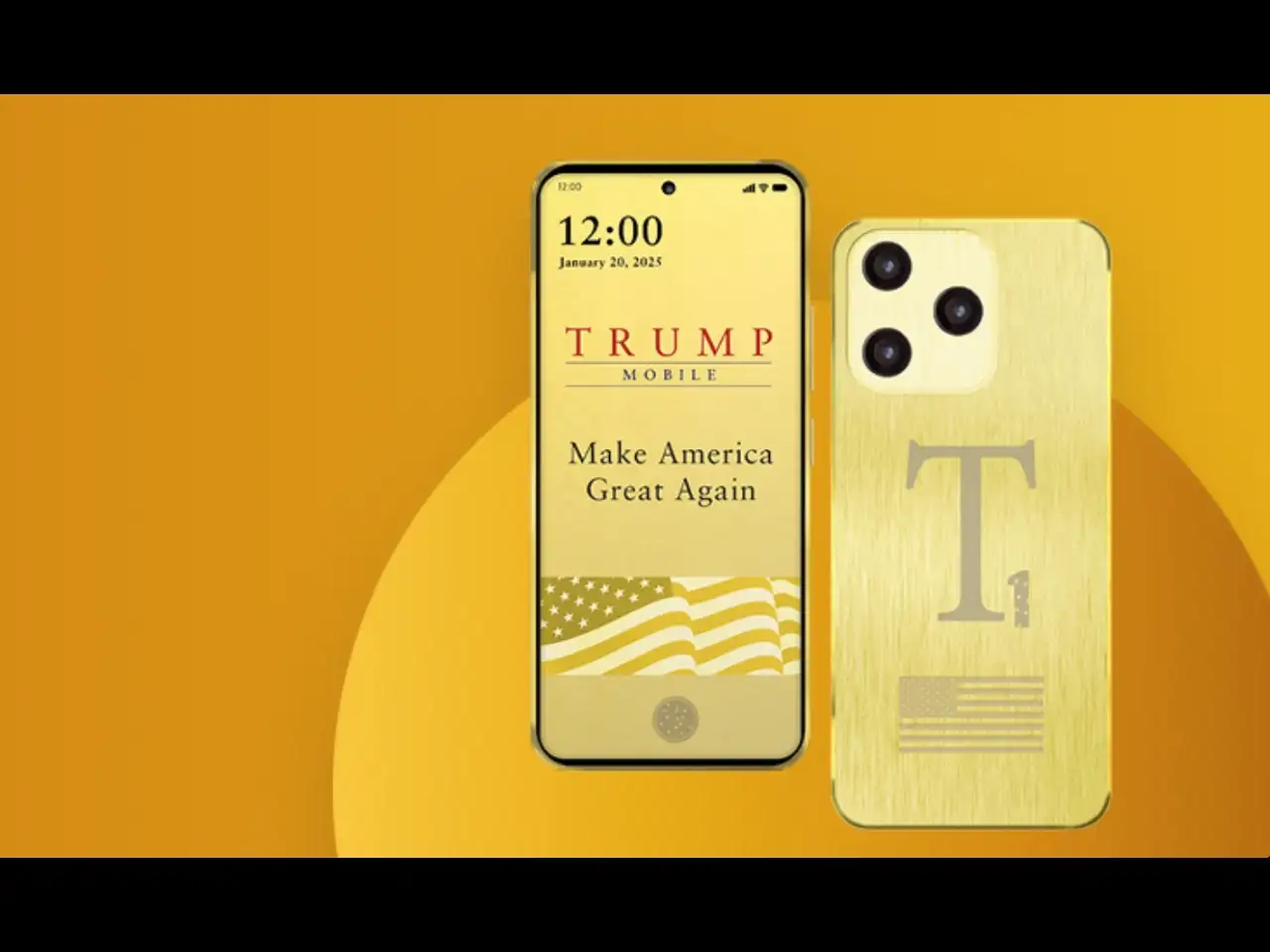
Trump Mobile T1 Phone Release Date Finally Begins: Nearly a year has passed since Donald Trump Jr. and Eric Trump stood inside Trump Tower and promised America a gold smartphone built on home soil.
The Trump Mobile T1 phone, priced at $499 and draped in patriotic branding, was supposed to be in customers' hands by August 2025. It never arrived. What followed was a cascade of missed shipping deadlines, quiet fine-print rewrites, and a growing wave of frustration from roughly 590,000 buyers who collectively handed over $59 million in deposits — and are still waiting.
Now, Trump Mobile CEO Pat O’Brien has confirmed to USA TODAY that phones are finally being shipped. The company says the first batch was assembled in the United States and future devices will increasingly rely on American-made components. That claim matters because the Trump Mobile brand heavily markets itself around domestic manufacturing, American jobs, and reducing dependence on overseas electronics supply chains.
Trump Mobile T1 Phone Shipping Delays
The Trump Mobile T1 phone shipping delay did not happen all at once. It unfolded in slow, grinding stages that stretched from summer 2025 deep into 2026. The original ship date was August 2025. When that passed without a delivery, Trump Mobile pushed the window to November. November became December. December became "sometime in Q1 2026." Q1 came and went. By April 2026, the company quietly removed the release date from its website entirely and replaced it with a prompt to "join the waitlist."
NBC News, which placed a $100 deposit in August 2025 specifically to track the story, called Trump Mobile's support line five times. Each call produced a different answer. In October, a representative confirmed November 13 as the ship date. When that date passed without any phone or explanation, callers were told December, then Q1, with one agent blaming the federal government shutdown — a justification that left many bewildered, given that Trump Mobile is a privately held company pursuing commercial certifications, not a federal agency waiting on budget approval.
The pattern here is important. Each new date was offered with confidence. Each deadline collapsed without acknowledgment. That gap between promise and delivery is not just operationally embarrassing — it shapes how buyers understand their legal position, and whether they can trust the next date if one ever appears.
What Happened to the "Made in USA" Trump Mobile T1 Phone?
According to Trump Mobile CEO Pat O’Brien, pre-ordered T1 Phones are now being shipped and remaining orders should arrive over the next several weeks. That announcement offers relief for buyers who feared the phones might never launch after repeated delays and growing social media complaints.
Still, questions remain about performance, specifications, software support, and long-term reliability. Smartphone buyers today expect fast processors, quality cameras, secure operating systems, strong customer support, and consistent updates. Consumers also compare every new device against flagship products from Apple and Samsung.
That means expectations remain high despite the phone’s political branding.
For supporters of Donald Trump and consumers interested in an alternative wireless brand emphasizing American identity, the T1 Phone may carry symbolic appeal beyond hardware specifications alone. For mainstream technology buyers, however, practical performance will likely matter more than messaging.
The Trump Mobile T1 phone USA manufacturing promise was central to the product's identity. At the June 2025 launch event, the device was described as "a sleek, gold smartphone engineered for performance and proudly designed and built in the United States." The language was deliberate. It landed in a political climate where domestic manufacturing was a cultural rallying point, not just an economic policy.
That claim quickly unraveled. Independent researchers identified the T1 as likely a rebadged budget Android device with origins in Chinese manufacturing.
Trump Mobile later confirmed to reporters that full domestic production was never the plan. The revised version: final assembly of the last ten components would take place in Miami. The rest of the phone would be built overseas. Quietly, the "Made in America" language disappeared from the company's marketing materials — with no press release, no apology, and no real explanation to the 590,000 people who may have ordered partly because of that promise.
The phone has also been redesigned at least three times. The current design on the Trump Mobile website looks noticeably different from the model introduced at launch. It is described as a gold Android phone with a 6.78-inch display, a 50-megapixel main camera, fingerprint sensor, AI face unlock, and quick charging. Whether that device actually exists in manufactured form, beyond prototype, remains genuinely unclear.
$59 Million in Deposits: What Are Buyers' Rights Now?
Here is where the story shifts from frustrating to genuinely alarming for anyone who paid. In April 2026, Trump Mobile updated its preorder terms and conditions with language that dramatically redefined what a deposit actually means. Under the new terms, a preorder deposit "provides only a conditional opportunity if Trump Mobile later elects, in its sole discretion, to offer the device for sale." It is not a purchase. It does not constitute acceptance of an order. It does not transfer ownership. It does not lock in the $499 promotional price. Final pricing, the terms now specify, will be disclosed at the time of actual purchase — at which point buyers will have the option to accept or reject.
Crucially, no path exists in the published terms for a buyer to voluntarily withdraw and recover their deposit before Trump Mobile cancels the project entirely. The company says it will issue refunds if it cancels outright — but on no specific timeline, and with no liability for delays caused by parts shortages or regulatory hold-ups. The deposit earns no interest while Trump Mobile holds it, and the company's financial liability is capped at the deposit amount itself.
Senator Elizabeth Warren and other Democratic lawmakers flagged this situation to the Federal Trade Commission in January 2026, citing alleged "bait-and-switch tactics" and false advertising around the "Made in USA" claim. As of May 2026, the FTC has not confirmed whether any investigation has been opened.
Can Trump Mobile realistically compete against Apple and Samsung in the smartphone market?
The smartphone business is brutal. Even established technology companies struggle to survive against dominant players like Apple and Samsung. Consumer loyalty is powerful. Ecosystems matter deeply. Most buyers already live inside iPhone or Android ecosystems connected to apps, cloud storage, watches, messaging services, and subscription platforms.
That makes Trump Mobile’s challenge unusually difficult.
At the moment, Trump Mobile is also selling refurbished Apple and Samsung devices on its website. That detail has drawn attention because it shows how hard entering the hardware business can be. Even companies launching their own phones often rely on existing smartphone ecosystems to generate early revenue.
However, Trump Mobile may not be trying to compete traditionally. The company could instead be targeting identity-based consumer behavior. In today’s polarized economy, many consumers increasingly buy products connected to political values, cultural identity, or ideological affiliation.
That strategy has worked in media, clothing, and entertainment. Technology remains a harder frontier because consumers prioritize reliability, software updates, and long-term support. A smartphone is not simply merchandise. People trust it with banking, communication, health information, and private data.
If Trump Mobile wants long-term credibility, customers will likely expect more than branding. They will want reliable service, functioning hardware, security updates, and consistent delivery timelines.
The company’s ability to meet those expectations over the next several months may ultimately decide whether the T1 Phone becomes a sustainable business or a short-term political novelty.