President Emmanuel Macron travels to eastern France on Tuesday for talks with farmers and discussions on social media regulation, against the backdrop of a far-right breakthrough in nearby Haute-Savoie.
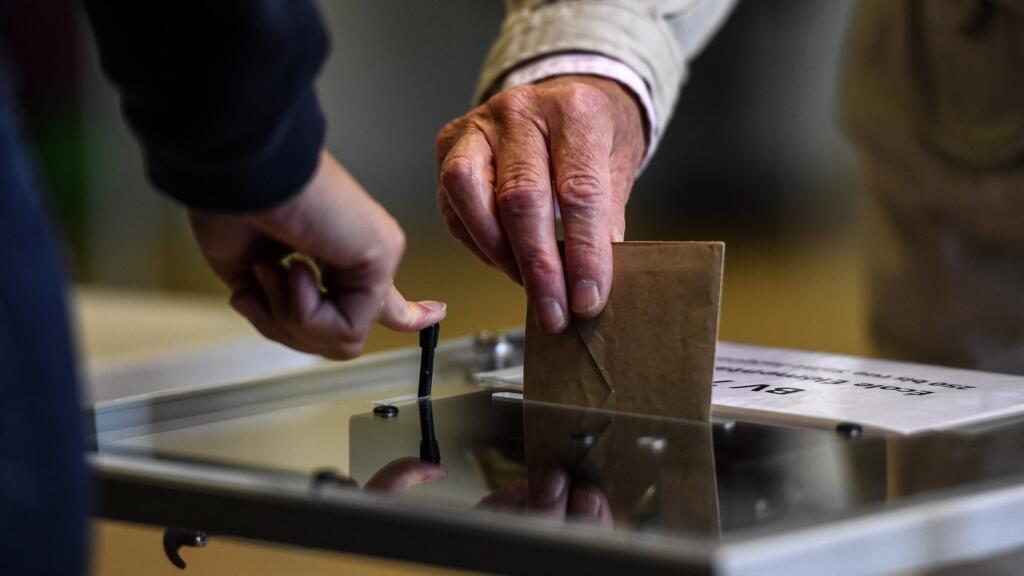
On Sunday, voters in the Alpine Haute-Savoie département handed the far-right its first-ever parliamentary seat there, electing Antoine Valentin in a low-turnout by-election that many are reading as a dress rehearsal for the March municipal contests.
33-year-old Valentin stood for the Union of the Right for the Republic (UDR) – the party launched by former Les Républicains leader Eric Ciotti and allied with the National Rally.
He defeated Les Républicains candidate Christophe Fournier with 17,341 votes – just over 59 percent of ballots cast – in Haute-Savoie’s third constituency.
Turnout was strikingly low at just over 34 percent, with nearly two-thirds of registered voters staying away.
Calls for a “republican front” to block the far right failed to gain traction in this rural, mountainous area near Switzerland, long considered a conservative stronghold and home to the Glières plateau, a symbol of the French Resistance.
French conservatives in chaos after leader ousted over far-right pact
Far-right alliance
Even before the official results were confirmed, Ciotti hailed the victory online, praising Valentin as “deeply rooted” locally and claiming the UDR was supplanting Les Républicains across France.
National Rally figures were quick to echo the message. Party president Jordan Bardella called it an “undeniable victory”, while Marine Le Pen argued the RN-UDR alliance was triumphing over a mainstream right discredited by backing Macron.
With municipal elections scheduled for 15 and 22 March, the contest was widely seen as a test of rival right-wing strategies: Les Républicains refusing any pact with the far-right, and Ciotti’s UDR openly embracing one.
The seat fell vacant after the resignation of LR MP Christelle Petex, who cited excessive political manoeuvring, criticism and threats.
Valentin, who is also mayor of Saint-Jeoire and co-founded the Politicae institute to support mayoral candidates, styled himself simply as “the candidate of the right”.
His campaign reportedly benefited from funding linked to ultra-conservative billionaire Pierre-Edouard Stérin’s “Périclès” project that backs and coordinates conservative and far-right movements through training, media work and electoral strategy.
Left-wing parties – including the Socialists, Ecologists and Communists – urged voters to block the far right. The Communist Party of Haute-Savoie stressed the constituency’s symbolic ties to the Resistance, warning against turning it into a testing ground for the far-right.
Angry French farmers defy ban and block Paris streets over Mercosur deal
Macron courts farmers and teens
Against this backdrop, Macron’s visit on Tuesday to Vesoul – in neighbouring Haute-Saône – takes on added resonance.
The Elysée says the president will meet agricultural unions ahead of the Salon de l’Agriculture – France's annual, flag-ship agriculture fair – which opens on 21 February, and voice his support for a profession under pressure.
Farmers remain angry about the EU’s free trade agreement with Mercosur countries and the government’s handling of outbreaks of contagious nodular dermatosis.
Macron will tour a farm and meet local agricultural organisations, pledging support for breeders hit by health crises who will be unable to bring cattle to the show.
Several breed selection bodies have already decided not to present animals this year.
The day will end on a different note, with lunch alongside local high school students to discuss social media use.
This comes as the National Assembly just backed a bill to ban social media for under-15s – an issue Macron has been touring the country to promote.
(With newswires)