French President Emmanuel Macron has entered a race against time to promote his plan to maintain the 2005 nuclear deal with Iran, while calling for negotiations with Tehran on three issues: the fate of the country’s nuclear program after 2025, its ballistic missiles programs, and finally its “destabilizing” regional policy.
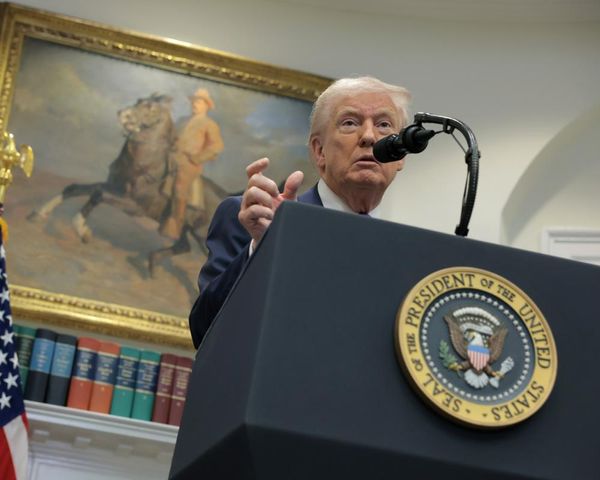
Although nothing suggests that US President Donald Trump, who has repeatedly described the international agreement as the “worst deal” signed by the US, will back down from his 12-month deadline to make a final decision on the matter, chances that Marcon will succeed in his endeavor are not weak.
There are three indications that the French president has gone a long way in his efforts. First, Trump declared that he “does not rule out” negotiating a new agreement with Tehran, which he wants comprehensive and with real and serious guarantees so that Iran will never get the nuclear bomb, as he recently stated
Second, France’s European partners in the agreement, Britain and Germany, have recently accepted Macron’s project and hence, adopted a “middle” position between what Washington is demanding and what Tehran rejects.
Third, the resumption of communication between Macron and Russian President Vladimir Putin. Although communication was not really interrupted, it has worsened after the military strikes by the three Western parties (Washington, Paris and London) against alleged Syrian chemical sites on April 14. According to French sources, France is hoping that Russia would accept the French proposal and would push Iran to accept negotiations over a new agreement.
This issue will be among the most important files that Macron will discuss with Putin during his visit to St. Petersburg on May 24-25.
Several sources in Paris told Asharq Al-Awsat that the French president wanted to convince Tehran not to break the agreement, even if Trump executed upon his threat. Paris’ purpose at present seems to be “buying time” for further consultations, contacts and pressures.