French President Emmanuel Macron has called for France’s fight against drug trafficking to be 'stepped up', following a string of violent incidents that have shocked the country – including the killing in Marseille of the brother of an environmental activist, described by the government as a 'crime of intimidation' and a 'turning point'.
The emergency meeting held at the Élysée Palace on Tuesday brought together senior ministers, judicial police officials and specialised magistrates as the government seeks to project firmness on an issue rapidly rising up the political agenda ahead of next March’s municipal elections.
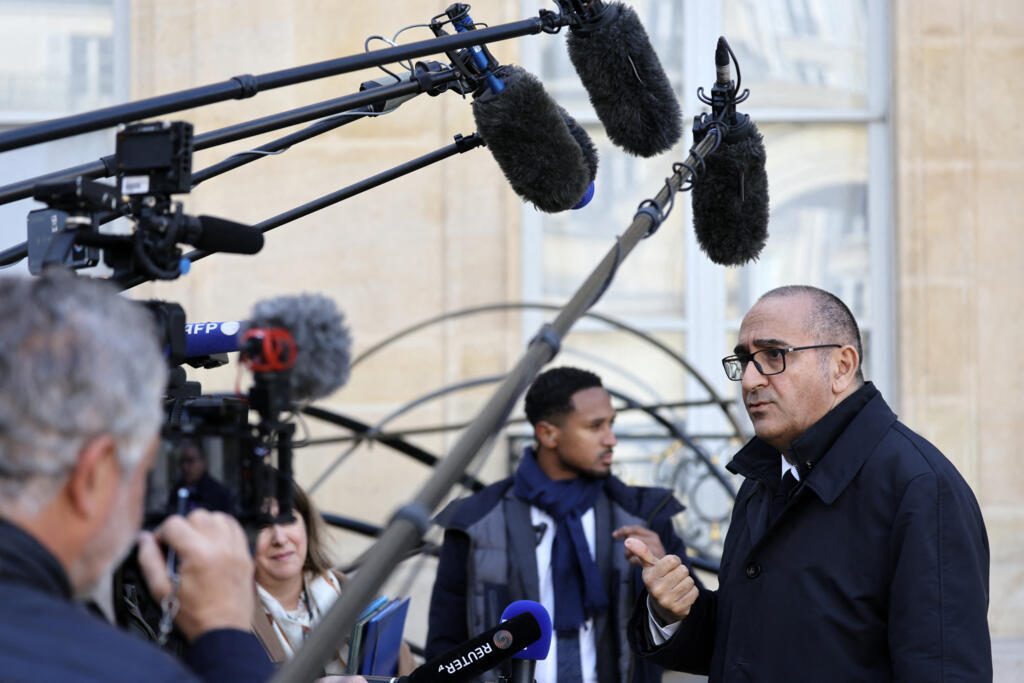
Interior Minister Laurent Nuñez said after the discussions that he would travel to Marseille on Thursday with Justice Minister Gérald Darmanin, following a request from the President.
Macron himself plans to reconvene anti-trafficking stakeholders in mid-December – again at the Élysée Palace – before making his own trip to Marseille.
“We have noticed that traffickers, particularly those who run the Marseille mafias, are becoming increasingly nervous because we are taking extremely effective action,” Nuñez said, striking a confident tone as he outlined the government’s next steps.
Earlier in the day, politicians from across the spectrum had urged the government to move from rhetoric to results in tackling a problem that is expected to loom large in the coming municipal campaign.
Among those present at the Élysée were the Ministers of Public Accounts, Amélie de Montchalin, and Foreign Affairs, Jean-Noël Barrot. They were joined by key judicial figures, including Marseille’s public prosecutor Nicolas Bessonne and Christian Sainte, the national director of the judicial police. Darmanin took part via videoconference from the United Arab Emirates.
The gravity of recent events was never far from the discussions. Last week, the brother of environmental activist Amine Kessaci – himself a vocal campaigner against drug trafficking – was shot dead in the southern port city.
Prosecutor Bessonne has not ruled out that the killing may have been a warning assassination. According to a source close to the case, Macron personally phoned Kessaci, whose other brother, Brahim, was killed in 2020.
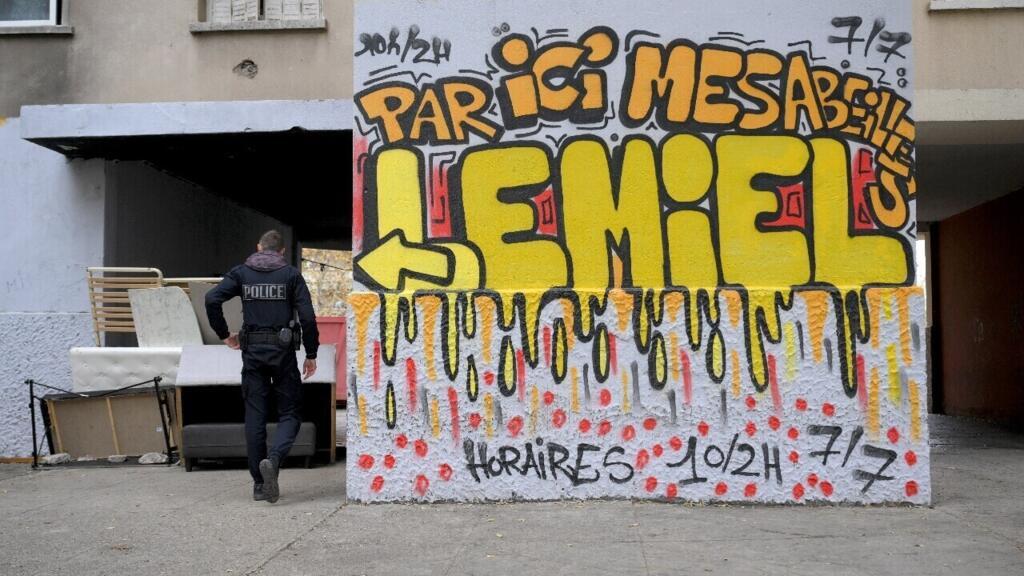
Meanwhile in Grenoble, a teenager was shot three times on Saturday night near what police believe was a drug dealing point. His attackers are still on the run, adding to public unease over drug-related violence.
France to boost police and courts in fight against rising drug scourge
Specialised public prosecutor’s office
Tuesday’s meeting was also held to accelerate the rollout of a new anti-trafficking law, promulgated in June and now “gaining momentum”, according to the Élysée. Central to the reforms is the creation of the National Prosecutor’s Office for Organised Crime (Pnaco), due to be formally launched on 1 January.
Modelled on the National Anti-Terrorism Prosecutor’s Office (Pnat) and the National Financial Prosecutor’s Office (PNF), the Pnaco will take charge of the most serious and intricate organised crime cases.
Darmanin has already proposed magistrate Vanessa Perrée to head the new body.
The Justice Minister has repeatedly defended the new legal framework in Parliament, noting that it includes tougher penalties, enhanced tools for investigators and fresh provisions to establish high-security prison wings for the most dangerous traffickers – who could be placed in solitary confinement.
Marseille's drug war victims, perpetrators younger than ever: prosecutor
A theme for municipal elections
With barely four months until the municipal vote, the fight against drug trafficking is quickly becoming a defining theme.
Franck Allisio, the far-right National Rally's candidate for mayor of Marseille, has called for a “state of emergency" in the city – a measure that would grant prefects expanded powers to restrict gatherings or authorise administrative searches.
The topic is also expected to feature prominently at this week’s Association of French Mayors (AMF) congress in Paris. AMF president David Lisnard told BFMTV/RMC that while the new drug trafficking law is “a good law”, the government needs to go further.
“Beyond public displays and emergency meetings, what is needed now is action,” he said.
Lisnard, the centre-right Les Républicains mayor of Cannes, recalled that the AMF held a round table on drug trafficking last year because “this is a reality we are experiencing in large cities, medium-sized towns and even villages”.
As France braces for a heated electoral season, Macron’s renewed push suggests the government is intent on showing it can deliver tangible results – and perhaps restore a sense of security in communities grappling with the daily consequences of drug crime.
(With newswires)