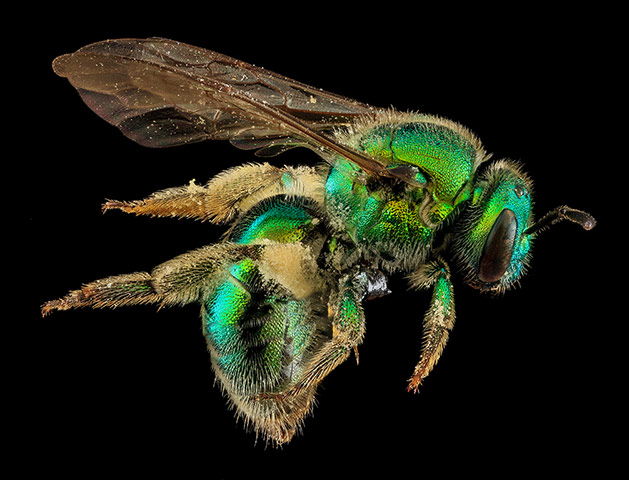
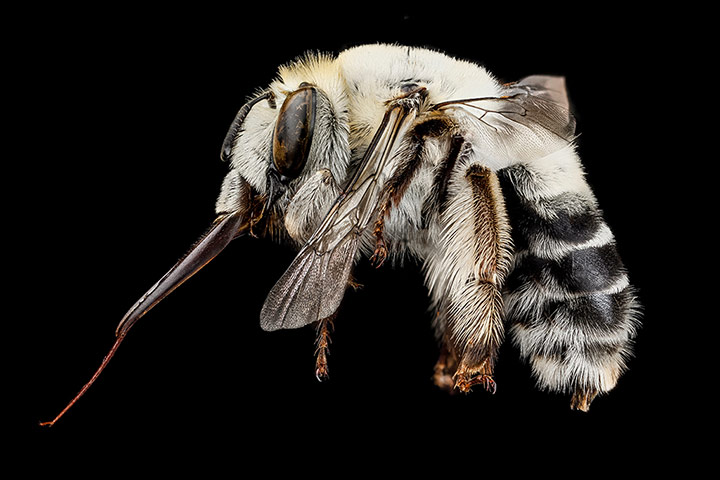
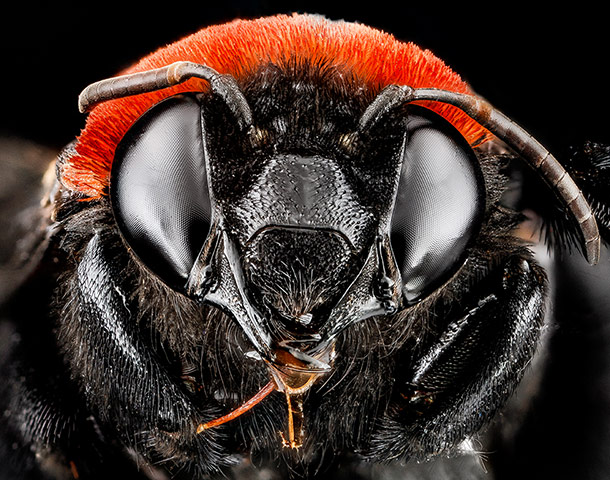
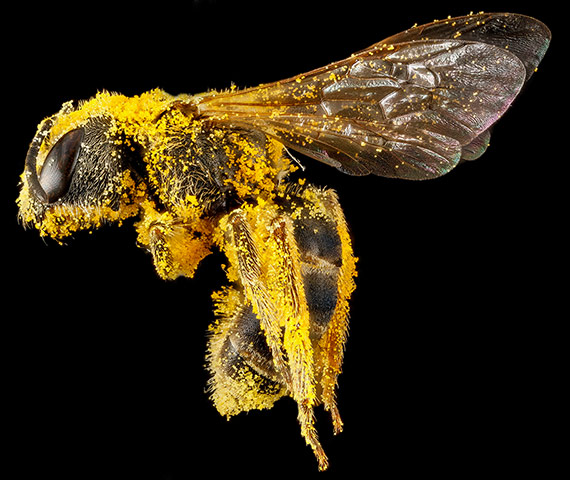
Turning the lens on every groove and hair, Sam Droege and his team at the USGS Bee Inventory and Monitoring Lab are on a mission to capture the portraits of the 4,000 species of bee found in the United States. Their goal is to create a comprehensive online reference for identification
Photograph: Sam Droege and the USGS Bee Inventory and Monitoring Lab
Photograph: Sam Droege and the USGS Bee Inventory and Monitoring Lab

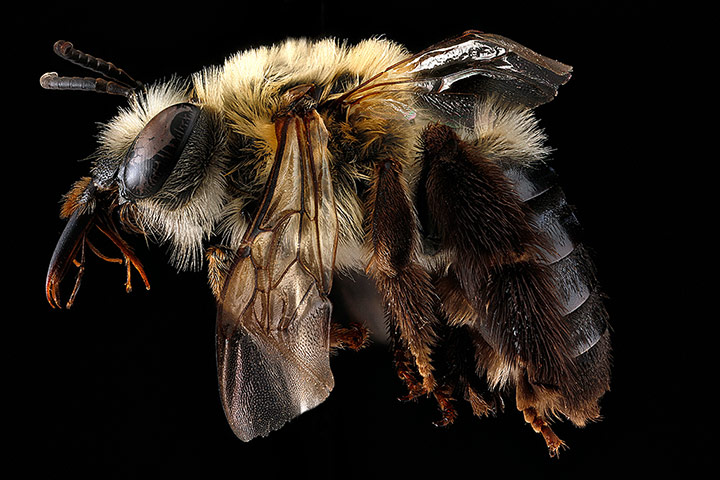
It’s a herculean task but, with bee populations under threat, such a resource could prove invaluable to those monitoring species. 'The biggest problem in developing some understanding of how bees are doing is how to identify the bees you’re seeing or that you’ve captured,' Droege says. With many species distinguished by subtle differences, relying on descriptions alone can lead to mistakes
Photograph: Sam Droege and the USGS Bee Inventory and Monitoring Lab
Photograph: Sam Droege and the USGS Bee Inventory and Monitoring Lab
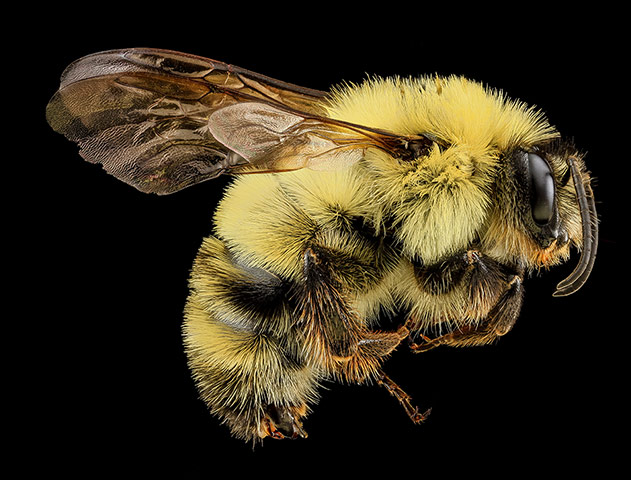
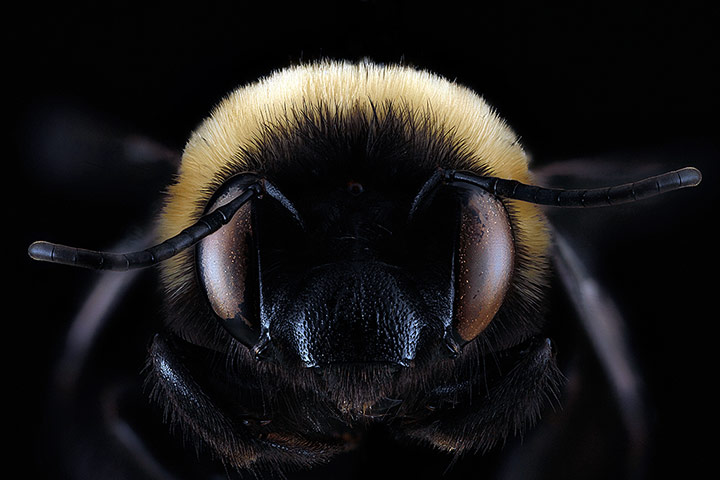
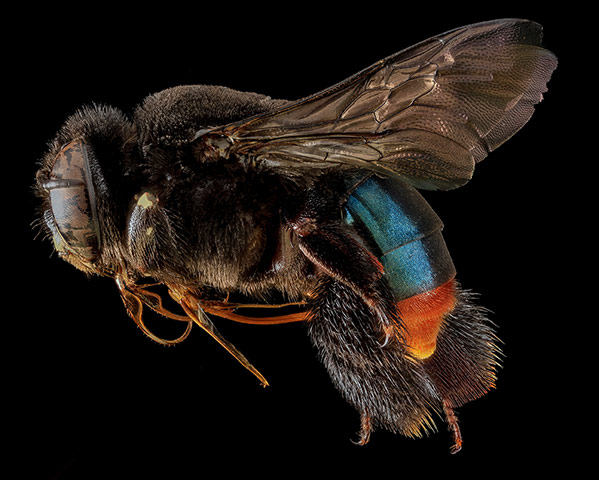
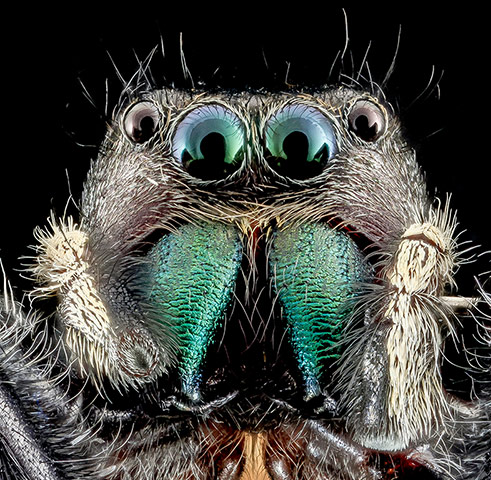
Droege’s high resolution images leave no room for ambiguity. 'The whole insect is in focus at incredible detail,' he says
Photograph: Sam Droege and the USGS Bee Inventory and Monitoring Lab
Photograph: Sam Droege and the USGS Bee Inventory and Monitoring Lab
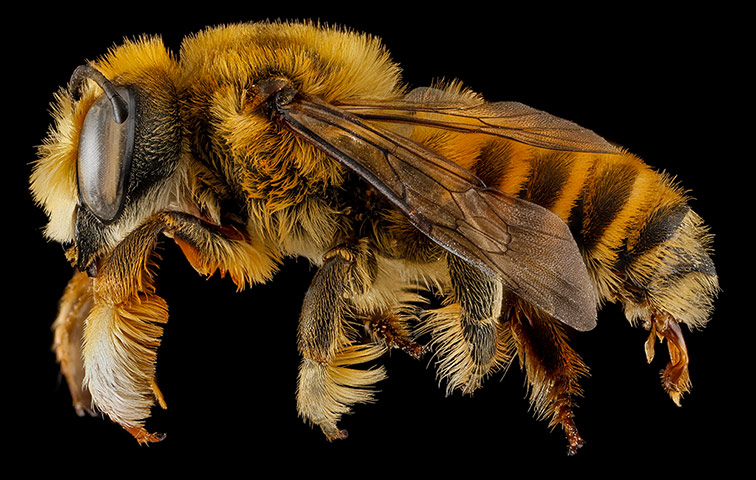
Prior to 2010 the team had been trying to create the Inventory by strapping simple point-and-shoot cameras to microscopes, with disappointing results
Photograph: Sam Droege and the USGS Bee Inventory and Monitoring Lab
Photograph: Sam Droege and the USGS Bee Inventory and Monitoring Lab
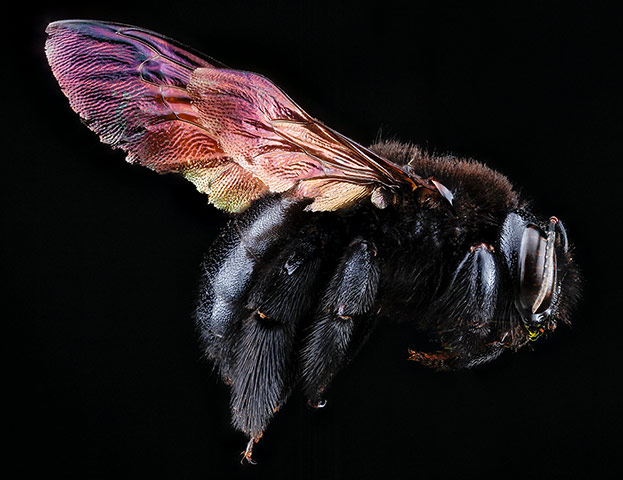
In 2010, the team was approached by the US Army who had pioneered macro photography techniques, borne of necessity. 'Military personnel are exposed to all kinds of diseases,' says Droege. 'In fact, a much bigger problem than getting shot is getting bitten by some kind of insect and not knowing what it is and coming down with a disease.' Previously, troops would have to catch and send samples to experts for identification but, by developing techniques to capture highly detailed images, identification and medical advice can be issued more rapidly
Photograph: Sam Droege and the USGS Bee Inventory and Monitoring Lab
Photograph: Sam Droege and the USGS Bee Inventory and Monitoring Lab
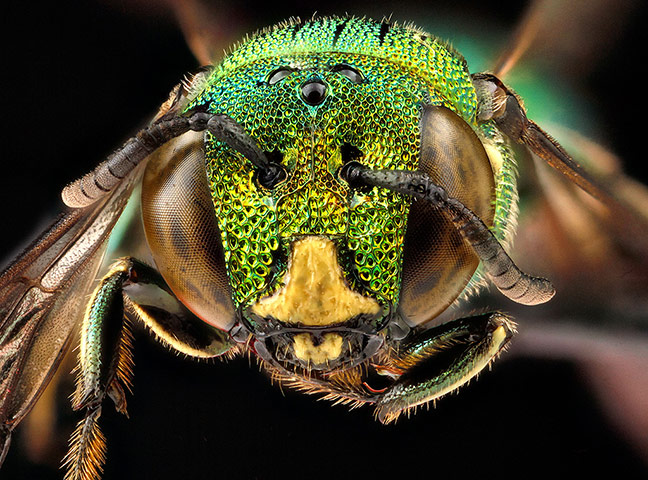
From that point onwards, Sam and his team adopted and modified the macro photography technique and resumed photographing their specimens
Photograph: Sam Droege and the USGS Bee Inventory and Monitoring Lab
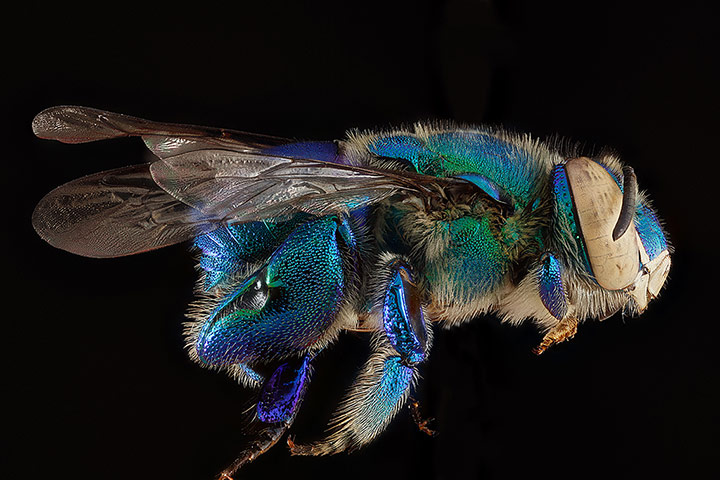
To capture the bees with such detail, Droege and his team take several different shots of the (already dead) insect and combine them together to form one image using a special software. This software creates detailed macro images which can be blown up to three square metres without pixelating
Photograph: Sam Droege and the USGS Bee Inventory and Monitoring Lab
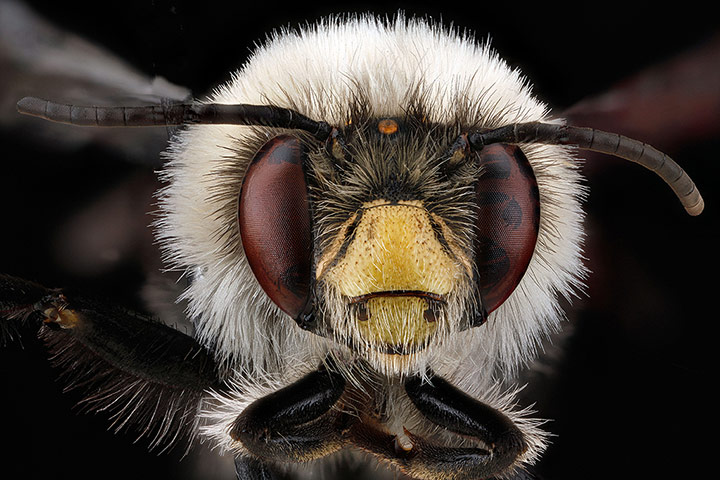
'We do select out the supermodel bees,' admits Droege. 'We wash them in soapy water and then we blow dry them to make them look good.'
Photograph: Sam Droege and the USGS Bee Inventory and Monitoring Lab
Photograph: Sam Droege and the USGS Bee Inventory and Monitoring Lab
To see more beautiful photographs of insects and animals taken by Sam Droege, Brooke Alexander, Sue Boo, Heagan Ahmed and Sierra Williams view their flickr site here
Photograph: Sam Droege and the USGS Bee Inventory and Monitoring Lab