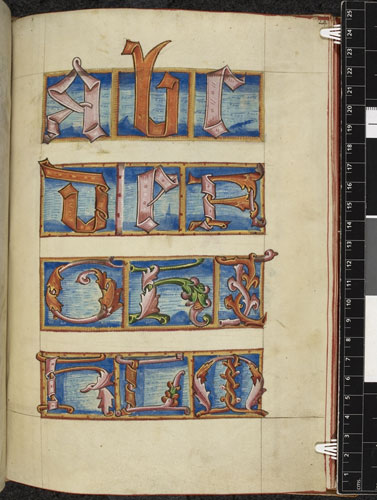
Painted ‘ribbon’ or ‘banderole’ alphabet in colours, of lower and upper case letters A to MPhotograph: /British LibraryLetters L, M, N, O, and P, in brown ink, with faces and animals, including dogs Photograph: British LibraryDecorated letters A to O, one O with a ‘Green Man’ facePhotograph: British Library
Letters C and D, formed of figures and animals, copied after the Flemish ‘1464 Grotesque Alphabet’ circulating in woodblocks and engravingsPhotograph: British LibraryMacclesfield Alphabet's flower and ‘bar’ border designs, fully painted and with gold dots Photograph: British LibraryLetters L, M, N, and O, formed of figures and animals, copied after the Flemish ‘1464 Grotesque Alphabet’ circulating in woodblocks and engravingsPhotograph: British LibraryLetters in black ink, O (with a kneeling pope), P (with a fish and two birds’ beaks), Q (with a monkey riding an animal), R (with two birds’ heads), S (formed of two fish), and T (with a bird’s head)Photograph: British LibraryAlphabet in blue letters with red pen-flourishing from A to Z, and the letters ‘KL’ (an abbreviation for kalends, the first day of the month, from which ‘calendar’ is derived), which would be used for calendar pages in prayer booksPhotograph: British LibraryPainted border designs of flowers, and a bar borderPhotograph: British LibraryThree-sided drawn manuscript border, with a T and flowers Photograph: British Library
Sign up to read this article
Read news from 100’s of titles, curated specifically for you.