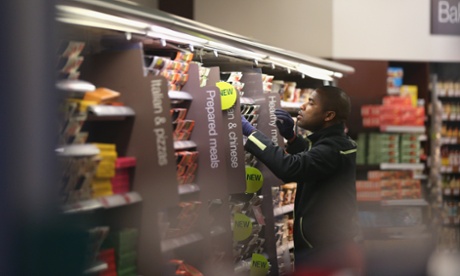
Marks & Spencer buyers have an incentive to buy products from suppliers who work towards what the company terms its “silver” factory standard.
The approach involves a scorecard that measures performance in three areas: economic , human resources and community, and ethical conduct. The framework took 18 months to develop, beginning in 2010.
M&S would like 75% of food products by volume to come from factories with silver status by 2020; it would like to develop “gold” status factories; to create and promote tools to support suppliers in their quest for recognition; and use key performance indicators to drive improvement.
Behind the framework is a challenge: 90% of M&S’s environmental impact is to be found in its supply chain. If supplier sites achieve the standard they receive a silver certificate at the M&S annual commercial conference.
The programme was co-created by M&S, suppliers and other stakeholders to give ethical, economic and environmental considerations equal weight. It covers, for example, water, waste, ethical standards and labour management.
M&S has held over 100 supplier events since 2007 and these have promoted sustainability.
The framework’s scorecard was drawn up after considering over 100 supplier case studies, workshops and consultations with experts, NGOs and other stakeholders, including Oxfam and the Carbon Trust.
So far 25% of M&S food volume comes from silver status factories. There are more than 300 supplier participating in the scheme and the number with silver status has doubled since 2012; 25% have improved energy efficiency by at least 20% since the scheme began; 24% have reduced water usage year on year; and 41% now send zero waste to landfill.
In addition, a 2013 survey showed 84% of suppliers agreed that the framework had helped them, with one commenting: “It’s like a business keep-fit app … and has saved us an estimated £3m over 18 months.”
A spokesman for M&S says the company has learned a lot. With 363 sites registered to the scheme, the company is on track to purchase 30% of its food volume from silver factories this year. It also has its first “gold” site and three more on the way.