Get all your news in one place.
100’s of premium titles.
One app.
Start reading
The Guardian - UK
The Guardian - UK
Lifestyle

Lyonel Feininger : From Manhattan To The Bauhaus

Lyonel Feininger: Carnival
Carnival, painted in 1908, soon after Feininger had begun to explore painting after a successful career as an illustrator.
Photograph: National Galerie, Staatliche Museen, Berlin/MMFA
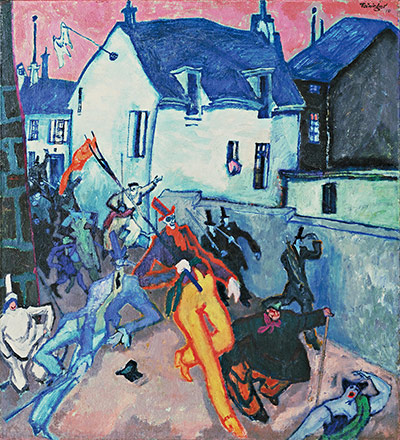
Lyonel Feininger: Uprising
Uprising, painted in 1910. The oblique perspective and distorted scale are a foretaste of Feininger's subsequent encounter with cubism.
Photograph: The Museum of Modern Art, New York/MMFA
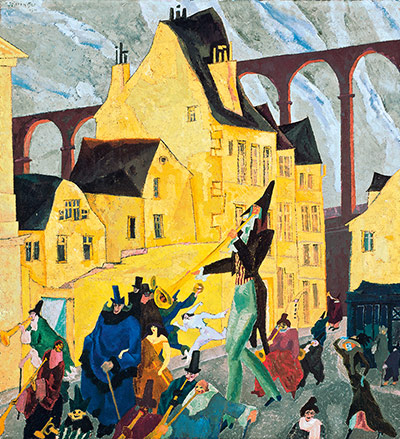
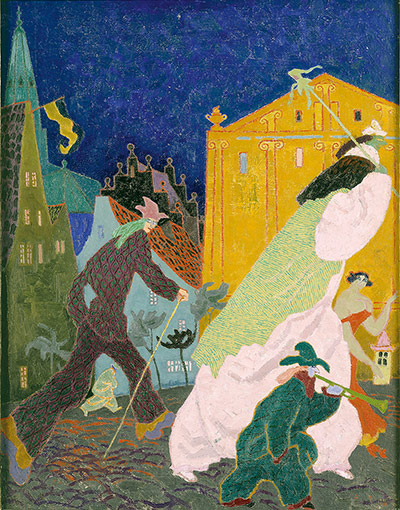
Lyonel Feininger: Carnival in Arcueil
Carnival in Arcueil, painted in 1911. Feininger's work around this time often included a carnival world with larger-than-life figures in vibrant colours.
Photograph: The Art Institute of Chicago; Joseph Winterbotham Collection/MMFA
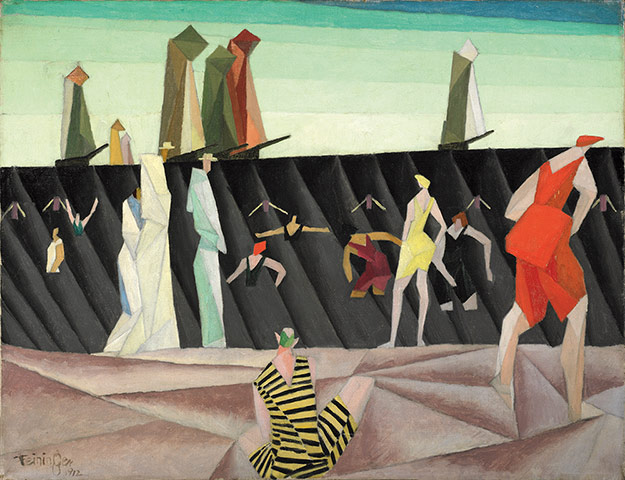
Lyonel Feininger: Bathers on the Beach I
Bathers on the Beach I, painted in 1912 soon after Feininger moved on from the drawings, illustrations and caricatures that made up the early part of his career.
Photograph: Harvard Art Museums, Busch-Reisinger Museum/MMFA
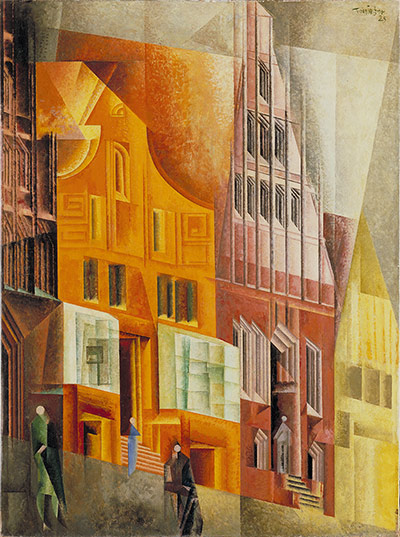
Lyonel Feininger: Gables I, Lünenberg
Gables I, Lünenberg. Prior to his Bauhaus period, Feininger joined the German avant-garde of Klee, Kandinsky and Franz Marc. His Gables series shows a use of geometric planes set at angles to achieve volume.
Photograph: Smith College Museum of Art, Northampton/MMFA
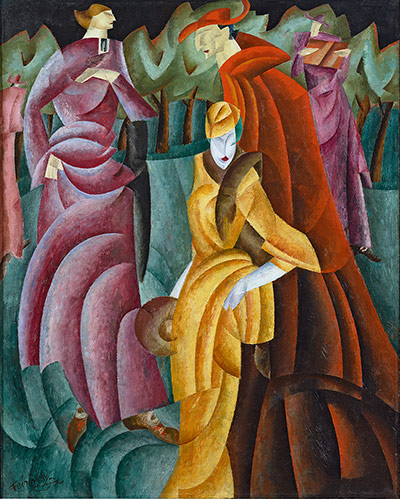
Lyonel Feininger: Jesuits III
Jesuits III. Painted in 1915, around the same time as his Gables series, Feininger's Jesuits series is, by contrast, full of lively colours.
Photograph: Private Collection/MMFA
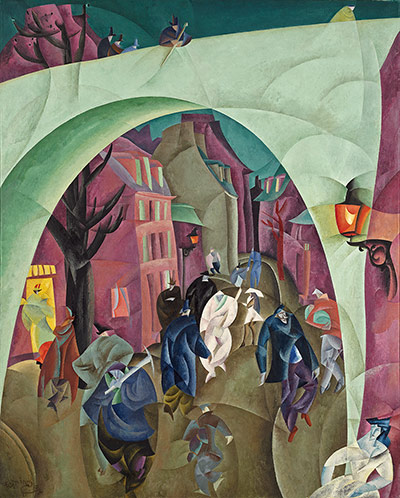
Lyonel Feininger: The Green Bridge II
The Green Bridge II, painted in 1916, is another example of Feininger's pre-Bauhaus period.
Photograph: North Carolina Museum of Art, Raleigh/MMFA
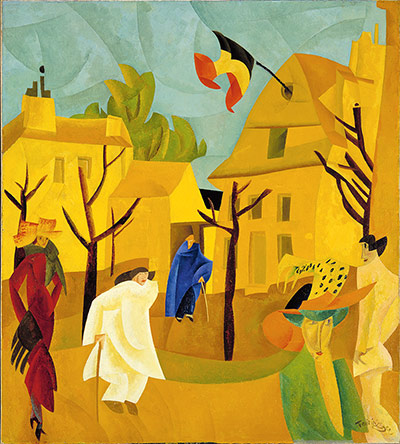
Lyonel Feininger: Yellow Street II
Yellow Street II, painted in 1918. Like the Jesuits series of the same era, the lively colours of Yellow Street II contrast with his Gables series, where Feininger often eschewed the colours of expressionism in favour of greys.
Photograph: MMFA
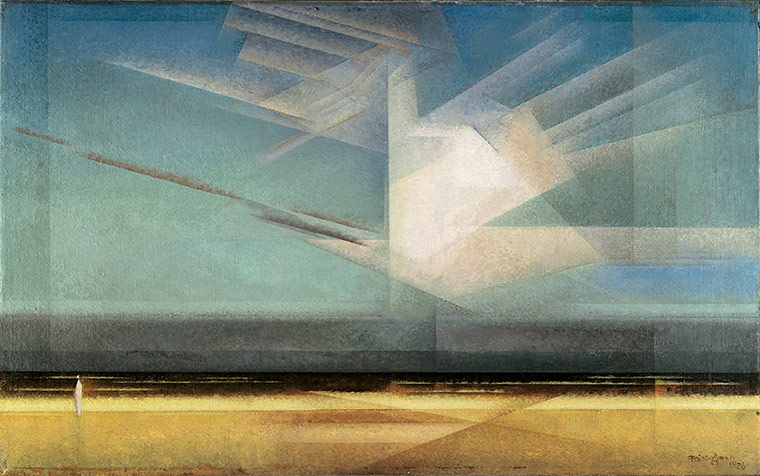
Lyonel Feininger: Bird Cloud
Bird Cloud, painted in 1926. By now Feininger had become a leading light in the Bauhaus movement. His works at this time were often inspired by architecture or nature.
Photograph: Harvard Art Museums/Busch-Reisinger Museum/MMFA
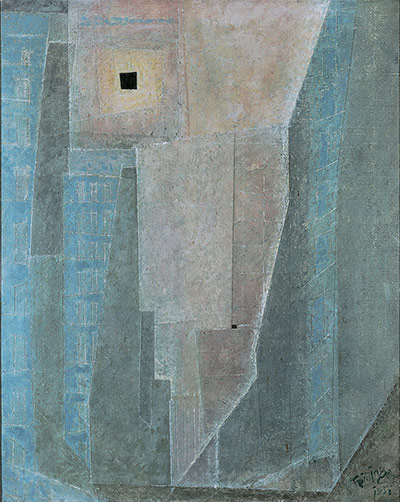
Lyonel Feininger: The Spell
The Spell, painted in 1951. The rise of Nazism saw Feininger return home to New York in 1937, aged 66. During the 1950s he painted mainly Manhattan streets, bridges, trains, steamships and sailing boats using watercolours and oils.
Photograph: Collection of Geraldine S Kunstadter, courtesy Moeller Fine Art, New York-Berlin/MMFA

Sign up to read this article
Read news from 100’s of titles, curated specifically for you.
Already a member? Sign in here
Related Stories
Top stories on inkl right now
One subscription that gives you access to news from hundreds of sites
Already a member? Sign in here
Our Picks
Fourteen days free
Download the app
One app. One membership.
100+ trusted global sources.