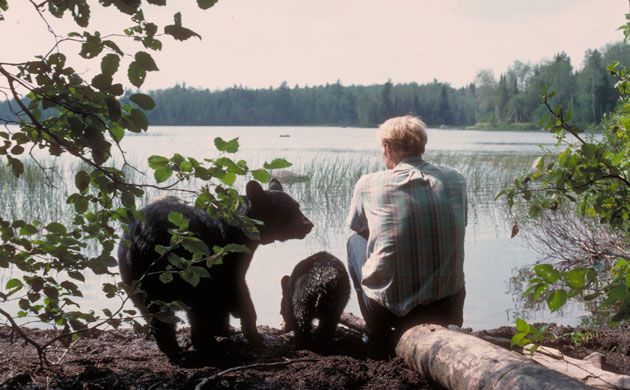
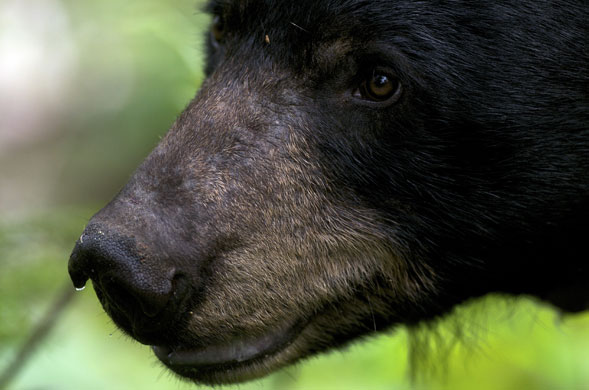
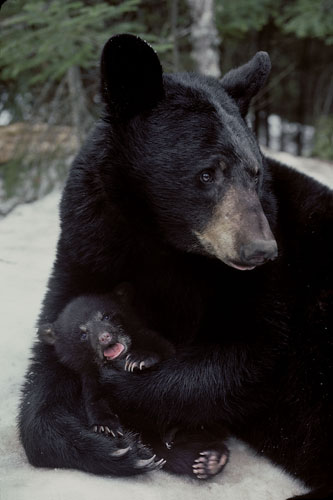
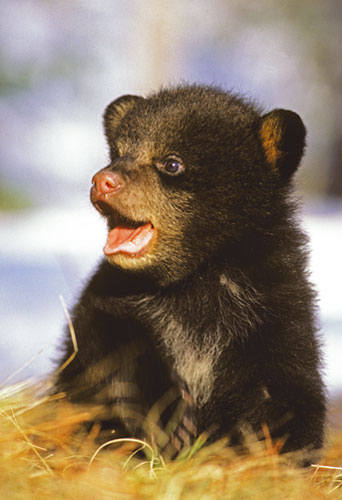
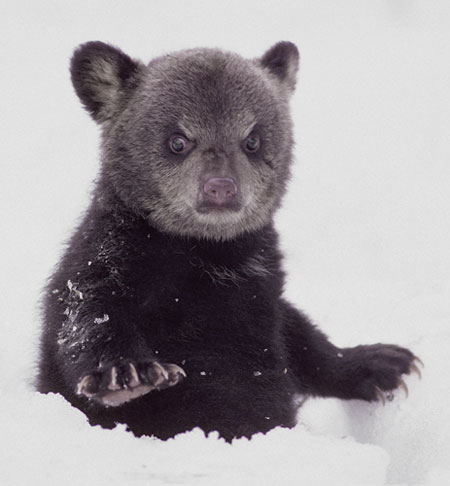
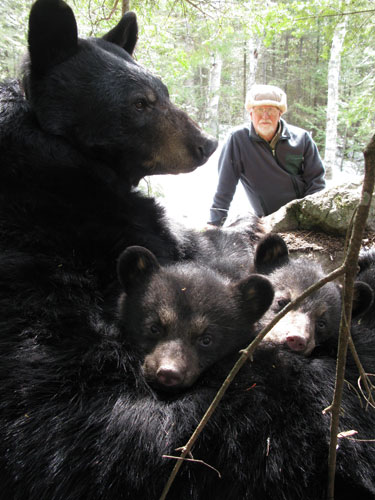
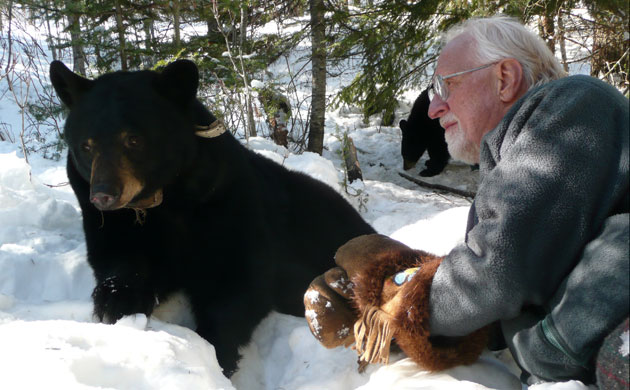
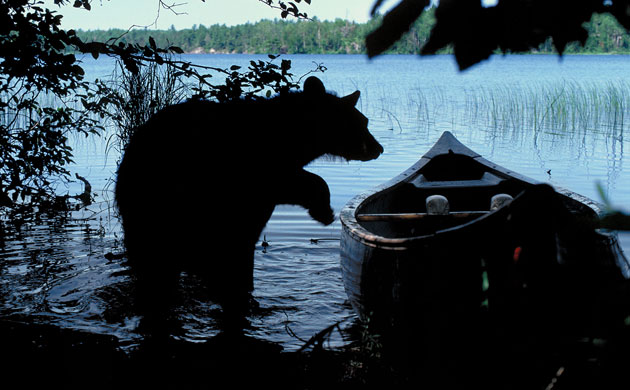
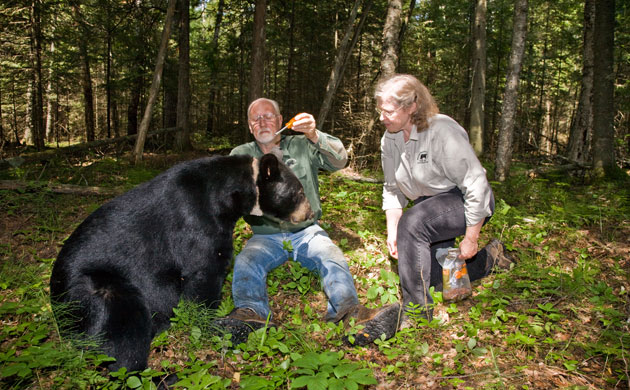
In the forests of northern Minnesota, biologist Lynn Rogers uses food to gain the trust of wild black bears - a controversial technique. Following the fortunes of mother bear June and her three cubs over a year, the film reveals an intimate portrait of the lives of black bearsPhotograph: guardian.co.ukBy bribing his study animals with food, Rogers convinced them to accept his presence and was able to observe them close-up. This has given him an insight into the animals’ social organisation and he has been able to explode myths about them. Contrary to popular belief, he contends that they are not violent and they do not like honey, for example Photograph: Tim MartinRogers realised he couldn’t hope to know bears unless he got closer to his subjects and won their trust. And so he abandoned scientific detachment and set out to form relationships with his study animals, using food as an entree to an extended bear family in the Northwoods of MinnesotaPhotograph: Lynn Rogers
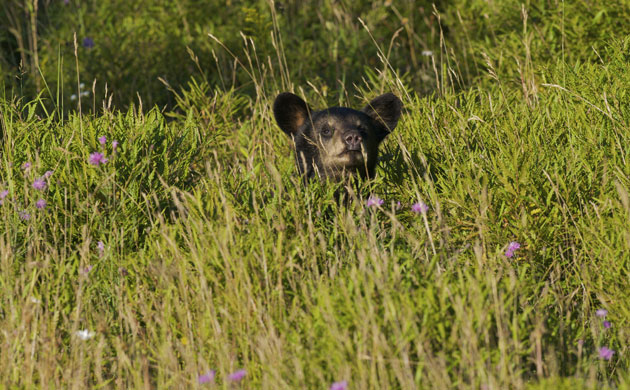
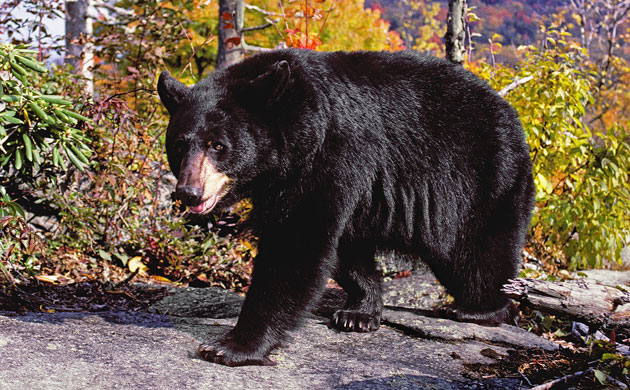
The film-makers have shot the first footage of bears mating and they got close enough to record wild bear cubs purring while suckling Photograph: Lynn RogersThe bears that Rogers knows are timid creatures. Defensive postures, such as swatting their large paws on the ground, are mistaken for aggression by many peoplePhotograph: Lynn RogersRogers says that in all of his years of close proximity to the animals he has never been seriously hurt even though in his early years he displayed what he calls “bad bear manners”Photograph: Lynn Rogers'In my 42 years of working closely with bears and testing every no-no, I have not found a way of getting a bear to attack. The more I push them the more they try to get away. They might want to nip and slap, but it is not an attack, it is just a way of fending me off so they can find a way to escape,' he saysPhotograph: David WrightRogers had logged thousands of hours studying North America’s black bears. He had shot them up with tranquilisers before fitting them with ear tags or radio collars. He had drawn their blood and mapped their DNA. And he had tracked their movements with pins on maps. But none of that had allowed him to really know the bearsPhotograph: Tim MartinRogers’ methods have made him controversial with fellow bear researchers, who say that feeding the animals runs the risk of changing the very behaviour scientists want to study. “We want to understand how they behave and operate in a natural ecosystem. And feeding them - to my way of thinking - kind of disrupts that so it’s not an approach we use,” said Tim Ginnett, an associate professor of wildlife who has been working at the University of Wisconson-Steven’s Point black bear research project for the last nine yearsPhotograph: Lynn RogersJune is Rogers’ most prized research subject and the source of much of his knowledge about bears. 'June in her eight years has become ever more trusting. You can see how she is not wary of me at all. She is completely trusting,' says Rogers Photograph: Ted OakesIn the years Rogers has tramped through the Northwoods he has abandoned just about everything he knew, or thought he knew, about bears. They do not like honey. They are not even that crazy about berries or nuts – provided, of course, there is a nice rich stash of ant larvae in the vicinityPhotograph: Lynn RogersThe film opens with Rogers – a lean, white-haired man who is now 70 – hiking through the woods of north-eastern Minnesota about to commit what most North Americans grow up believing is one of the cardinal sins of outdoor life: drawing within a paw-swipe of a mother bear and her cubsPhotograph: Ted Oakes
Sign up to read this article
Read news from 100’s of titles, curated specifically for you.