As it attempts to reckon with the rising tide of state laws giving college athletes the right to capitalize on their name and image, the NCAA has contorted itself into knots trying to apply restrictions without coming off looking like a villain.
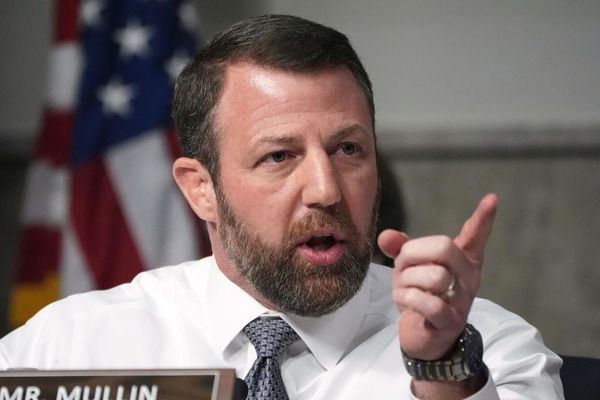
Thursday, in a webinar hosted by the Knight Commission on Intercollegiate Athletics, Tom McMillen, the former Congressman and basketball star now the head of a lobbying organization that represents athletic directors, just went ahead and gave the game away.
"I do think our ADs are very concerned about conflicts and displacement, losing income because it goes to the athlete," McMillen, the president and CEO of LEAD1, said.
Whoa.
Talk about saying the quiet part out loud.
The NCAA has made glorious announcements lacking almost entirely in substance, lobbied hard in Congress for an antitrust exemption and shunted decisions to slow-moving committees, but always under the guise of finding a way to make name, image and likeness rights _ NIL _ work within the NCAA system because it was the right thing to do.
That was the spin, anyway: "Developing fair approaches." Instead of restrictions, "guardrails." One N.C. lawmaker asked whether the NCAA's willingness to adapt was a bait and switch, but there was at least the sentiment that some sort of NIL reform was inevitable and justified.
But McMillen left no doubt what's really going on, while hinting at a growing disconnect between the Power 5 schools and the NCAA itself. NIL may be the splinter that becomes a wedge.
After all these years of profiting off the backs of unpaid athletes, keeping millions upon millions for themselves, schools are pushing back on NIL not because it disrupts the so-called collegiate model, as the NCAA would say _ "student-athletes," a phrase created to avoid worker's compensation laws _ but because some of the money schools are raking in now might actually go to the athletes who, you know, actually generate all that money.
Greed, greed, greed, greed, greed, pure greed, despicable greed.
Unfortunately, one of McMillen's allies in the fight against NIL is North Carolina athletic director Bubba Cunningham, who is not only on LEAD1's board but is the author of a letter to a nonpartisan group that suggests and coordinates legislation nationally, arguing against any grant of NIL rights to college athletes.
Cunningham even told The Athletic this week that he thinks the NCAA should preemptively sue California, the first state to pass a law guaranteeing NIL rights. Similar bills to California's "Fair Pay for Play Act" have been introduced in Congress and in North Carolina.
Cunningham's criticism of current NIL proposals is more nuanced than McMillen's _ he fully supports finding ways to utilize group NIL rights that would create new revenue, like video games or trading cards _ but he does believes this will irreparably damage college athletics as we know it.
"I'm all for more choices for kids, but this financial model for intercollegiate athletics is built on different principles," Cunningham told The News & Observer in an interview. "It only works if you collect the money and spread it among many."
Over the course of his time at North Carolina, Cunningham has typically been one of the more forward-thinking athletic directors in the country, a pragmatist who has moved with fiscal caution in the aftermath of the school's NCAA issues as his peers throw money to the wind, thinking the spigot of TV revenue would never turn off.
When schools started wrestling with the coronavirus pandemic, few athletic directors were as thoughtful about its implications for college athletics at large than Cunningham. North Carolina's COVID-19 return-to-play plan is as comprehensive as any in the Power 5. (That doesn't necessarily mean it will work, but still.)
He never wanted to become the face of the opposition to NIL _ that's what McMillen gets paid to be _ and it's a little jarring to hear him line up on the wrong side of history, even if he believes fighting NIL is necessary for the survival of college athletics.
Over the years, North Carolina has typically had athletes who are more aware, more educated, more sensitive to these issues than most schools. It's going to be fascinating to see if and how they react to their athletic director arguing against their ability to benefit from their most basic rights.
Especially when the NIL wave has yet to crest; it's clear that whether by court or by Congress, athletes are going to be able to monetize their images in some way, shape or form. The NCAA, as an organization, came to that conclusion this winter and has been fighting an organized retreat ever since.
Now LEAD1 is trying to preserve the status quo, with the letter under Cunningham's signature echoing the marching cry. Among other arguments, some of which are definitely worth consideration, the letter at one point makes the same case as McMillen, that money that now goes to schools could end up going to athletes. And in this case, goes as far as to single out the same star athletes who make the most money for the schools.
"In time, it is likely that corporate sponsors will reduce or eliminate broader financial sponsorship agreements with athletic departments in favor of allocating certain money to an infinitesimal percentage of individual student-athletes in the most high-profile sports," the letter to the Uniform Law Commission, first reported by the Associated Press and obtained by the N&O via a public-records request, reads in part. It is co-signed by UNC associate athletic director Paul Pogge and several national groups that represent individual sport coaches in Olympic and non-revenue sports like tennis and soccer.
The argument that non-revenue sports will be hurt if high-profile football and basketball players get some of the money that now goes to schools instead is a tough one to swallow. Cunningham absolutely believes it to be true. But similar things were said about Title IX or cost of attendance, and college athletics has rolled along just fine. Administrators' salaries have never been higher.
No matter what the NCAA may say, claim or pontificate, no matter what Mark Emmert says to Congress, no matter how hard it begs for the antitrust exemption it shouldn't get, we now know what this is really about.
McMillen tore away the shroud, deliberately or inadvertently. It's about what this has always been about: Making sure the athletes who actually generate the money don't get to keep it, and the people who have always kept that money still do.