How Cooper Flagg Saved the Dallas Mavericks has become one of the defining storylines of the 2026 NBA Playoffs, with Dallas now viewed more through the emergence of forward Flagg than through the aftermath of Luka Dončić's departure. The Mavericks' direction shifted sharply after they traded Dončić to the Los Angeles Lakers and briefly attempted to reshape the roster around Anthony Davis, a sequence that ultimately pushed the organisation towards a broader rebuild centred on Flagg, the No. 1 pick in the 2025 NBA Draft.
The turning point came on the night of 1–2 February 2025, when Dallas completed a blockbuster three-team trade sending Dončić to the Lakers in exchange for Davis, Max Christie, and future draft compensation, with the Utah Jazz acting as facilitators to complete salary matching. Finalised late on a Saturday and reported publicly the following morning, the deal reportedly caught figures across both organisations off guard, with Dončić informed only after its completion.
The trade represented one of the most dramatic mid-prime superstar swaps in recent NBA history. Dallas internally framed the move as a shift towards defensive balance and roster flexibility rather than a conventional rebuild, but reaction across the league was sceptical from the outset. Dončić had led the Mavericks to the 2024 NBA Finals and remained widely viewed as the franchise's long-term cornerstone. His exit, particularly without a trade request, fundamentally altered perceptions of the organisation's competitive timeline.
Davis arrived as the focal point of Dallas' new structure, though the fit never fully settled. Injuries and inconsistent availability disrupted continuity throughout his short stint with the franchise, while the Mavericks struggled to establish a stable identity around a roster that still appeared caught between competing timelines. Less than a year after acquiring him, Dallas moved Davis again in February 2026 as part of a broader organisational recalibration focused on long-term flexibility and younger foundational pieces.
How Flagg Saved the Mavs After Davis Fallout
The turbulence surrounding the Dončić and Davis era left Dallas in an unusually fragile position for a franchise that had entered 2025 expecting to contend. The Mavericks oscillated between perimeter-heavy offensive structures and defence-first line-ups anchored around Davis, but neither approach generated sustained traction. By the end of the 2025–26 season, Dallas had fallen to 26–56, missing the play-offs and reinforcing the league-wide perception that the franchise required a full reset.
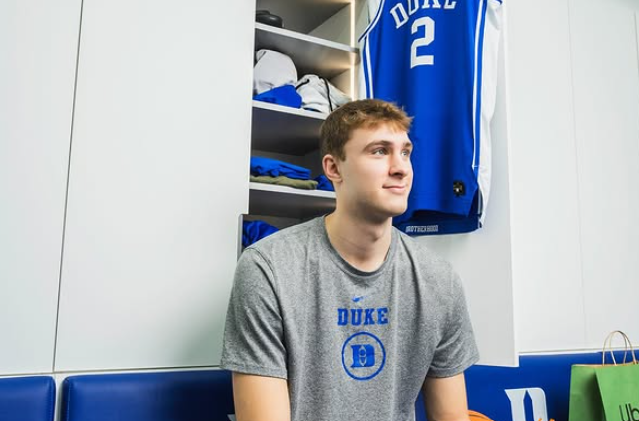
That reset increasingly revolved around Flagg. Viewed by scouts and executives as the consensus top prospect of his draft class, Flagg entered the league carrying expectations normally reserved for established franchise players rather than developmental projects. ESPN reported shortly after Dallas secured the No. 1 pick that the Mavericks had no intention of entertaining trade offers for the selection, with internal discussions quickly converging around Flagg as the uncontested choice.
League executives consistently described him as a franchise reset prospect, the type of player capable of accelerating a rebuild rather than merely fitting into one. That distinction mattered for Dallas. The organisation was no longer searching for a complementary piece; it needed a new centre of gravity.
Flagg's impact has extended beyond raw production. His versatility has allowed the Mavericks to move away from the singular offensive dependency that defined much of the Dončić era, with head coach Jason Kidd at times deploying him as a point forward to expand Dallas' creation options. The adjustment has not always been seamless, but it has given the franchise a clearer long-term direction than it appeared to possess during the final months of the Davis experiment.
Mavericks' New Identity
Dallas has still not fully settled on a definitive structure around Flagg. The Mavericks continue to rotate responsibilities depending on match-ups, injuries and personnel combinations, a reflection of a roster that remains in transition rather than one already built to contend. Yet the broader shift is unmistakable.
The Mavericks are no longer attempting to preserve the remnants of the previous era; they are constructing a different one. That context matters when viewed against the wider NBA landscape. San Antonio's rapid emergence behind Dylan Harper and Victor Wembanyama has intensified scrutiny on franchises navigating post-superstar transitions, while several teams from the 2025 draft class have already accelerated their timelines through immediate rookie contributions. Dallas, by contrast, spent much of the past year recalibrating expectations while searching for structural stability.
Even so, Flagg's emergence has altered the conversation surrounding the organisation. League-wide discussion around Dallas now centres less on the shock of losing Dončić and more on whether the franchise may have recovered faster than initially expected.
For much of the past year, the Mavericks looked caught between timelines, uncertain whether to chase immediate relevance or fully embrace long-term reconstruction. Flagg has not solved every structural issue within the roster, but he has given the organisation something it lacked during the turbulence that followed the Dončić trade — a coherent future.