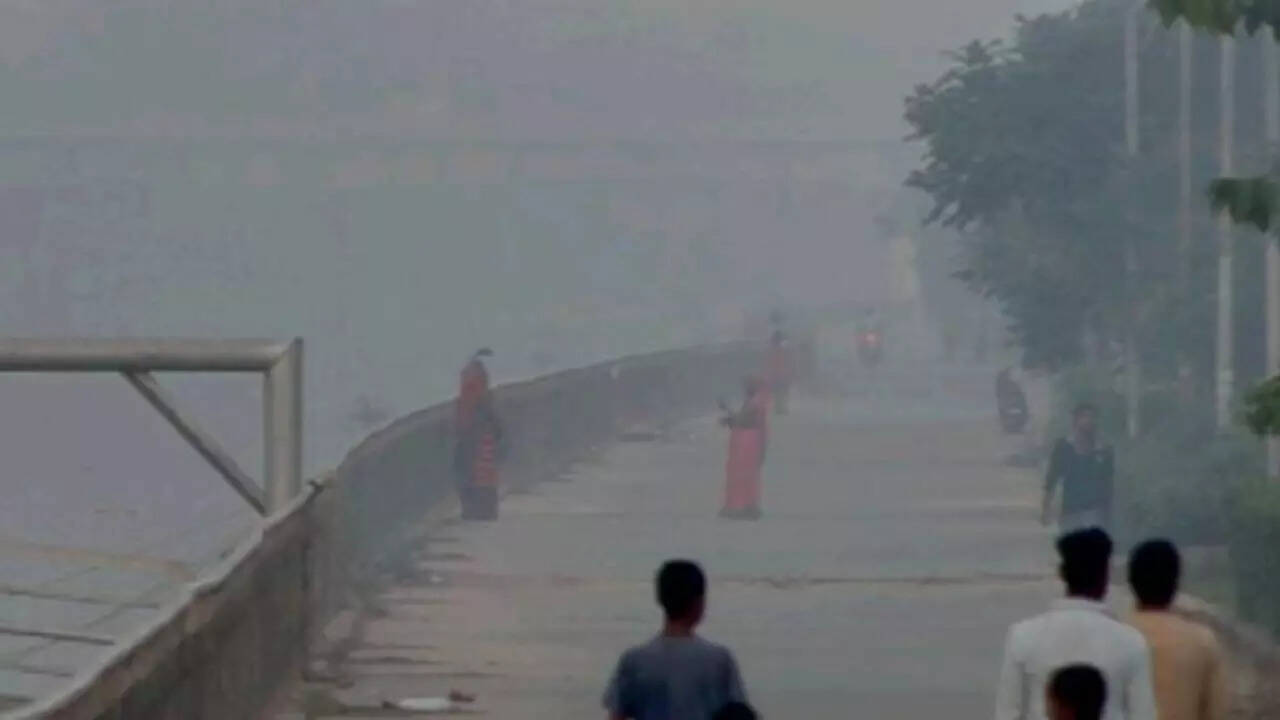
LUCKNOW: Increase in human and commercial activities after the Covid-19 second wave led to a spike in the fine particulate matter, PM2.5 and PM10 pollutants, in the city air this year after monsoon as compared to last year.
Track the pollution level in your city
The PM2.5 and PM10 concentrations were monitored at various locations and found to be above prescribed limits of 60 micrograms and 100 micrograms set by Central Pollution Control Board.
Chowk had most polluted air with both superfine PM2.5 and PM10 concentrations being recorded at the highest among nine major localities — four residential and commercial and one industrial.
This was revealed in the report of the survey ‘Assessment of ambient air quality of Lucknow city, post-Monsoon 2021,’ conducted by the CSIR-Indian Institute of Toxicology Research, released on the institute’s annual day on Monday.
“Increase in vehicular load, ongoing construction, garbage and crop residue burning, and drop in temperature have taken a toll on air. Air pollution levels witnessed a bigger increase after monsoon this year,” said chief scientist G C Kisku, who led the survey.
Among residential areas, PM2.5 concentration was the highest in Gomtinagar at an average of 82.8, followed by Aliganj (76.2), Vikasnagar (75.3) and Indiranagar (63.4).
In commercial areas, Chowk recorded PM2.5 concentration of 97.8 micrograms — the highest among all categories — followed by Charbagh (86.2), Alambagh (68) and Aminabad (63.4).
Last year, post-monsoon PM2.5 concentration was in the range of 49.5 to 90.6 micrograms, while this year it ranged from 25.7 to a maximum of 199.4 micrograms.
Meanwhile, the highest PM10 concentration in residential areas was recorded in Vikasnagar (140.9), followed by Aliganj (131.6), Indiranagar (123.6), and Gomtinagar (115). Among commercial areas, it was highest in Chowk (217.8) followed by Aminabad (195.7), Alambagh (163.3) and Charbagh (159.4).
Last year, the PM10 concentration during this period ranged from 91.4 to 130 micrograms, while this year it hovered between 67.5 and maximum of 313.5 micrograms.
“Scientific evidence shows that both long and short term exposure to fine particulate matter can cause premature death, harm the cardiovascular system, increase hospital admissions and emergency department visits for heart attack and stroke,” said Kisku.