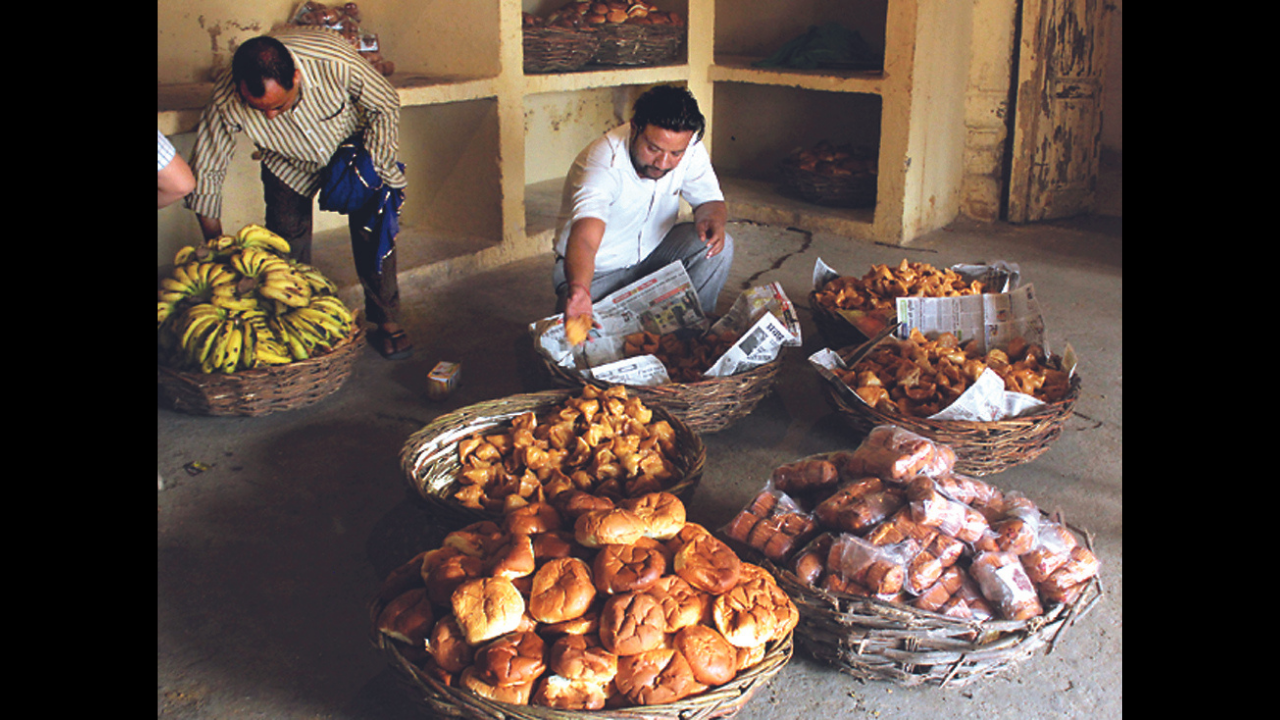
LUCKNOW: After a two-year lull following the Covid-19 pandemic, the fire at the about 183-year-old Nawabi kitchen at Chhota Imambara is finally to be rekindled this Ramzan.
The Nawabi tradition of providing Iftari — meal served in the evening to rozedars to break their day-long fast in Ramzan — at 13 mosques under the Husainabad and Allied Trust (HAAT) and distribution of food to about 600 poor families had been lying defunct since Covid took over normal life in 2020.
Iftari prepared at the ‘Shahi Bawarchikhana’ (royal kitchen) is sent to 13 mosques including Asafi Masjid at the Bara Imambara, Shahi Masjid at Chhota Imambara, mosque at Shahnajaf Imambara and Jama Masjid in Husainabad among others. Food is handed out to around 600 poor families from the Chhota Imambara at night for 30 days.
The tradition had been halted for the Ramzans of 2020 and 2021, but this year a tender inviting interested individuals or companies to provide food for the activity has been floated, which will be opened on April 1.
The month of fasting is expected to begin from April 3 this year. Established in 1839 by the third king of Awadh, Muhammad Ali Shah, as the Husainabad Endowment Deed, 3,000 poor families have been continuously fed under the trust fund put in by the king. “The tender has been floated this year. Back in 2019, a budget of Rs 19 lakh had been passed to be used from HAAT — the king’s ongoing trust,” said Habibul Hasan, an official in HAAT. Iftari includes bun-butter, patties, samosa, cake, pakodas, chips, fruits etc, while the food given out at night includes 2 tandoori rotis and daal or an Awadhi delicacy called ‘taley hue aaloo ka salan’ alternatively for three days at a stretch.
Prior to the two-year halt, everyday from 8am the kitchen would be abuzz with activity and by 4-4:30pm, the first batch of Iftari was sent out to the mosques so that by the time the fast had to be broken, the mosque officials could arrange the food in neat rows laid out for rozedars.
In 2015, however, the tradition had received a hiccup for 12 days. A movement against alleged corruption in the UP Shia Central Waqf Board had stopped the process. Protesters had locked the entrance to the Imambara and thus its kitchen
Protesters had locked the entrances to both Bada Imambara and Chhota Imambara, restricting all entry, including the kitchen which was later restored.