It will be another three to five years of living with Covid. The game plan for reopening borders has to be based on more than just luck, warns Sir Brian Roche.
In March, Covid Response Minister Chris Hipkins announced a real-time advisory group to help the Government continually improve its response and systems.
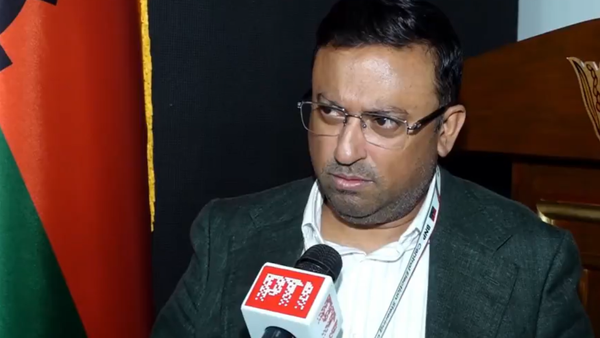
Sir Brian Roche chairs the group, which also includes Rob Fyfe, Dr Debbie Ryan, Professor Phillip Hill and Dr Dale Bramley.
Speaking to Newsroom, Sir Brian said it was regrettable the group had been sold as “real-time’’ from the get-go, because the reality was that it took time to set up a group, establish terms of reference, complete work and then report back.

“What [Hipkins] said about real-time is still his very strong preference, it’s the message we get from him as well.
“The issue we’ve faced is announcing the group is all well and good, but setting it up and starting a work programme takes time, and we regret that framing of it,’’ Roche said.
As such, since the group was set up three months ago, there has only been one report delivered to Hipkins – a review of what went wrong with February's Valentine’s Day cluster.
That report is still with Cabinet and yet to be released, although some of the recommendations have, and are, being adopted already.
Roche told Newsroom they didn’t find any major issues with how that community outbreak was dealt with, but there was “scope for improvement’’.
The criticism at the time was whether health officials had been clear about who at Papatoetoe High School needed to stay home and be tested, and the Prime Minister’s public comments about a student who said she didn’t know she was meant to be isolating.
Roche said for the most part the system performed well in that it “achieved an outcome and allowed us to get back to normal reasonably quickly’’.
“The lessons are around communication, maintaining simplicity, focusing on high-risk groups – particularly Pasifika.
“We didn’t find any major failing, but we have identified useful areas for improvement.’’
He said one of those areas was health officials acting more quickly when they couldn't get hold of contacts and physically going out and knocking on doors much earlier than what happened in February.
“The system has served us well; we’re learning by doing. We weren’t trying to find mistakes or gotchas with the review, we were genuinely trying to find where we could improve,’’ Roche said.
A key recommendation from the group was to ditch the new terms – casual plus and close plus – which were introduced during the cluster.
While medical professionals had always used them, they hadn’t been introduced publicly until February and ultimately, they confused those caught up in the community outbreak.
Roche said it’s a “balance between highly-technical accuracy and simplicity, and we’re much more attracted to simplicity’’.
Now that Roche’s team had delivered that review, he said the real-time aspect could begin, which would be more about informal observations and recommendations
“Everybody needs a bit of luck, but luck isn’t a strategy. We need to have a system that holds up.'' - Sir Brian Roche
The focus of the group now shifts to the future and what systems the country needs to have in place to reopen to the rest of the world.
“If we think about a future world, and what’s happening overseas, there’s going to be an inevitable relaxation of the borders.
“Once we’re living in a post-vaccine world it will allow greater freedoms, so what system do we need to have in place that will keep our elimination strategy intact but expose us more to the rest of the world,’’ Roche said.
The advisory group plans to tackle all elements of the Covid response over the coming months and assess what work needs to be done to ensure they hold up once borders relax.
“Everybody needs a bit of luck, but luck isn’t a strategy. We need to have a system that holds up,’’ he said.
“The minister is wanting us, over a two-to-three-week cycle, to look at key elements and give insights as to how we can improve.
"He doesn’t want big, large reports that take forever – he’s looking for a much more interactive system."
That means Hipkins will now start getting regular monthly updates on the group’s observations on whatever area it's reviewing at the time.

First cab off the rank this month is looking at how the border operates.
Roche said international examples would also feed into the work. For example, how Israel is performing and “if you’re vaccinated do you get across the border automatically or still have to go into quarantine’’.
Prime Minister Jacinda Ardern posed that question and whether the whole country would need to be vaccinated before opening the border in her pre-Budget speech earlier this year.
That work is being done by the likes of Professor David Skegg, the Prime Minister's chief science advisor Professor Juliet Gerrard, and now Roche and his peers.
There’s a lot of crossover between the groups and they all have different components they’ll focus on.
Roche said his advisory group would eventually do a full stocktake of the capacity of every element of the system, from the border to testing to contact tracing.
“The vaccination programme is fundamental to anything we do and the success of that programme affects our work and our success.’’ - Sir Brian Roche
The current system was set up in response to a crisis, but Roche said there were many parts of it that would remain important in the future even when borders are open globally.
“Covid will be with us for another three-to-five years potentially, so what’s the nature of the system and associated infrastructure that we need to have to allow greater freedoms at the border.’’
Roche said he’d been frank with Hipkins that this was the work where the advisory board could “add the most value’’.
“We are dealing with a situation that is not static, it’s extremely dynamic.’’
The ever-increasing number of new variants of Covid were also of concern and the Government’s response “has to remain really open to all of these variants continuing to evolve’’.
“This is an extremely difficult situation to manage because we don’t know what we don’t know,’’ he said.
While the vaccination rollout was well-advanced before Roche’s group started its work, he said it was part of the “eco-system’’ they’re working within.
“The vaccination programme is fundamental to anything we do and the success of that programme affects our work and our success.’’
He said for all the commentary of what had gone wrong with the rollout, “there's an awful lot that has gone right’’.
“The key issue for the vaccination programme is maintaining the trust and confidence of the public.’’
Roche believes that’s being achieved, and the public is satisfied everyone will receive a vaccination by the end of the calendar year.