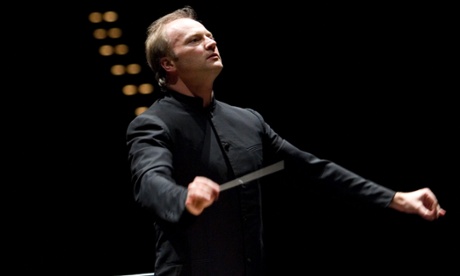
While speculation continues over whether the London Symphony and Simon Rattle will eventually get things together and set a date for their relationship to be formalised, the orchestra also seems to be strengthening its ties with Gianandrea Noseda. The Barbican certainly gets to see more of Noseda nowadays, and his latest appearance there with the LSO demonstrated what a formidable and effective combination they make.
Mahler’s Sixth Symphony dominated the programme, and what can be one of the most intimidating of all symphonic edifices was given a sense of total lucidity and purpose. Noseda’s approach – never indulgent, always rhythmically taut – perfectly conveyed the sense of its four-movement classical proportions, even with the orchestral apparatus such a vast one, and the music operating over such a span of time. The first two movements were run together with hardly any break between them, so that the scherzo became a manic, dark intensification of the opening, and what followed after – the Andante and the huge finale – could effect its own kind of resolution. The much-derided Barbican acoustic came into its own, too, proving ideal for Noseda’s crystal-clear exposition of the teeming inner workings of the score, with its hugely imaginative doublings and touches of colour, especially from the bass clarinet and the celesta.
Before the symphony, Alice Sara Ott had been the sparky, intelligent soloist in Liszt’s Second Piano Concerto, doing her very best not to turn it into a sequence of show-off pianistic tricks, or to make it seem more grotesque and bumptious than it really is. Even if he could not make the single-movement concerto an entirely likable piece, she did conjure some pristine quiet playing out of it, making its more rampaging moments as elegant as possible. Her duet with the LSO’s principal cellist Rebecca Gilliver in the third section was the quiet high point.