The sun broke from behind the heavy wall of cloud just as I reached the top of the lane. Shafts of light roamed like theatre spotlights across the hills beyond the river, the clouds driven by the strong south-westerly breeze. Despite this being the first bright day for a while, it was bitterly cold – the raw, desolate cold that comes with what an old friend used to call a “lazy wind”: a wind that goes straight through you rather than bothering to go around.
The steep, sheltered beech woods of Coed y Cwm were almost silent apart from the sound of falling water. The overnight rain, squally and intense, was draining rapidly through the woodland from the fields above – swelling the usually unimpressive stream into a torrent with organic debris, and an occasional bottle, entrained within it.
A group of wood pigeons took panicked flight as I approached, the beating of their wings seeming disproportionately loud in an acoustic softened by years of accumulated leaf-fall.
Beyond the old quarry, overgrown and with sweeping curtains of ivy hanging across the rock face, the path drops down towards Clarach. In a few months, the now almost bare soil at the margins of the track will be once again filled with the succulent, if pungent, foliage of the wild garlic and its delicate, almost sculptural, flowers. As I approached the western edge of the wood the insistent roar of the surf from Clarach Bay began to build.
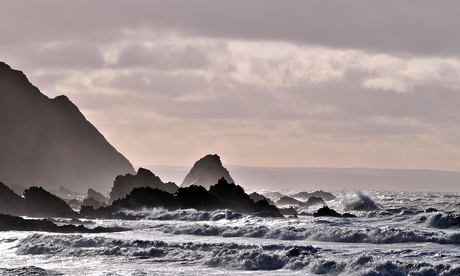
I discovered that I had the entire beach to myself, a rare and unexpected treat. The low, winter sun backlit the waves as they pounded in from the Atlantic, illuminating the confused peaks of water and foam that reared violently as broken water was deflected by the rocks. To the west, new banks of dark cloud hung ominously on the horizon. As I headed south along the cliff path towards Aberystwyth the day faded, shadows softening and losing their definition until, standing above the town, only the bright yellow of the gorse flowers remained as a token of the earlier brilliance.
Follow Country Diary @gdncountrydiary