
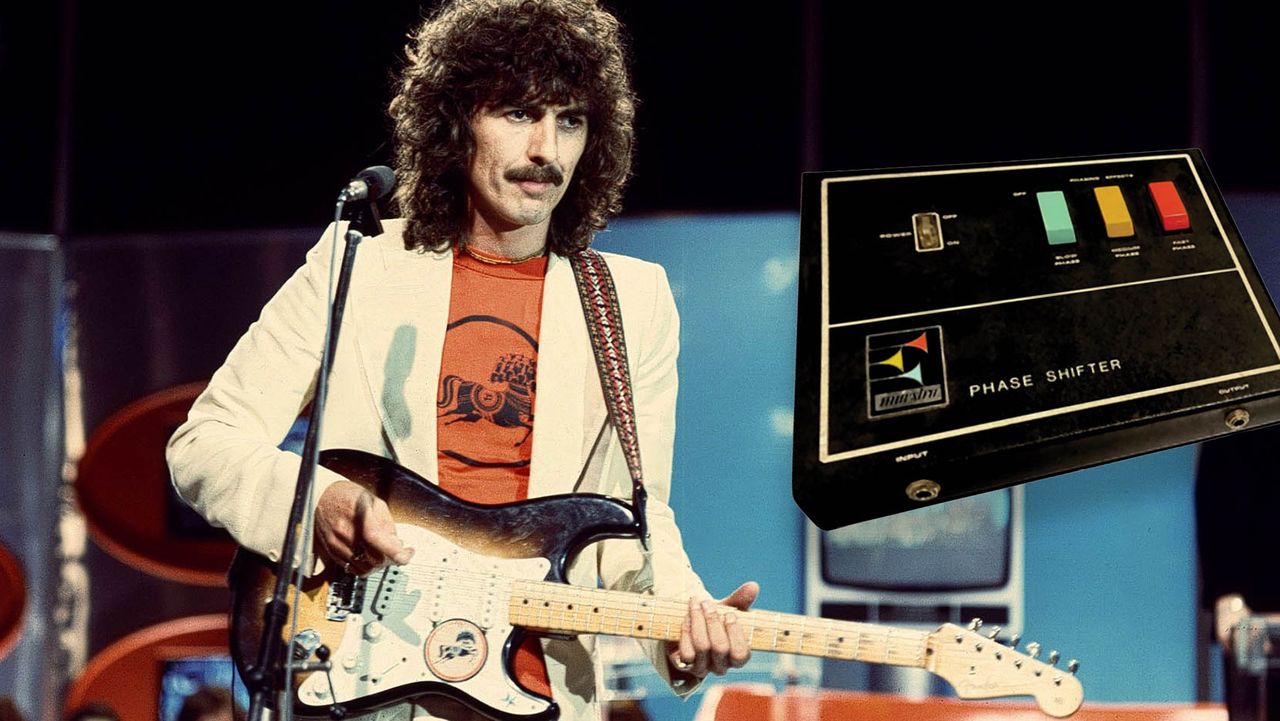
During the late ’60s, Tom Oberheim earned notoriety among Los Angeles musicians for the ring modulators he built for everyone from the experimental electronic psychedelia band the United States of America to film composer Leonard Rosenman, who used Oberheim’s ring modulator on the soundtrack for 1970’s Beyond the Planet of the Apes.
By 1969, Gibson’s Maestro division contracted Oberheim Electronics to build his ring modulator for them, which was marketed as the Maestro RM-1A.
The ring modulator had limited appeal to the masses (especially after the U.S. government outlawed LSD in 1970), but Oberheim’s follow-up was an incredible success – the PS-1 Phase Shifter, introduced in 1971.
The PS-1 technically wasn’t the first phase shifter on the market (the Shin-ei/Univox Uni-Vibe preceded it by four years), but it was the first effect unit called a “phase shifter” as well as the first to produce the steady rising and falling sweep effect that musicians now recognize as the standard phase shifting effect.
Oberheim designed the PS-1 as a compact substitute for a Leslie rotating speaker cabinet for keyboardists. As a result, it was housed in a rather large, boxy enclosure with only three large rocker switches on the top panel for selecting slow (blue), medium (yellow) and fast (red) sweep speeds.
One especially cool characteristic of the Maestro phase shifter effect is how the LFO speed ramps up or down to the selected rate (similar to the mechanical function of a Leslie) instead of changing abruptly. The unit itself had no bypass switch, but an optional foot controller provided bypass/slow, medium and fast footswitches.
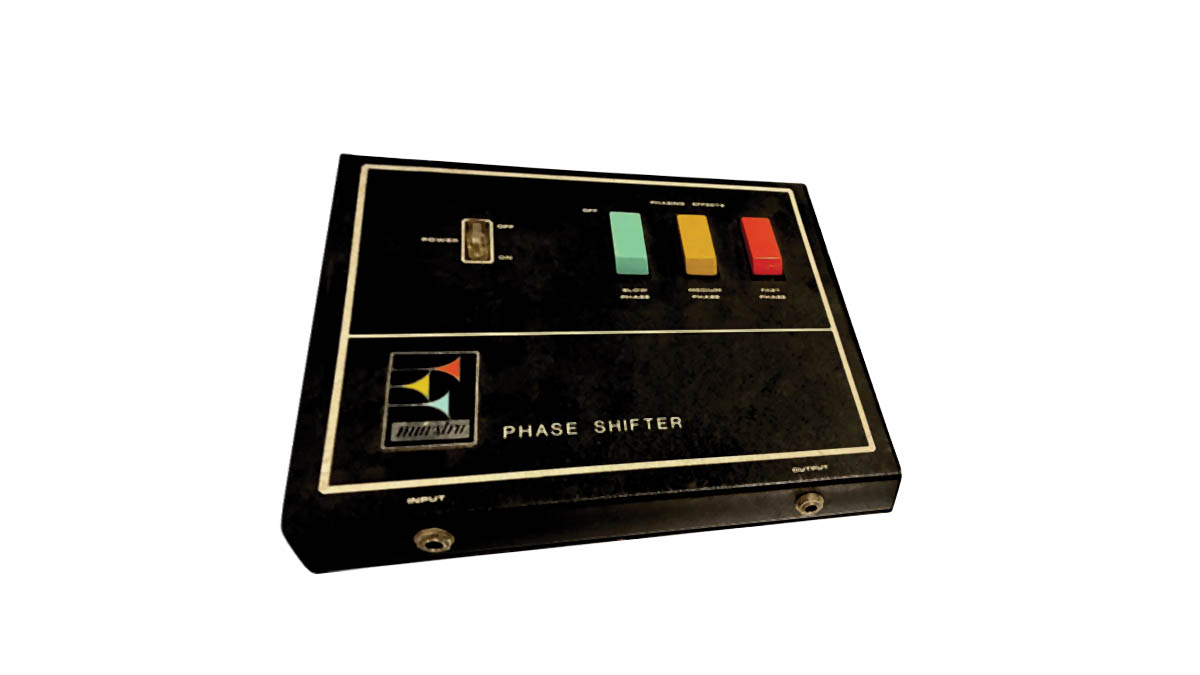
Despite its bulky, keyboard-centric design, the Maestro Phase Shifter quickly gained popularity with guitarists, who were mesmerized by the deep, trippy swirling textures produced by the six-stage circuit where six JFETs provide a cascading all-pass filter network.
Maestro produced three different versions of the Phase Shifter — the PS-1, PS-1A and PS-1B. The PS-1A is basically an improved version of the PS-1 that fixed a flaw with the input buffer amplifier that produced popping noises.
The PS-1B features a variable speed knob, which is a very useful upgrade, but because this version was introduced near the end of Oberheim’s contract with Maestro these units are very rare and command significantly higher prices on the vintage market.
Maestro sold an estimated 60,000 units to guitarists and keyboardists alike during its brief four-year lifespan. When smaller phase shifter pedals emerged around 1974 that were much more guitar rig-friendly, the bulky Maestro unit was soon rendered obsolete.
It still sounds great today and is great for studio applications
However, it still sounds great today and is great for studio applications. If you don’t want to bother with a vintage unit, Heptode Virtuoso replicates the Maestro’s vintage tones for players who want a modern pedalboard-friendly update.
Some of the most dedicated early fans of the Maestro Phase Shifter included Ernie Isley, who ran an Electro-Harmonix Big Muff in front of his to create the synth-like lead tone on Isley Brothers classic That Lady; Alex Lifeson, who used his Maestro on the first four Rush albums up to and including 2112; George Harrison, who plugged into a PS-1A on his Extra Texture and Thirty Three & 1/3 albums; Waylon Jennings on numerous mid-’70s outlaw country singles, plus John Cipollina, Steve Howe and Terry Kath.
- This article first appeared in Guitar World . Subscribe and save .