Within the next 50 years, some of the most diverse plant populations in Louisiana’s coastal wetlands could be lost as sea levels rise and flooding and saltwater intrusion increase, according to research published in the journal Restoration Ecology.
Get breaking news anytime, anywhere. Download the TOI app now!
According to the study published in Restoration Ecology, projections indicate a near-total loss of high-elevation salt marsh communities at the sampled Louisiana coastal sites within the next 50 years. The researchers conclude that maintaining natural hydrological connectivity and a range of elevations should be incorporated into future marsh restoration projects to improve long-term marsh health and persistence.
Uncertain future for high marshes
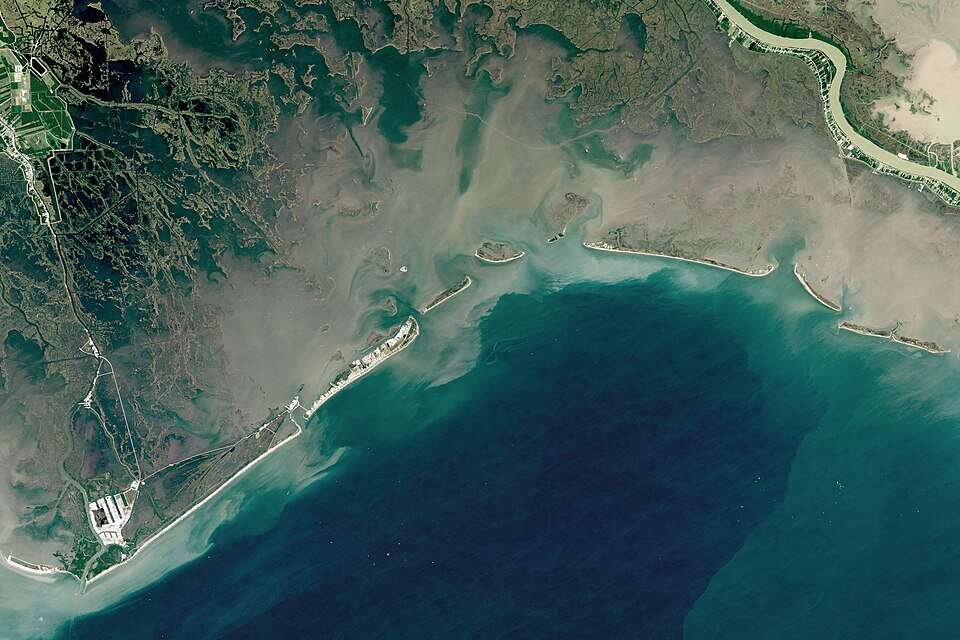
Scientists from Nicholls State University and the US Geological Survey assessed eight sites of marshes in the Barataria and Terrebonne basins of Louisiana. They analyzed the vegetative cover, soil properties, elevation, and flooding regime at these locations, followed by applying models to predict the development of these ecosystems over the next 50 years.
As per the study published in Restoration Ecology , the most critical parameters that would determine the survival of plant communities were inundation, or the period of time when the land is submerged in water, and soil salinity. Both are expected to grow because of the rise in sea levels in coastal Louisiana.
The paper reports that inundation was the strongest single control on future plant survival, with higher salinity adding further stress as sea level rose. Using eight marsh sites in the Barataria and Terrebonne basins, the authors combined vegetation, soil, elevation, and flooding data in predictive models and found that the vegetation most likely to persist was tied to the least frequently flooded, least saline conditions. The scientists predicted that the communities of high-elevation salt marshes would vanish almost completely from the sampled locations in the coming 50 years.
The importance of these wetlands
According to NOAA Fisheries , salt marshes are amongst the world’s most productive ecosystems. They protect against storm surges during hurricanes, store carbon, improve water quality, and create habitat nurseries for commercially viable marine life.
As per the I ntergovernmental Panel on Climate Change (IPCC), coastal wetlands are now under threat from accelerated sea level rises as a result of climate change. This makes both the ecosystems and neighboring communities more vulnerable. Louisiana is known to be one of the most vulnerable coastal regions in the world. Wetlands within the state have been declining in size for years due to sea level rise, subsidence, changes in the river system, and human activities.
Previous studies published in Nature Climate Change have revealed that Louisiana is experiencing some of the highest rates of relative sea level rise anywhere in the world, measuring an average of 12 millimeters annually.
In the study, the authors showed that these hotspot rates are not uniform across the state: the fastest relative rise occurs in southern Louisiana, where subsidence compounds ocean rise and can push local water levels up by more than a centimetre each year. They noted that this helps explain why marsh loss is so severe there, because the land is sinking almost as fast as the sea is rising.
Restoration programs may require reconsideration
In the words of the authors, many of the restoration programs are able to generate new lands but might inadvertently restrict the flow of water naturally.
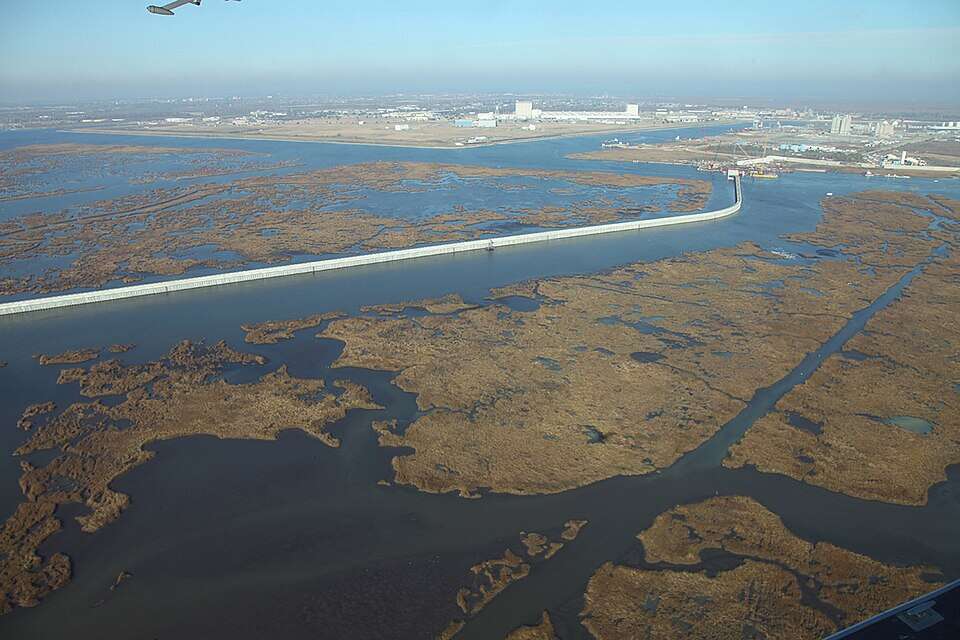
Many restoration sites use earthen barriers to retain dredged sediment while creating new marsh. If those barriers stay mostly closed, tidal exchange can drop, water can stagnate, and plants can face prolonged flooding or sudden saltwater intrusion during storms. The paper says that a restoration project should aim to ensure hydrological connectivity, which will allow tidal water to flow freely between the marshes and the water bodies around them.
According to the research team, maintaining varied elevations within restored wetlands can provide refuge for flood-sensitive plants.
Small changes in elevation make all the difference
Another one of the major findings of the study is that small variations in elevation can foster completely new plant communities.
Higher elevations tend to support a wider variety of vegetation because they stay above water longer and face less salinity stress. As the sea level rises slowly and steadily, and elevated areas start becoming flooded, the unique plant communities living in such areas will be replaced by flood- and salt-tolerant species. The study found that areas with larger elevational gradients have greater ecological diversity.
Implications beyond Louisiana
While the study concentrated on Louisiana, its results can be extrapolated to other coastal restoration projects all around the world.
According to the USGS, healthy coastal wetlands act as a natural barrier against storms while providing habitat and storing carbon. The acceleration of the rate of rising water levels caused by global warming makes it critical to use restoration methods which would take into account the future environmental conditions. The authors argue that the restoration project must not be limited to mere land construction; rather, it must include connectivity with other water bodies and adequate elevational heterogeneity to allow plants to adapt to changing conditions.
Their results imply that any future coastal defenses must incorporate both engineering and biological processes.