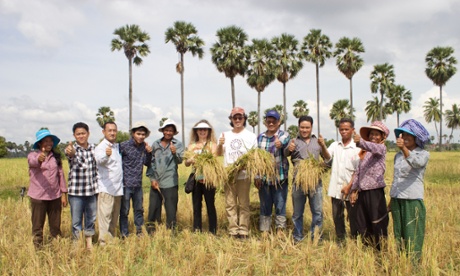
Lotus Foods, a global innovator in the production and marketing of specialty rice, joined the Business Call to Action with a commitment to increase the incomes of at least 3,000 farm households by 2017.
The company is paving the way to market for smallholder farmers in Africa and Asia who adopt the ecological method of rice cultivation known as the System of Rice Intensification (SRI). This helps farmers to grow rice more sustainably to make livable incomes as well as to offer healthier rice choices to consumers.
Established in 1995, Lotus Foods has become dominant in linking marginalized farmers to major markets, having pioneered the introduction of heirloom black and red rice into the United States.
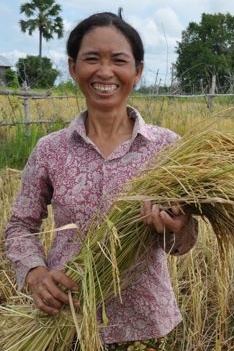
The SRI production method, which is being applied by more than 10 million farmers in more than 50 countries, helps farmers generate surpluses by doubling their rice yields with less water, land, chemicals and greenhouse gas emissions.
Introduction of this growing method to its farmer-producers led Lotus to surpass its early goals and increase the amount of SRI-produced rice it buys from organic-certified farmers in Cambodia, Indonesia and Madagascar. Initially the rice was sold only in bulk, but in 2010 the company launched its heirloom varieties for retail customers.
Suba Sivakumaran, Business Call to Action (BCtA) Programme Manager, said: “Fair trade, organic and healthy products are among the food industry’s fastest growing trends – we are pleased that Lotus Foods has seized the opportunity to improve farmers’ productivity, enhance developing economies and protect the environment.”
Lotus has been an important catalyst for farmers to obtain organic and fair trade certifications, in addition to producing according to SRI methods, in order to earn higher export premiums.
More than 3,000 farming families are now benefitting from the organic and fair trade premiums paid by the company for consumer-friendly products, increasing rice farmers’ incomes by 20% to 40%. In the next two years, the company aims to double the number of these producer farmers to 6,000, and double the quantity of rice imported from SRI farmers.
With its aggressive outreach and a social media consumer education campaign, Lotus rice products are now available in more than 6,000 stores across the US, from small independent grocers to the country’s largest supermarket chains like Whole Foods and Costco. Its rice is also served by chefs in thousands of restaurants and food service venues.
According to Lotus Foods co-founder and co-owner Caryl Levine: “What’s more, we have established a special relationship with Whole Foods, which also has a strong commitment to agro-ecological values. With our partners all along the value chain, we are taking advantage of exciting new consumer trends to increase farmers’ incomes while conserving biodiversity and protecting valuable natural resources.”
For example, in partnership with Whole Foods, Lotus is continuing to innovate new product lines like rice crackers, ramen and other rice-based products, including its Heat & Eat Rice Bowls.
Demonstrating the scalability of small farmer-driven food production, Lotus Foods plans to further expand SRI rice cultivation into India, the Philippines, Thailand and Vietnam.
BCtA is a global initiative that aims to support private sector efforts to fight poverty through companies’ core business. It is supported by several international organizations and hosted by the United Nations Development Programme.
Copy on this page is provided by Business Call to Action, supporter of the role of business in development hub.