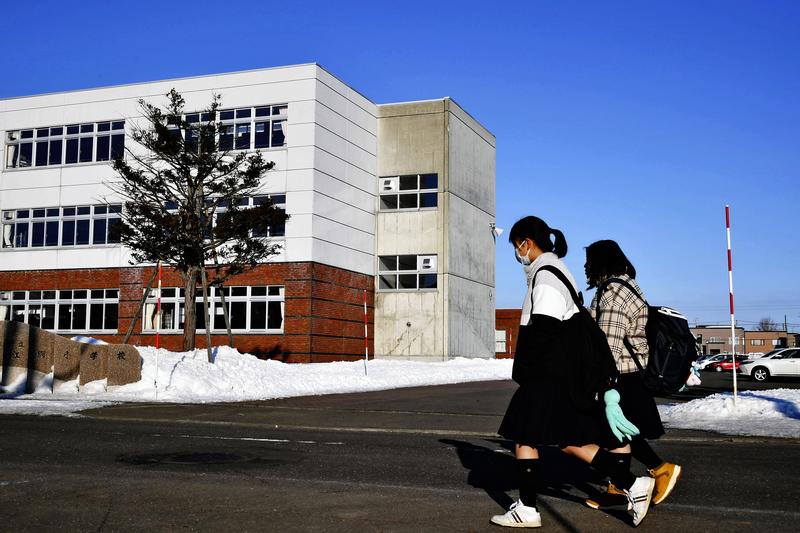
The spread of coronavirus infections has led the central government to ask elementary, junior high, high and other schools across the country to temporarily close until spring break.
However, there are many households where both parents work, and issues associated with the sudden school closures are piling up, such as ensuring places to accept children and students during the daytime and securing necessary classroom hours. Municipalities, schools and parents in various parts of the country are increasingly concerned about the situation.
Real intention
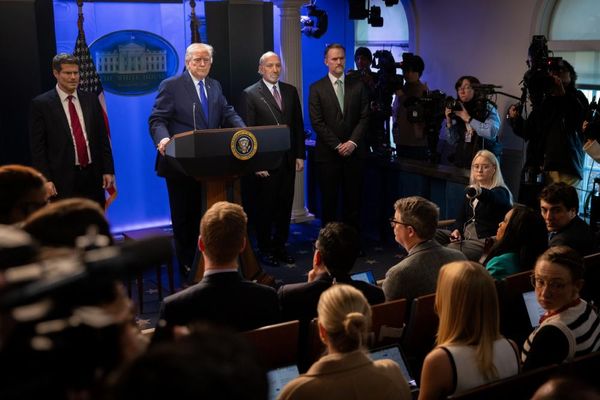
"We give first priority to the health and safety of children, so we should prepare for the risk of being infected as a result of gathering in the same place for long hours on a daily basis," Prime Minister Shinzo Abe said at the end of a meeting of the Novel Coronavirus Response Headquarters held at the Prime Minister's Office on Thursday evening. By saying so, Abe explained the real intention for requesting across-the-board temporary closures of schools.
Because schools are environments where many children congregate for many hours, infectious diseases can easily spread there. In addition, there are numerous possibilities to come in contact with other people, such as visitors, at schools. The government has requested all schools across the nation to temporarily close because "the request indicates the entire government's will to stop the infections," a senior official at the Education, Culture, Sports, Science and Technology Ministry said. However, respective municipalities are struggling with this request.
By Wednesday, 20 people had been confirmed to be infected with the new coronavirus in Nagoya. There have been no reports of infections among students at elementary, junior high and high schools, and the city has not taken such measures as temporarily closing schools.
At the Nagoya municipal board of education, senior officials including the commissioner of education held an emergency meeting Thursday night to discuss how to handle the situation. "We have too much going on and nothing has been decided yet," a responsible official said with a surprised look.
The Nagoya municipal government plans to hold graduation ceremonies at municipal high schools on Monday, at municipal junior high schools on Tuesday and at municipal elementary schools on March 19, while high school entrance exams will begin from Thursday.
"If all schools are closed, it will affect graduation ceremonies, high school exams and other events. We will collect information from Osaka, which has already decided to temporarily close schools, and others to discuss further measures," the official said.
Confusion
In Hokkaido, because many people have been confirmed to be infected with the new coronavirus, the Hokkaido prefectural government has temporarily closed elementary and junior high schools since Thursday. Starting Friday, the Sapporo municipal government was to close about 300 elementary and junior high schools. In addition, the municipal government has decided to close all 200 children's halls that are used after school. The measure has prompted dual-earner households to voice concern.
A 38-year-old company employee in the city who's son is a first-year elementary student, said: "I can't get off work. Because it was a sudden decision, my wife working part-time cannot adjust her work schedule."
Report cards
In the 2009 pandemic of new influenza in Japan, soon after a high school student in Kobe was confirmed to be the first person infected with the flu in May, Hyogo and Osaka prefectures temporarily closed all schools for a week. In the latest case, all schools across the nation are asked to close for about a month until spring break, a longer period of time than in 2009. For that, there are concerns such as children being behind in studies and not recording a sufficient number of school days.
Courses of study determine the minimum number of classroom hours required for each school year.
"The number of classroom hours will significantly decrease, and we do not know whether we will be able to complete all classes. It would be difficult to make up for the shortage," a principal of a municipal elementary school in Tochigi Prefecture said. It is also uncertain how to evaluate children on their report cards. If a school has already collected school lunch fees, it will be a great burden to pay back the fees for March.
"Schools and boards of education need to quickly discuss relief measures such as securing substitute school hours. Schools and parents are required to make sure not to have children go out without a good reason," Yoshio Toda, visiting professor at Meikai University who is familiar with school risk management, said.
On the other hand, Akihiko Saito, a professor of pediatrics at Niigata University, said: "While there are regions that have no people infected with the virus, closing schools has little scientific grounds as a measure to prevent infection. How will children spend about a month from now? If places that accept children are closed, it will impose a great burden on parents, and so it will have a considerable impact on the whole of society."
Read more from The Japan News at https://japannews.yomiuri.co.jp/