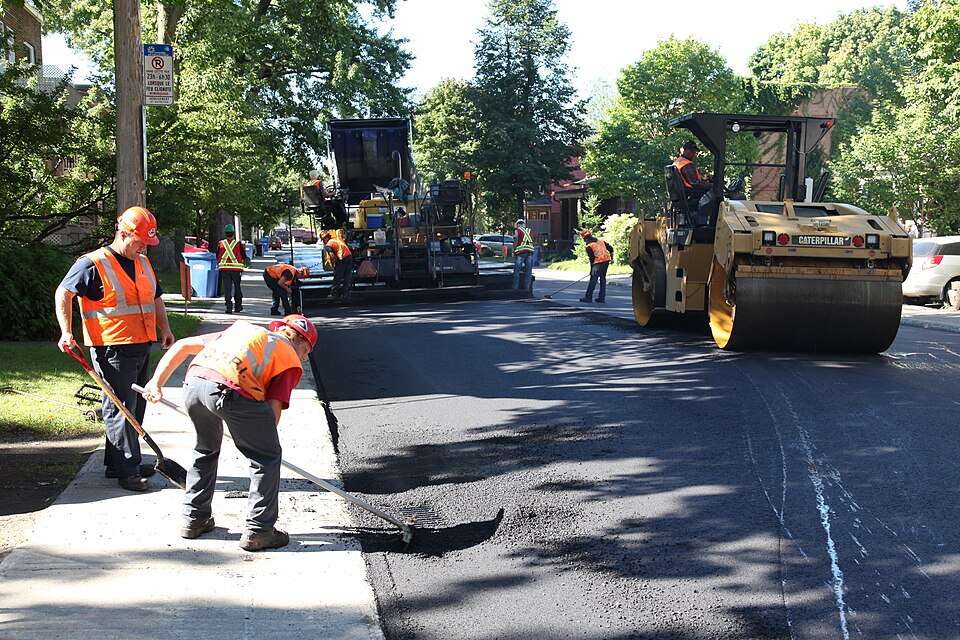
In one of Los Angeles's hottest neighbourhoods, more than 700,000 square feet of dark asphalt was covered with a solar-reflective coating. The aim was simple: reduce the amount of heat absorbed by streets, car parks, playgrounds and other paved surfaces. According to research published in Environmental Research Communications , the experiment took place in Pacoima, a neighbourhood in the San Fernando Valley where summer heat can be intense. After the coating was applied, researchers found that the treated area was cooler than a nearby comparison area. During a September 2022 heatwave, afternoon air temperatures in some street segments of the treated area were up to 3.5°F (1.9°C) lower than in the comparison area.
Get breaking news anytime, anywhere. Download the TOI app now!
The result offered evidence that changing the surface of a city can influence the heat experienced around it. But the experiment also highlighted the limits of reflective pavement: cooling the air does not necessarily mean every aspect of outdoor heat exposure becomes more comfortable.
A neighbourhood-scale test of reflective pavement
The experiment was done in Pacoima in collaboration between Climate Resolve, a non-profit organisation, and GAF, a company that provided the reflective coating material. The coating was applied in over 700,000 square feet of dark asphalt. It included parts of roads, parking lots, basketball courts, and playgrounds. Dark asphalt absorbs a substantial part of the sun's rays and radiates it in the form of heat. Reflective pavements, on the other hand, reflect more sunlight instead of absorbing it. Scientists observed both areas and compared them to a neighbouring community with the same conditions but without the coating. The observation period was much longer than a single temperature reading.
The study published in Environmental Research Communications also notes that the results varied according to weather conditions. On ordinary sunny days, the cooling effect on air temperatures was smaller. During an extreme heat event, however, the difference became more pronounced, with air temperatures in the treated area up to 3.5°F lower than in the comparison area. The coating also had a much larger effect on the pavement itself. Surface temperatures fell by as much as about 10°F in the study, showing that the material altered how the ground absorbed and released heat.
Cooler air does not mean every surface feels cooler
The results were encouraging, but reflective pavement is not a complete solution to urban heat. A highly reflective surface can send more solar radiation back into the surrounding environment. That can reduce the amount of heat stored in the pavement, but it can also affect the radiant heat experienced by people standing or walking nearby. This distinction matters because air temperature is only one part of how hot a person feels. The temperature of surrounding surfaces, direct sunlight, wind and humidity all influence thermal comfort.
Earlier research on cool pavements in Los Angeles examined the issue from a pedestrian perspective. Researchers found that reflective pavement could lower surface temperatures, but its effects on human heat exposure were more complicated because reflected radiation can influence the heat received by people nearby. The findings suggest that reflective pavement should not be treated the same as shading. A tree canopy reduces solar radiation before it reaches people and other surfaces. Reflective pavement changes how the surface responds to sunlight after installation. That does not mean reflective pavement is ineffective; it means its benefits depend on whether you measure air temperature, surface temperature or perceived thermal comfort.
A tool for hot cities, but not a standalone answer
The Los Angeles experiment also raises questions about how reflective pavement performs over time. Coatings can weather and lose some of their reflectivity, while roads and other paved surfaces are exposed to traffic, dirt and repeated maintenance.