HAYAMA, Kanagawa -- "The Showa era began here," municipal official Takuji Kuramochi, 46, told me as he guided me through the Hayama Shiosai Museum in Hayama, Kanagawa Prefecture.
The museum is located inside the about 18,000-square-meter Hayama Shiosai Park, which is famous for its beautiful, circuit-style Japanese garden. The Imperial villa in the town is very close to the park, which used to contain an annex of the villa.
After the villa was damaged by the 1923 Great Kanto Earthquake, Emperor Taisho rested in the annex until his death. It was here that Emperor Showa succeeded his father.
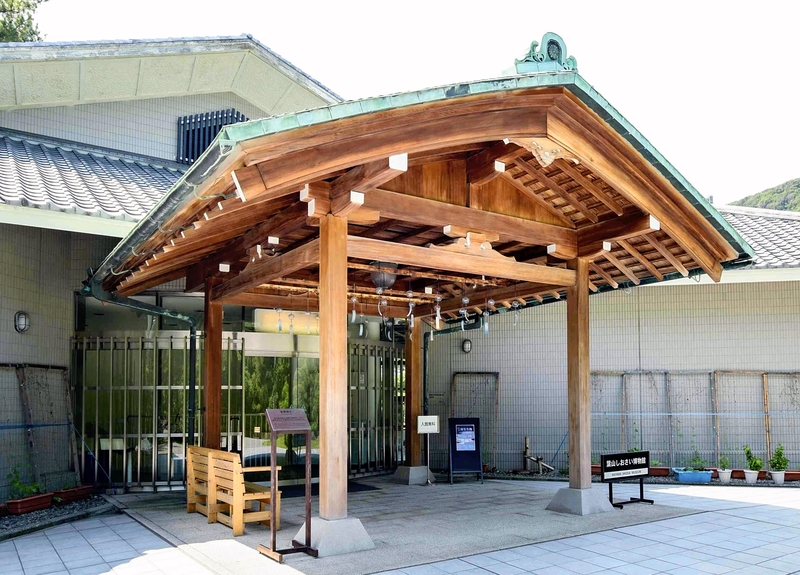
The museum is primarily devoted to the marine ecosystem of Sagami Bay in the prefecture, with a focus on the Hayama coast. Yet there are also many exhibits related to the annex and the Imperial household.
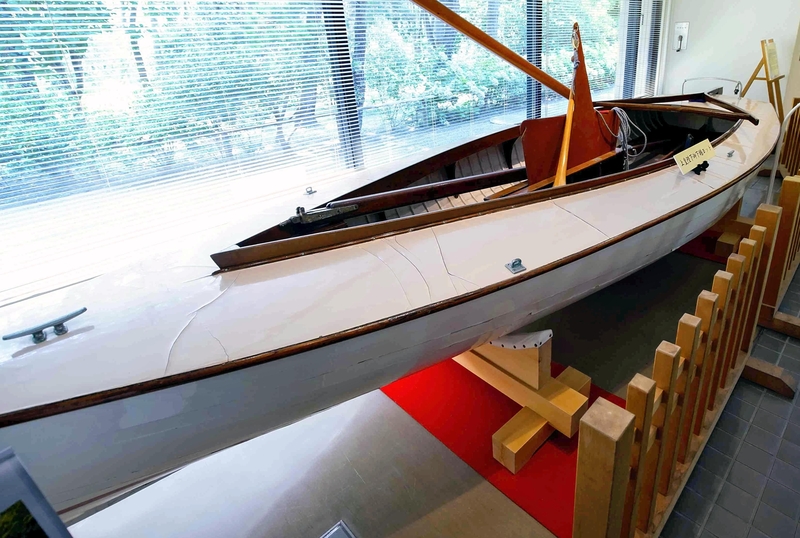
The carriage porch of the annex, where Imperial carriages used to arrive, was relocated to the museum and is used as a canopy over the entrance. Step inside the museum and the first thing you see is the current Emperor Emeritus' favorite yacht during his days as crown prince.
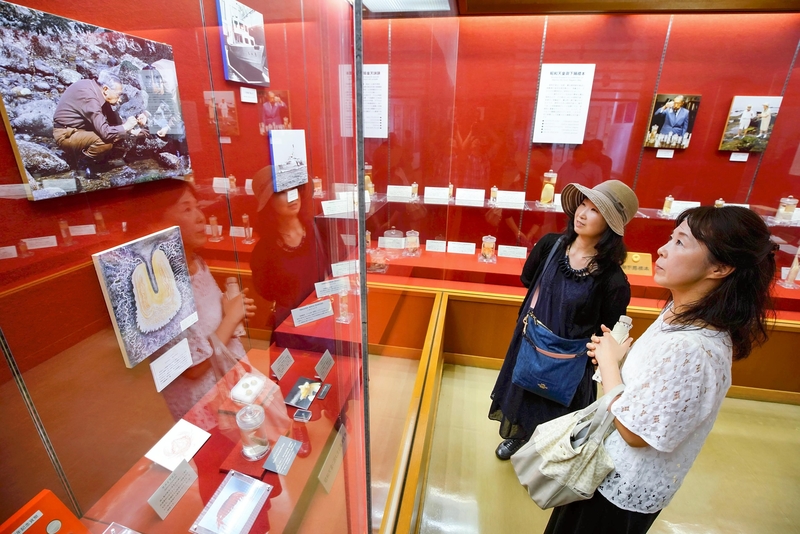
The museum has a special room devoted to marine biological studies, a lifelong interest of Emperor Showa. Wondering why there were living creatures that did not move, he focused on researching hydrozoans, relatives of coral and sea anemone.
Visitors can see 28 samples of hydrozoans and Enoshima coral collected on the Hayama coast, as well as photographs of Emperor Showa searching for living creatures on the seashore.
Marine organisms of both southern and northern origins are seen in Sagami Bay, into which runs both the warm Black Tide and the cold Oyashio current. The bay is also a habitat for many marine life species endemic to Japan and some specific to the bay, thanks to the complex, undulating sea bottom that ranges from shallow to deep.
The museum exhibits specimens of fish and crustaceans categorized by their habitat.
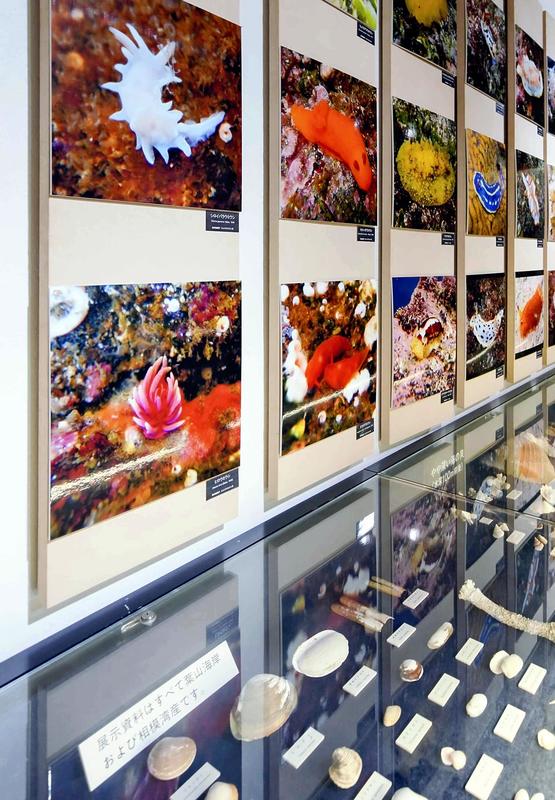
About 600 types of shellfish of different shapes and sizes are displayed in large exhibition cases. The walls are adorned with photo panels showing sea slugs in red, yellow, purple and other vivid colors.
I wondered whether there were that many shellfish and sea slugs in the bay.
"You can always find all those creatures [here] if you look for them on a rocky shore," said Kuramochi. "I hope you'll be interested in them."
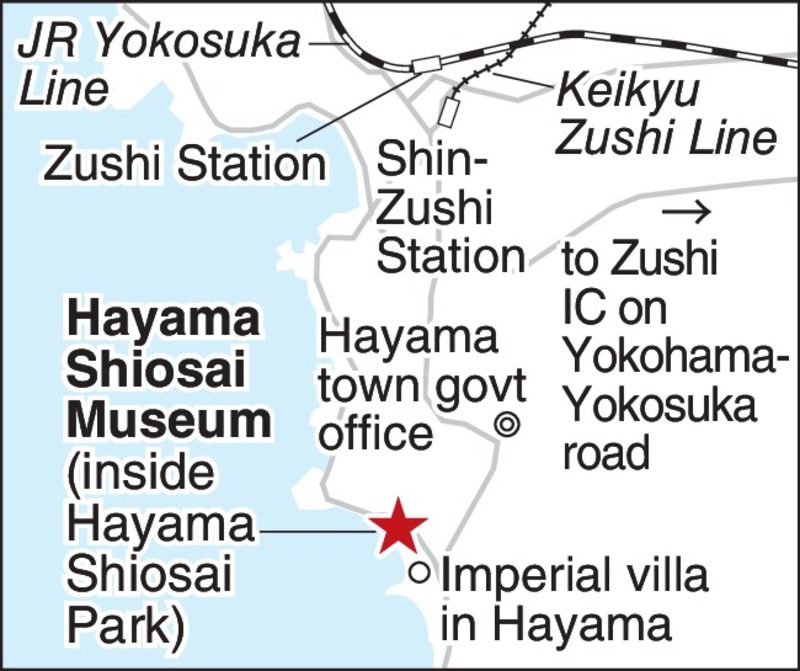
Here at the museum, you can glimpse the riches and depth of the sea that enchanted Emperor Showa.
-- Hayama Shiosai Museum
The annex to the Imperial villa in Hayama was completed in 1919 after it was purchased from Tomosada Iwakura and others. The museum opened in 1987, and so did Hayama Shiosai Park. From the black pine forest on the coast, there are panoramic views of Mt. Fuji and the Izu Peninsula.
Address: 2123-1 Isshiki, Hayamamachi, Kanagawa Prefecture
Open: 9 a.m.-4:30 p.m. Closed Mondays, the days after national holidays and on the last day of each month
Admission: Free (300 yen to enter Hayama Shiosai Park for those aged 15 or older, 150 yen for elementary and junior high school students)
Information: (046) 870-1155
Read more from The Japan News at https://japannews.yomiuri.co.jp/