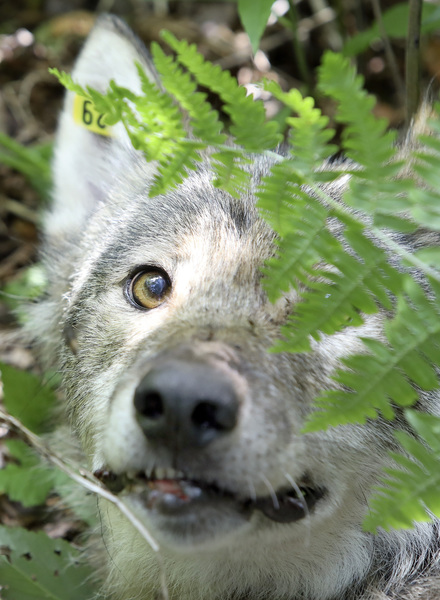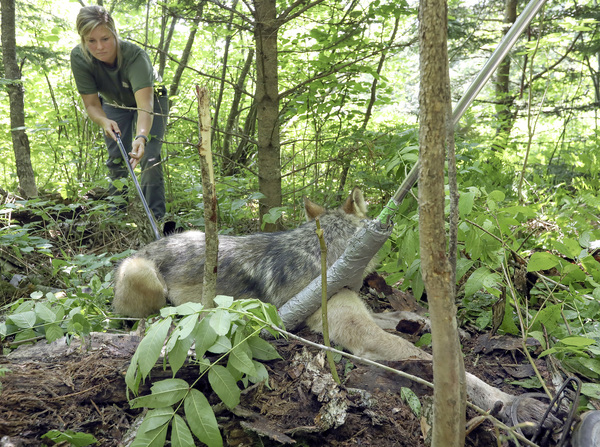
DULUTH, Minn. _ Christina Maley followed the drag marks across the logging road and peered into a dense tangle of spruce and balsam fir. She saw something moving in the shady undergrowth.
"It's a wolf!" said Maley, wildlife research and management specialist at the 1854 Treaty Authority based in Duluth.
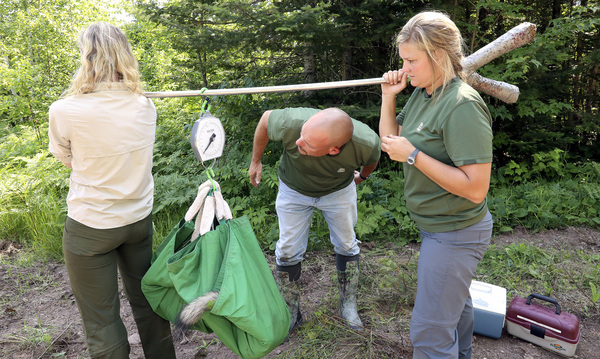
A big grin spread across her face. A wolf was exactly what she was hoping to see. Maley and two of her colleagues were just a few miles north of Duluth on a recent morning, checking 21 wolf traps they had placed the day before on county and state land.
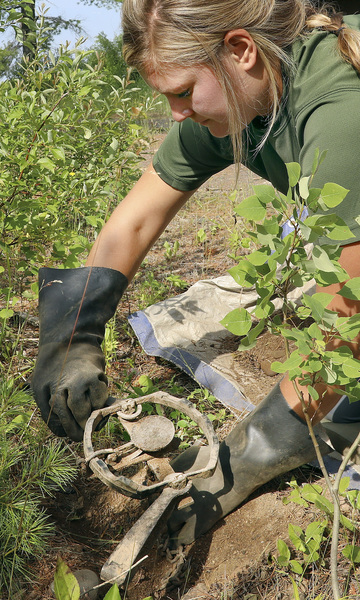
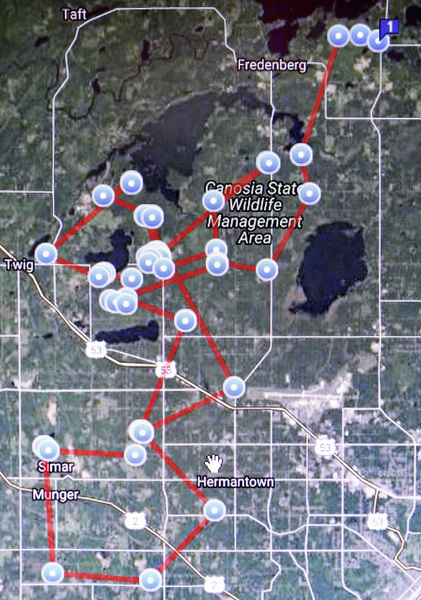
Their work is part of an ongoing research project to trap and place GPS collars on wolves in packs near Duluth _ some not far from the Western Lake Superior Sanitary District landfill off Rice Lake Road.
Maley, leading the project, has now trapped five wolves since June 5. She had trapped another in early spring.
One purpose of the study is to provide information on wolf pack size and territory that helps the 1854 Treaty Authority work with the Minnesota Department of Natural Resources to develop wolf population estimates. Another aim is to learn more about how wolves move about on borders between rural and urban areas, Maley said.

The project builds upon a similar study from 2007 to 2011 by Angela Aarhus-Ward, who then worked for the 1854 Treaty Authority and is now with the DNR.