Get all your news in one place.
100’s of premium titles.
One app.
Start reading
The Guardian - UK
The Guardian - UK
World
Harry Burton

Looking back: the Cold War

An anti-Communist picket against the film David and Bathsheba. The film’s writer, Philip Dunne, and one of its stars, Gregory Peck, were targeted by the House Un-American Activities Committee.
An anti-Communist picket against the film David and Bathsheba. The film’s writer, Philip Dunne, and one of its stars, Gregory Peck, were targeted by the House Un-American Activities Committee. Photograph: AP

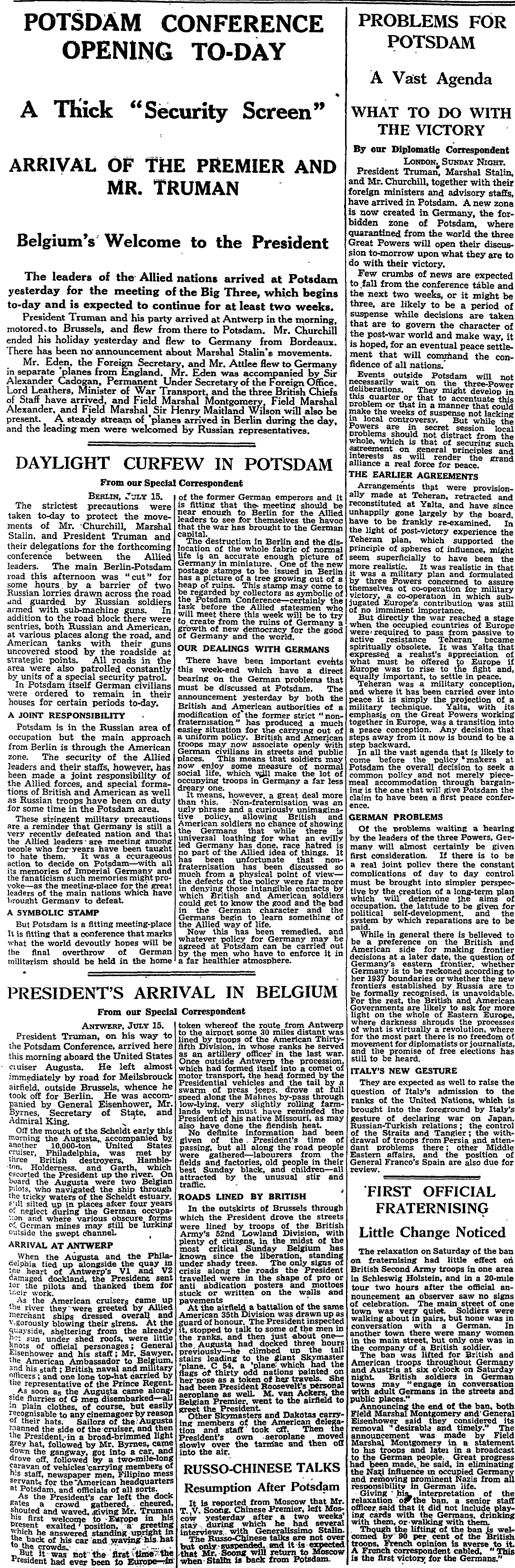
16 July 1945: The Allied leaders - Churchill, Truman and Stalin - meet in Potsdam to discuss a new order in war ravaged Europe.

The handshake between (from left) Winston Churchill, Harry S Truman and Josef Stalin in Potsdam, Germany, 23 July 1945.
The handshake between (from left) Winston Churchill, Harry S Truman and Josef Stalin in Potsdam, Germany, 23 July 1945. Photograph: AP

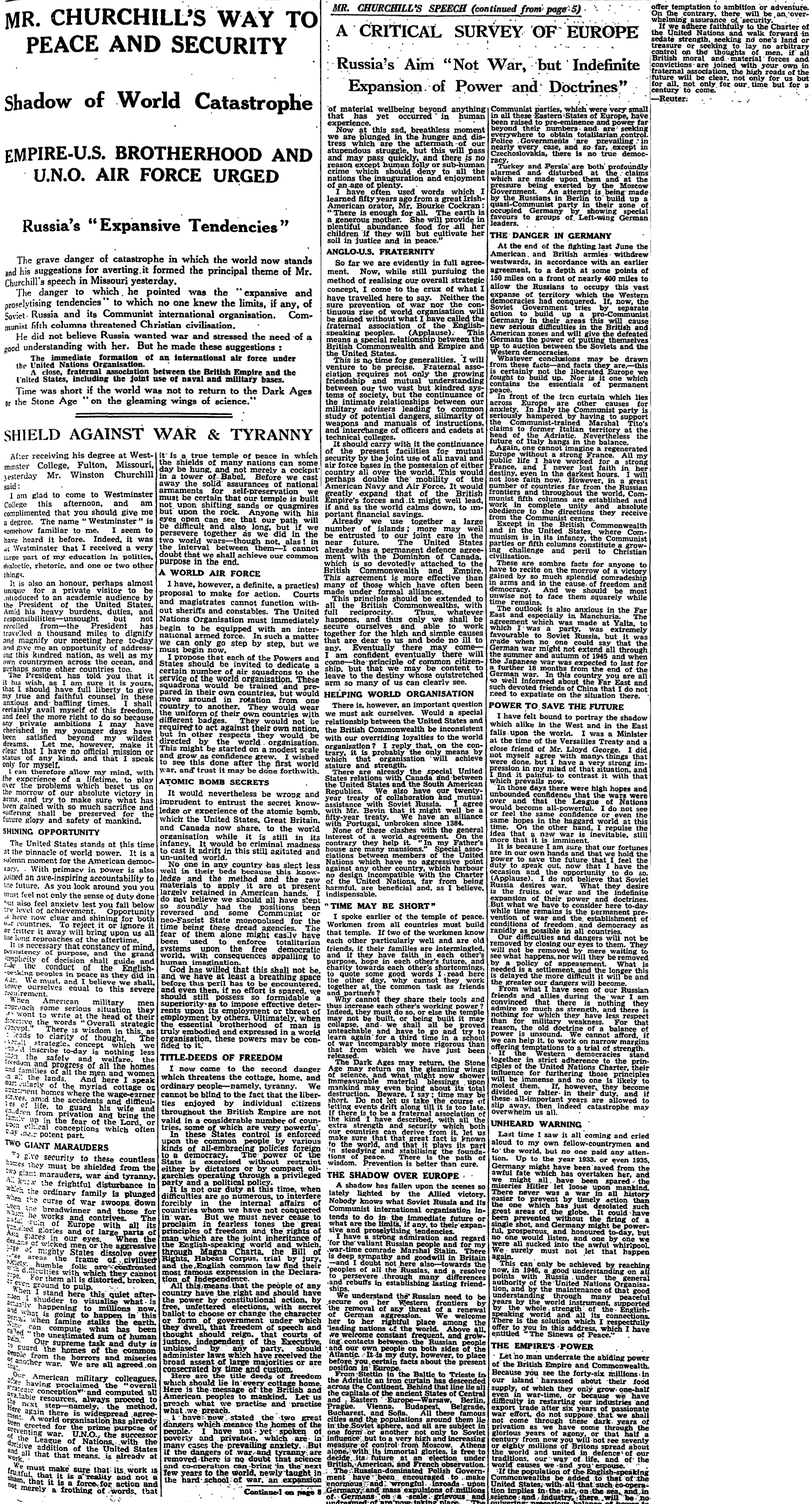
6 March 1946: Competing political influences in Europe are becoming so apparent that the recently ousted Churchill tells an American audience: “From Stettin in the Baltic to Trieste in the Adriatic, an iron curtain has descended across the Continent.” The Manchester Guardian reproduces the speech in full.

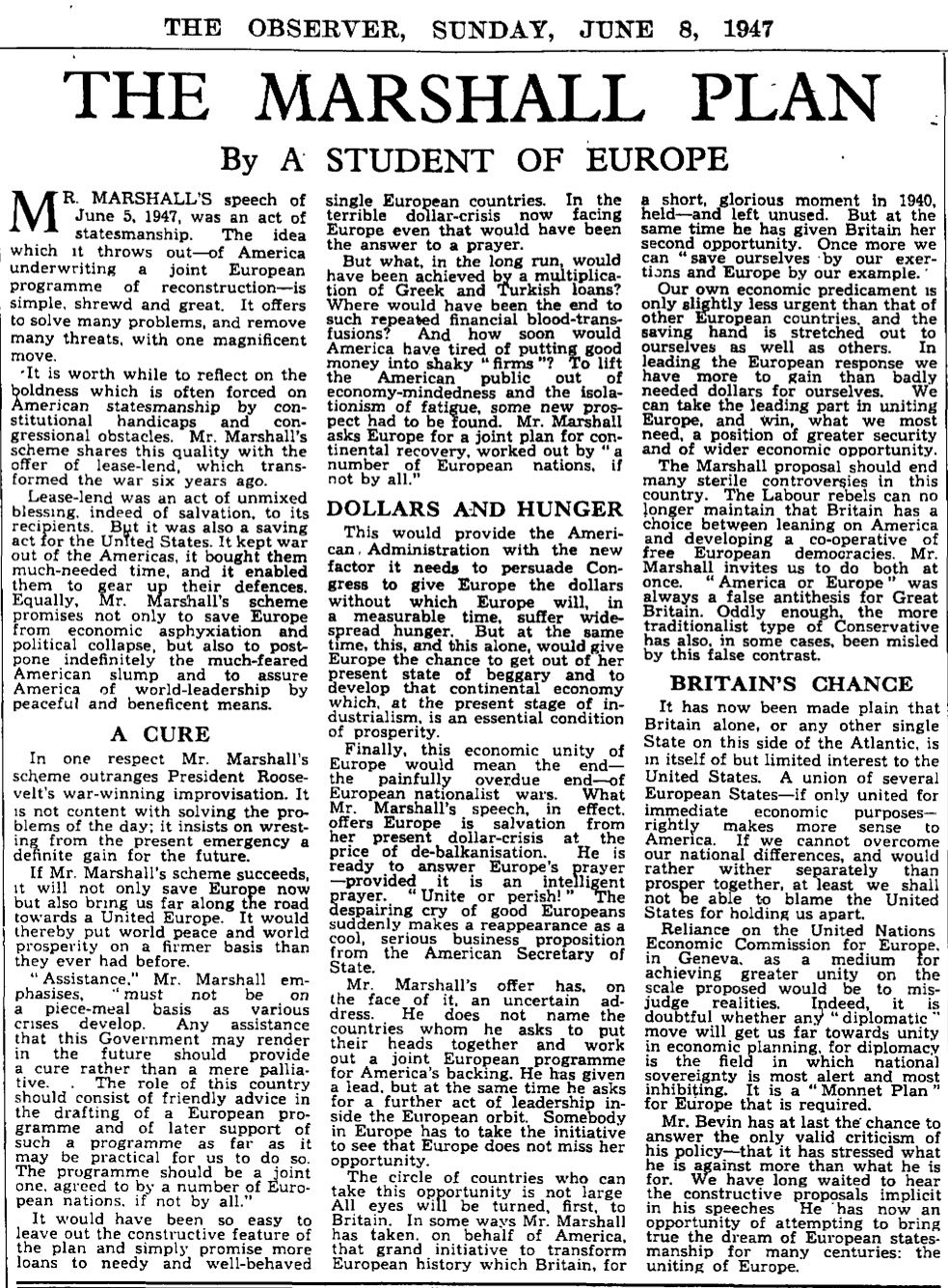
8 June 1947: The Marshall Plan is announced in reaction to the perceived Soviet threat to western Europe. It will flood Europe with American money, aiming to produce a bulwark against communism.

21 October 1947: “Reds under the bed” - fears abound that a “fifth column” have infiltrated American society at all levels. The result is widespread persecution and, famously, the Hollywood blacklisting of artists deemed un-American.

The group of Hollywood writers and producers summoned to appear before the House Un-American Activities Committee, Washington DC, 1947.
The group of Hollywood writers and producers summoned to appear before the House Un-American Activities Committee, Washington DC, 1947. Photograph: Bettmann/CORBIS

2 April 1948: The Berlin Blockade is ordered. Stalin’s response to American interference is to attempt to starve out the western zones of Berlin, a capitalist enclave far into Soviet territory.

American transport aircraft being unloaded of vital coal by German workmen at Berlin’s Templehof Airport, June 1948.
American transport aircraft being unloaded of vital coal by German workmen at Berlin’s Templehof Airport, June 1948. Photograph: Popperfoto/Getty Images

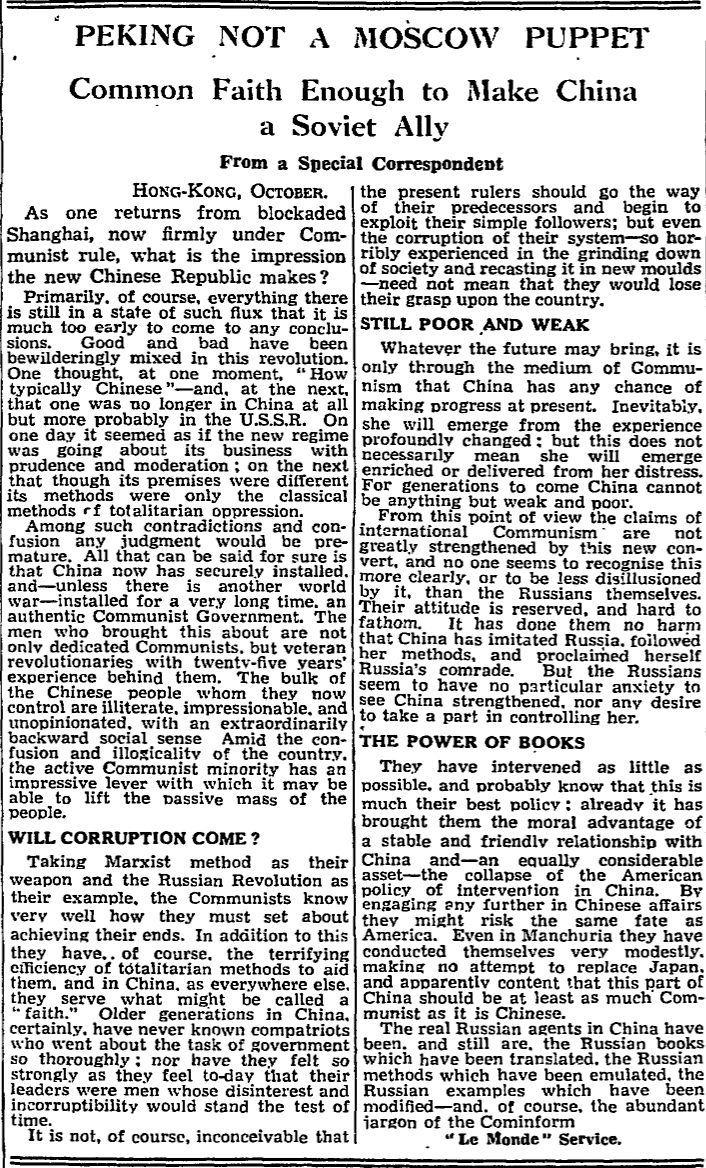
15 October 1949: Chinese Marxists establish control over the country.

28 June 1950: Soviet-backed North Korea invades US-backed South Korea, causing fears of a direct conflict between the superpowers.

Korean refugees fleeing Chinese communist troops cling to a bridge spanning the Taedong River near Pyongyang, 4 December 1950.
Korean refugees fleeing Chinese communist troops cling to a bridge spanning the Taedong River near Pyongyang, 4 December 1950. Photograph: Max Desfor/AP

7 March 1953: Stalin dies. The Moscow home service announces: “The heart of the collaborator and follower of the genius of Lenin’s work, the wise leader and teacher of the Communist party and of the Soviet people, stopped beating.”

2o June 1953: The height of American paranoia is realised with the trial and execution of the Rosenbergs, a couple found guilty of conspiring to pass on atomic secrets to Russia.

18 June 1953: Michael Rosenberg, 10, right, and his brother, Robert, 6, sons of Julius and Ethel Rosenberg, read that their parents have one day more to live.
18 June 1953: Michael Rosenberg, 10, right, and his brother, Robert, 6, sons of Julius and Ethel Rosenberg, read that their parents have one day more to live. Photograph: AP

17 March 1956: Stalin’s successor, Nikita Khrushchev, denounces the dictator in a fiery speech to the Communist party.

24 October 1956: Hopes for a softening of Soviet policy are swiftly undone when Khrushchev sends tanks to crush a popular uprising in Hungary.

Freedom fighters with the revolutionary flag in Budapest during the uprising against the Soviet-supported Hungarian regime, October 1956.
Freedom fighters with the revolutionary flag in Budapest during the uprising against the Soviet-supported Hungarian regime, October 1956. Photograph: Laszlo Almasi/Reuters

8 January 1959: Fidel Castro seizes power in Cuba, having deposed the US-backed dictator Batista. There are fears Castro will align Cuba with the Soviet bloc.

October 1962: American spy planes reveal that the Soviets are shipping missiles to Cuba. President Kennedy warns the American public that the eastern seaboard is under direct threat, and Cuba is placed under naval blockade. The peril of nuclear war inches ever closer.

People in a department store watching President Kennedy’s TV announcement of the Cuban blockade during the missile crisis, October 1962
People in a department store watching President Kennedy’s TV announcement of the Cuban blockade during the missile crisis, October 1962. Photograph: Ralph Crane/Time & Life Pictures/Getty Image
Sign up to read this article
Read news from 100’s of titles, curated specifically for you.
Already a member? Sign in here
Related Stories
Top stories on inkl right now
One subscription that gives you access to news from hundreds of sites
Already a member? Sign in here
Our Picks
Fourteen days free
Download the app
One app. One membership.
100+ trusted global sources.