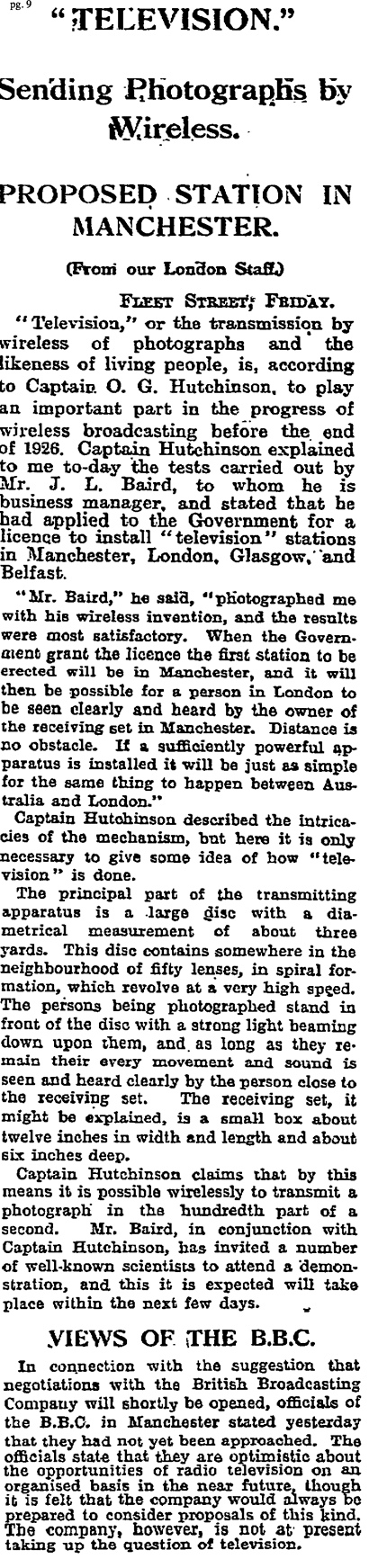
Speaking to the Manchester Guardian in 1926, Captain O.G. Hutchinson, business manager of John Logie Baird, said Baird had photographed him using his ‘wireless invention’ (television), and the results were ‘most satisfactory’. Hutchinson was praising the Scottish engineer for his pioneering work in developing the first TV set.
Many programmes made for TV were transmitted from BBC Television Centre, the vast new media ‘factory’ built at White City, London, in 1960.
Some shows like Z Cars, the popular BBC police drama which celebrated its 100th episode in 1964, were shot on location.
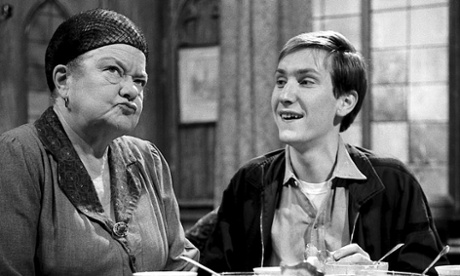
Also in the 1960s, the BBC’s dominance of the UK’s airwaves came under competition from independents such as Granada who brought us shows like Coronation Street.
Entertainment aside, TV could educate and inform viewers. This report from 1959 notes Aneurin Bevan, deputy leader of the Labour Party, telling parliament that TV cameras should be allowed into the House. It wasn’t until 1988 that MPs voted in favour of the proposal.
But even serious programming such as news and current affairs weren’t immune from ridicule, as the success of satirical show That Was The Week That Was proved in 1962.
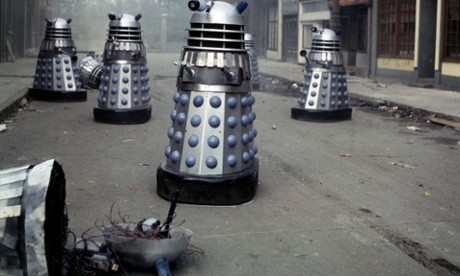
Entertaining children was just as important to programme makers. Shows such as Doctor Who became hugely popular, even though self-styled moral crusader Mary Whitehouse warned that the sci-fi programme was ‘highly disturbing’.
Anyone easily offended would have done well to have avoided Channel 4’s launch in 1982. The upstart channel’s live music show, The Tube, with its near the knuckle humour and colourful language, often meant the station’s switchboard was jammed with complaints.
Launched in 1997, one of Channel Five’s most successful shows to date has been Big Brother, the rights to which it secured in 2012.