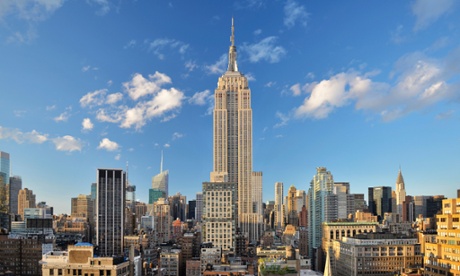
1885: The world’s first skyscraper goes up in Chicago. The skyscraper boom began in the capital of the American Midwest in 1885 with William Le Baron Jenney’s Home Insurance Building, which rose to its then-impressive height of 10 storeys (and, after an 1890 addition, 12) by means of metal, rather than just masonry.
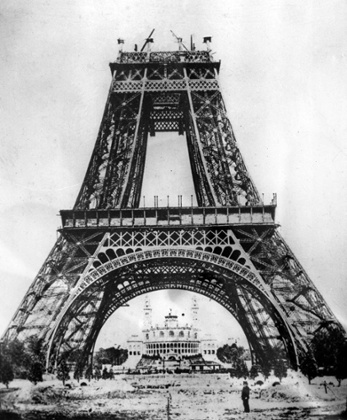
25 May 1888: Built for the Paris Exhibition, the Eiffel Tower, “as ugly a construction as can be imagined,” fails to impress for its aesthetics, although the engineering feat is being celebrated.
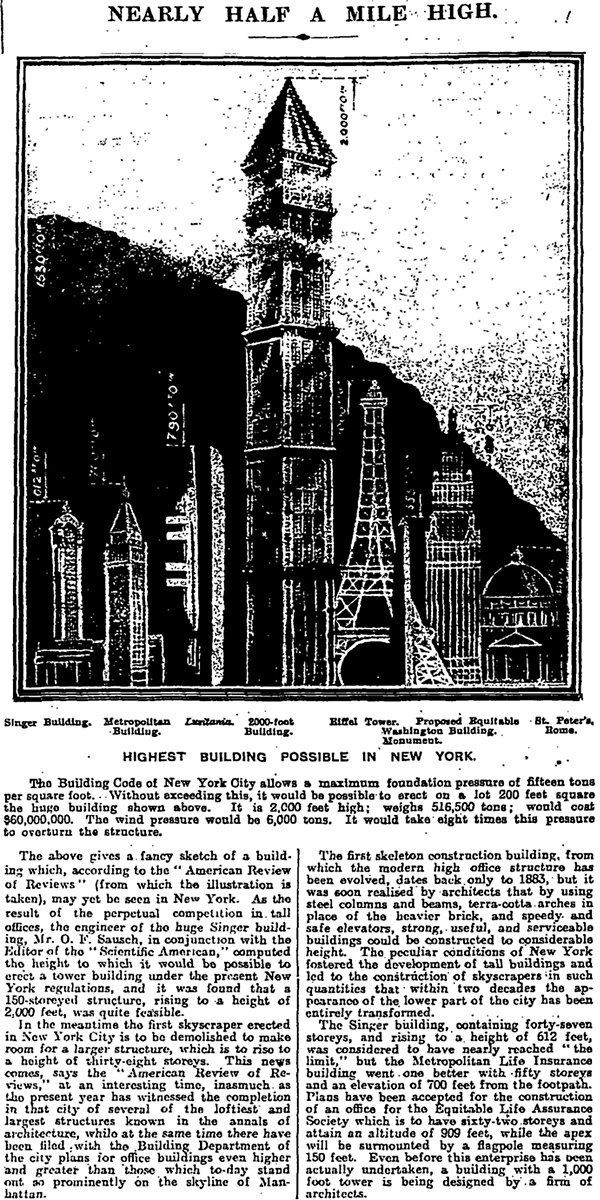
8 November 1908: A 150-storey building of a height of 2000 feet is claimed to be feasible by famous New York engineer, while the first skyscraper in the city is being demolished to give way to a 38 storey building.
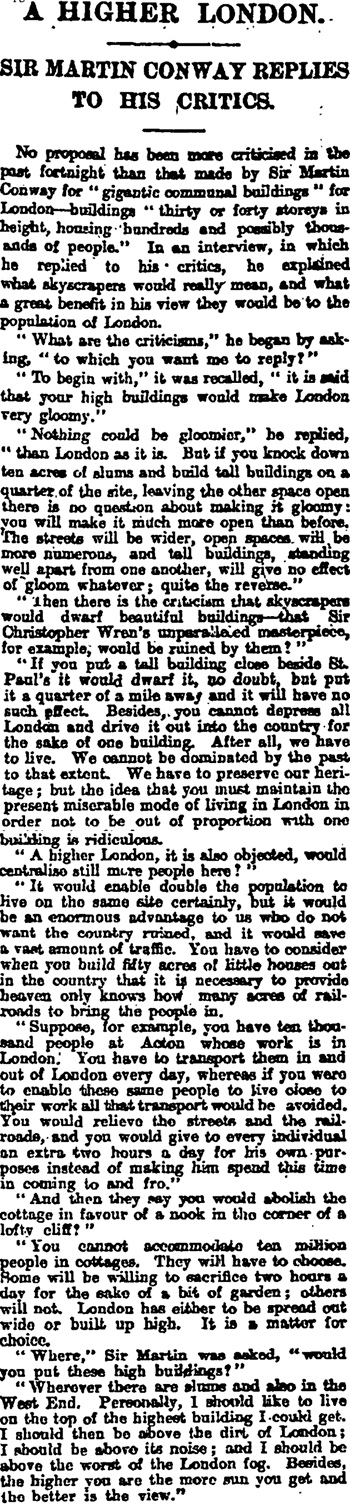
8 February 1920: Sir Martin Conway, advocate of higher buildings in London, replies to his critics and extols the advantages of high living.
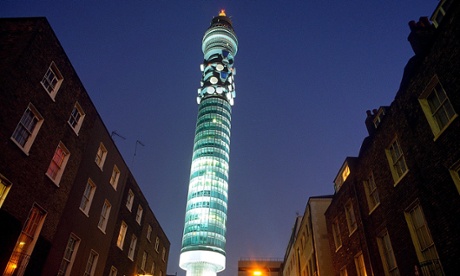
9 October 1965: Harold Wilson opens the tallest building in the UK, the 620 ft Post Office Tower in London. In 1971, an IRA bomb at the Top of the Tower restaurant eventually closed the building to the public.
5 July 2012: 23 facts about the 87-storey Shard, London’s and Europe’s tallest skyscraper.
27 February 2013: Skyscrapers which turn into vertical gardens
20 September 2014: Skyscrapers have captured our imagination for decades with their beauty and apparently gravity-defying structures. Here are some of the most breathtaking.
12 February 2015: Are vertical villages bad for cities now that skyscrapers are increasingly self sufficient?
17 February 2015: The rooftoppers: the urban outlaws who risk everything to summit our cities.