4 December 1791: The world’s first Sunday newspaper, the Observer, launches with a pledge to remain ‘unbiased by prejudice, uninfluenced by party’.

3 November 1921: The stylebook of the American journal the Christian Science Monitor bans cigarettes, exterminators, death and disease.
10 April 1928: A leap forward for photojournalism as wire services replace express trains and aeroplanes bringing pictures for tomorrow’s paper.

13 July 1929: Arthur Ransome on the changing landscape of the newspaper and the difficulty of writing a weekend column.
9 February 1933: A Daily Mail ‘exclusive’ that had already appeared in the Guardian has the paper wondering where scoops will end.

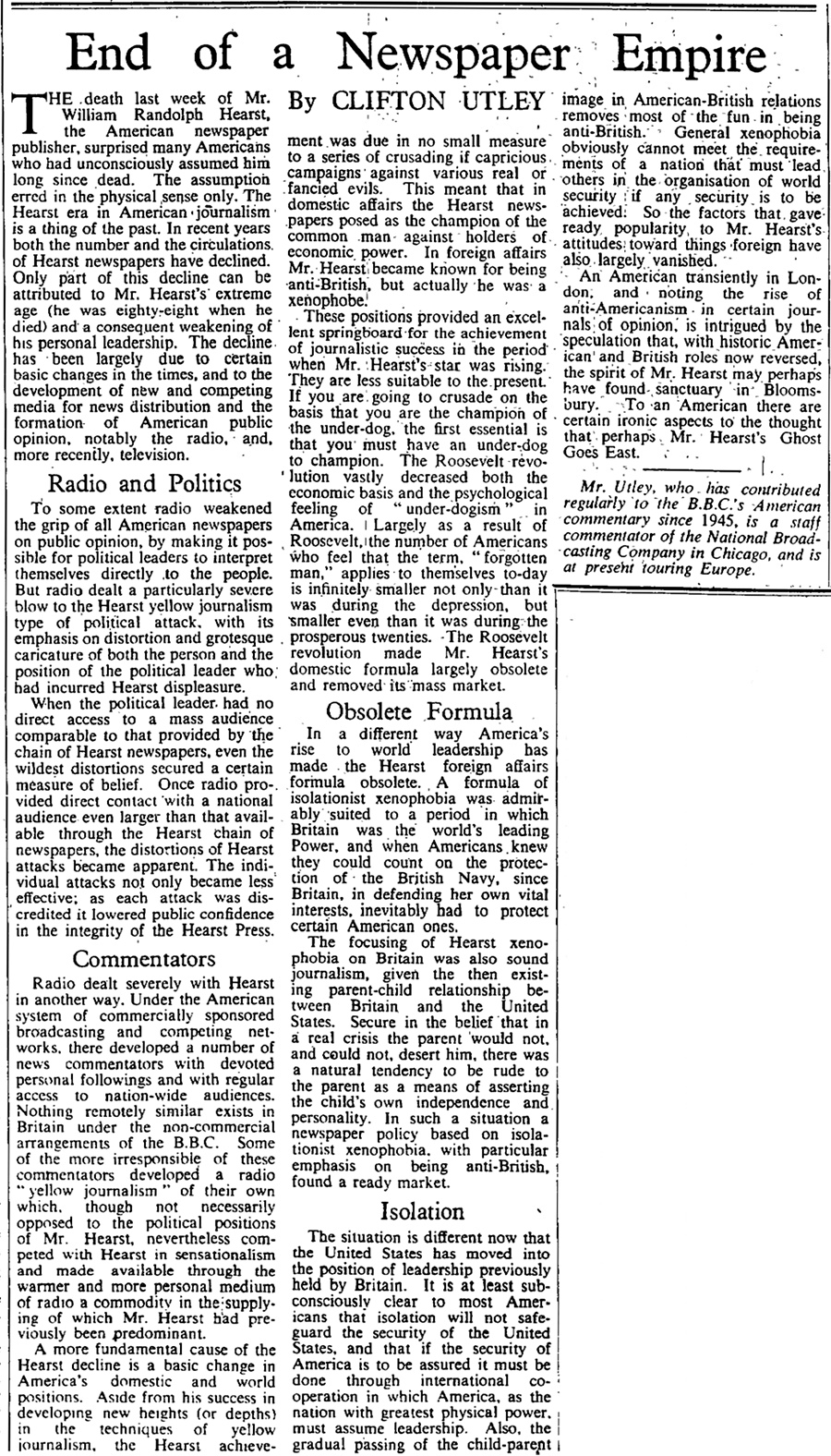
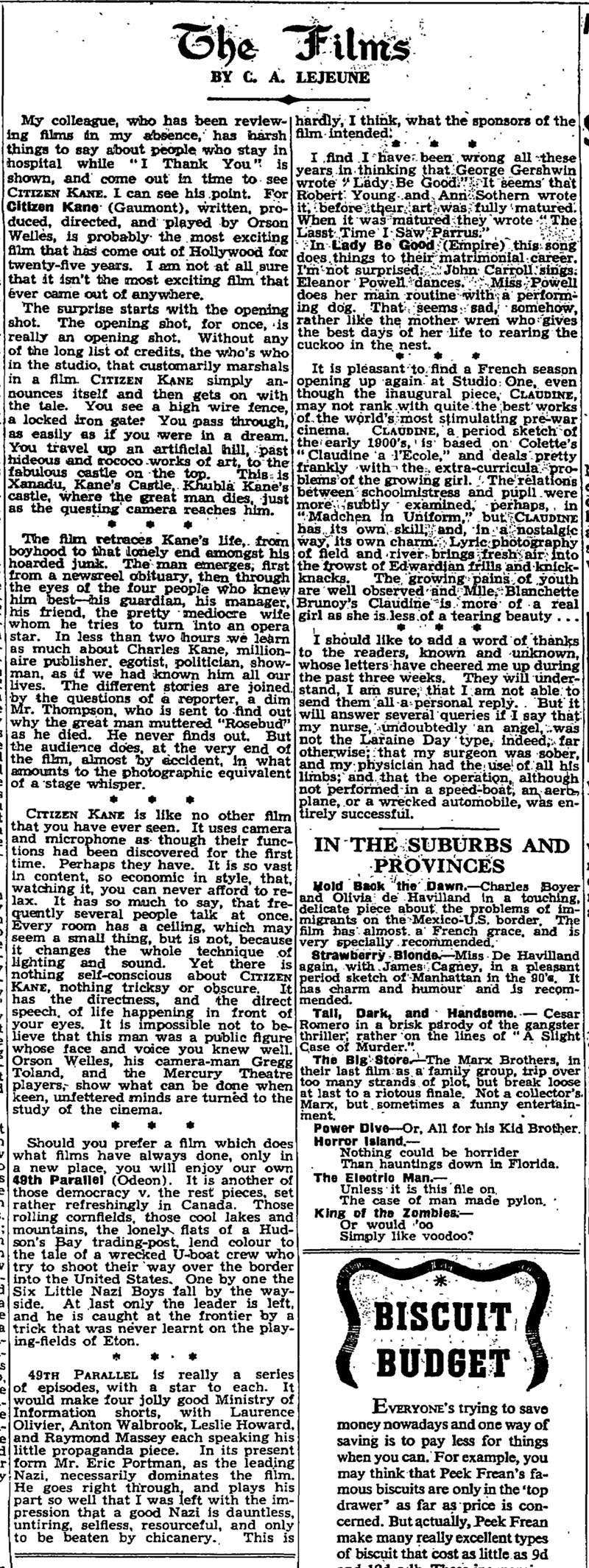
19 August 1951: The death of American magnate William Randolph Hearst marks the end of his ‘yellow journalism of political attack’ which was already under threat from radio. The publisher was the inspiration for Citizen Kane.
29 September 1952: Hold the front page! The Manchester Guardian switches from classified ads to news on page one.

11 September 1953: Randolph Churchill accuses the London press of dishing out a ‘cataract of filth’, a ‘river of pornography and crime’.
5 April 1955: A black market in the Manchester Guardian springs up in the wake of a London newspaper strike.

29 August 1969: Rupert Murdoch sets his sights on the Sun and a greater foothold in Fleet Street.
29 June 1970: The printed word has never been more alive, despite the growth of television and the many prophets of newspaper doom.

10 March 1973: Jean-Paul Sartre on the launch of new leftwing daily Libération.
28 January 1986: Alan Rusbridger describes News International’s chaotic move from Fleet Street to Wapping.

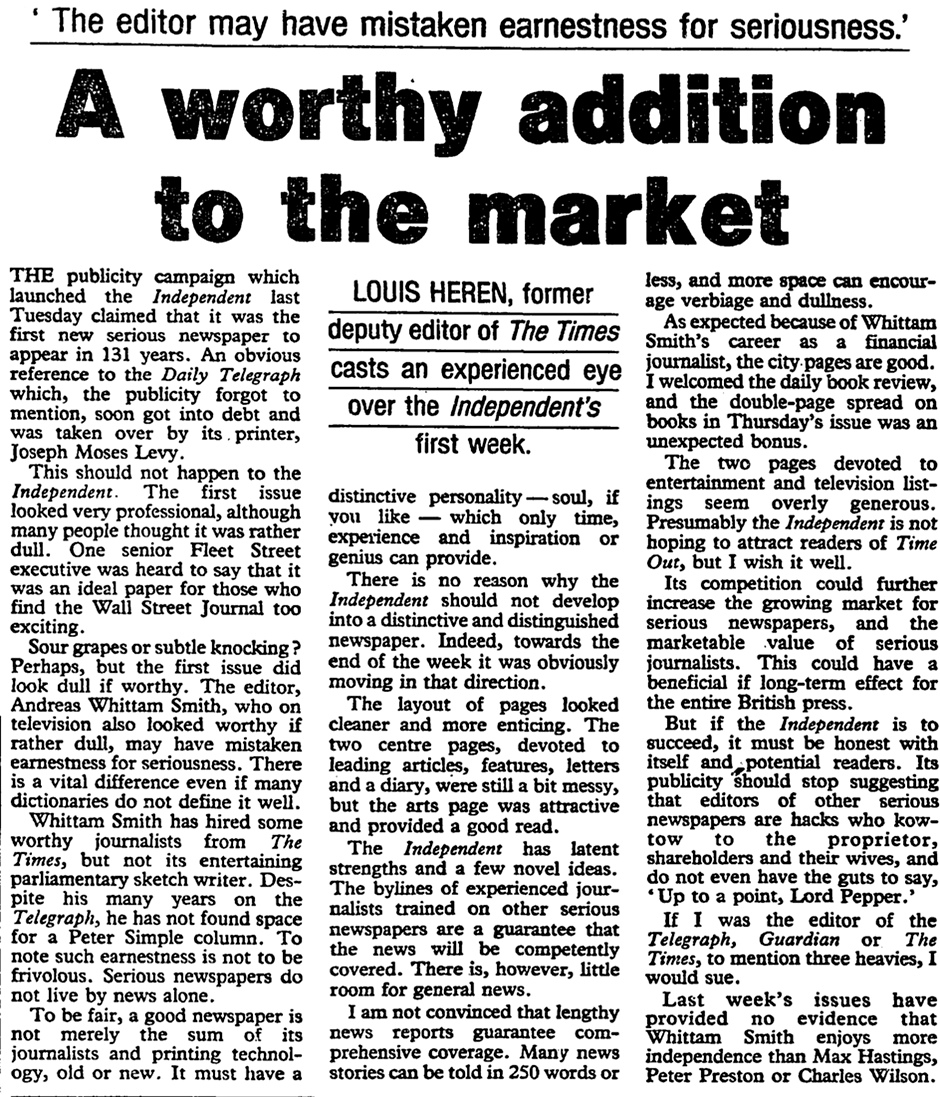
12 October 1986: The Observer is impressed with the new Independent newspaper, but warns that it must be ‘honest with itself’ and stop knocking other editors.
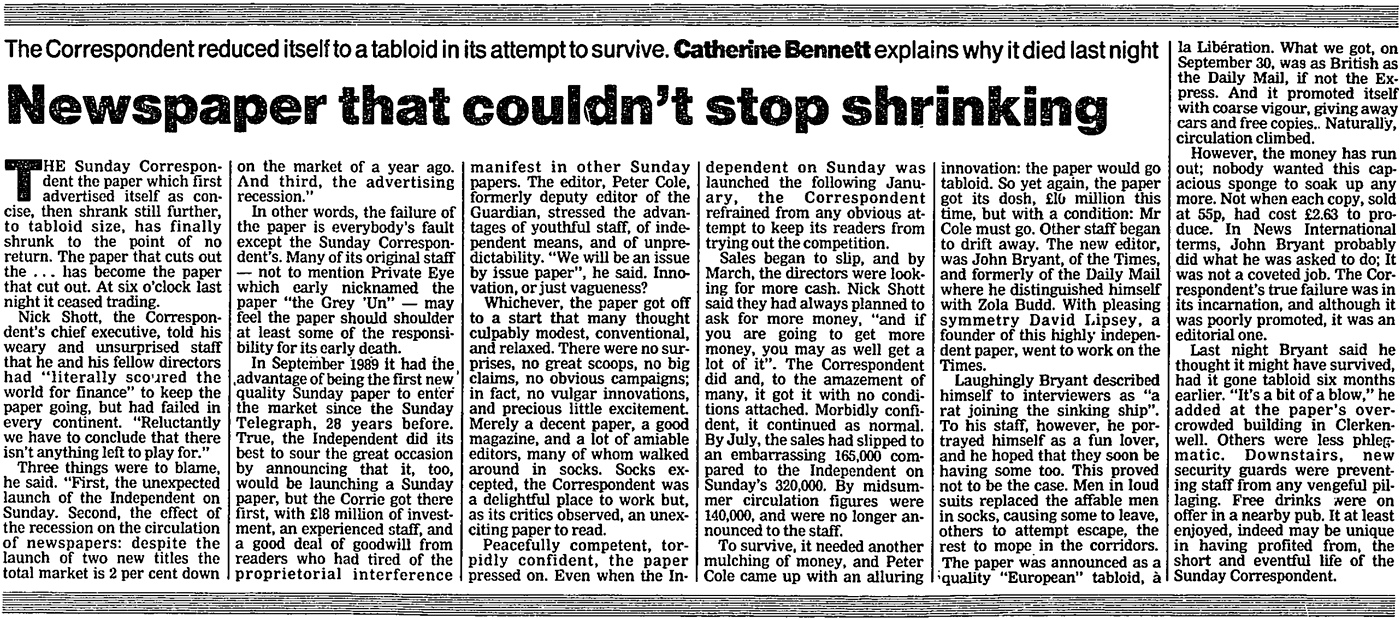
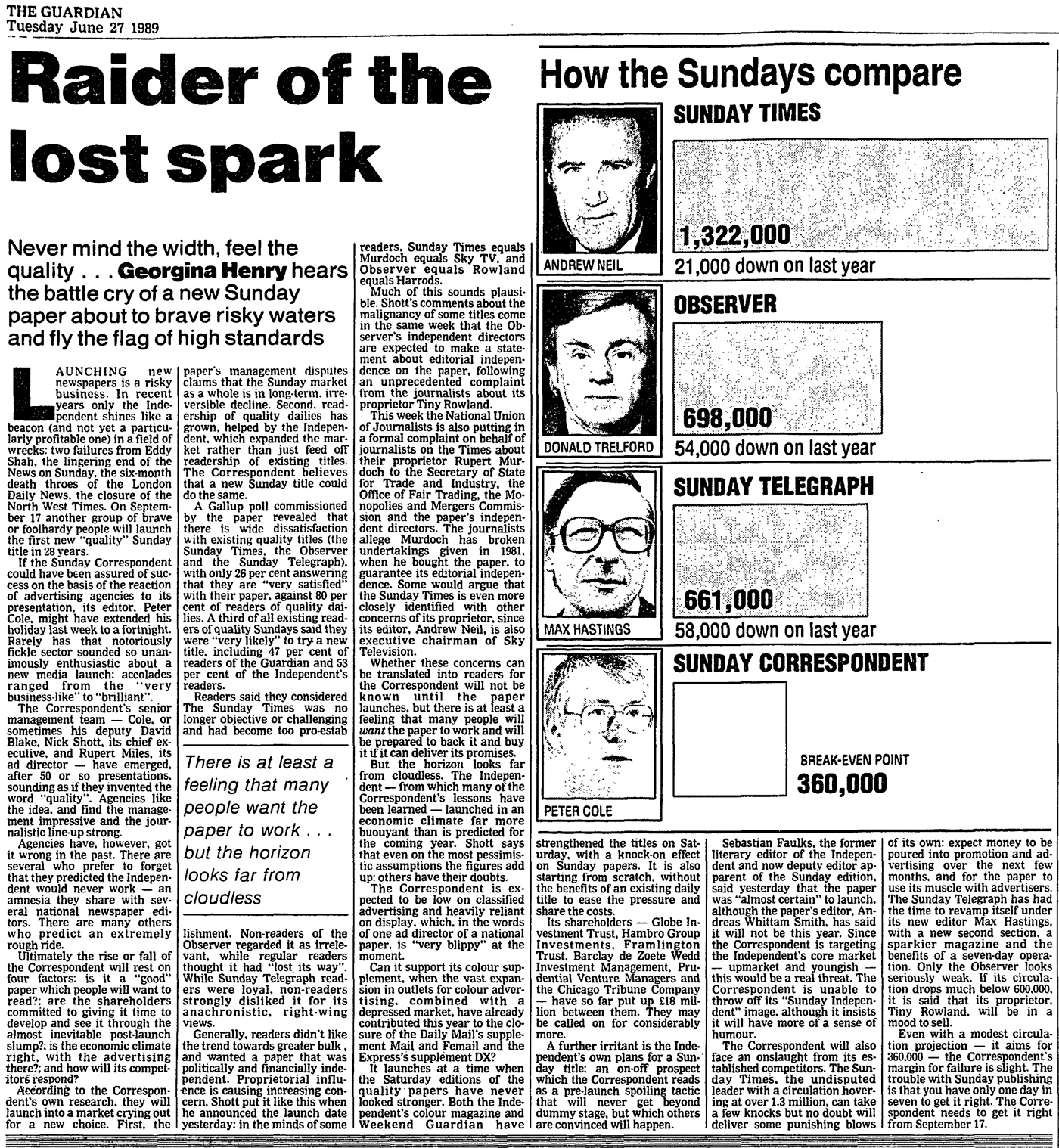
28 November 1990: The Sunday Correspondent, which launched amid much fanfare in September 1989, folds little more than a year later.
9 July 2011: Mired in the phone hacking scandal, the News of the World closes. Political editor David Wooding calls it ‘a good day for the bad guys’.
17 February 2016: Newsprint newspapers - even in the digital age - remain very special.