Islington in north London became a battleground over gentrification in the 1970s. The gradual resettlement of the borough by wealthy families, buying grand townhouses at bargain prices, led poorer locals to complain that they were being evicted, harassed and ‘winkled’ out of their rented properties by opportunistic developers and landlords.
The Guardian’s Melanie Phillips also reported on fears that rising property prices would eventually prevent local children buying in the area they grew up in.

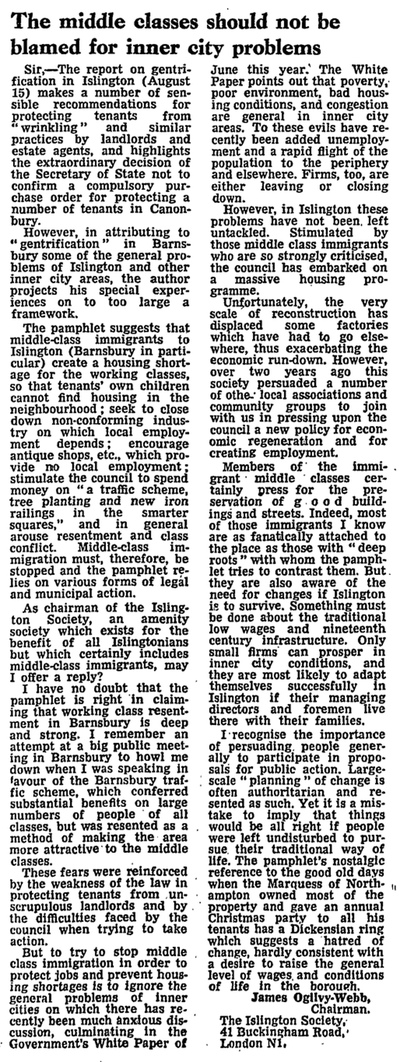
Unhappy at being accused of ‘colonising’ north London, some of those who had recently bought big properties in Islington wrote letters to the Guardian to give their side of the story.
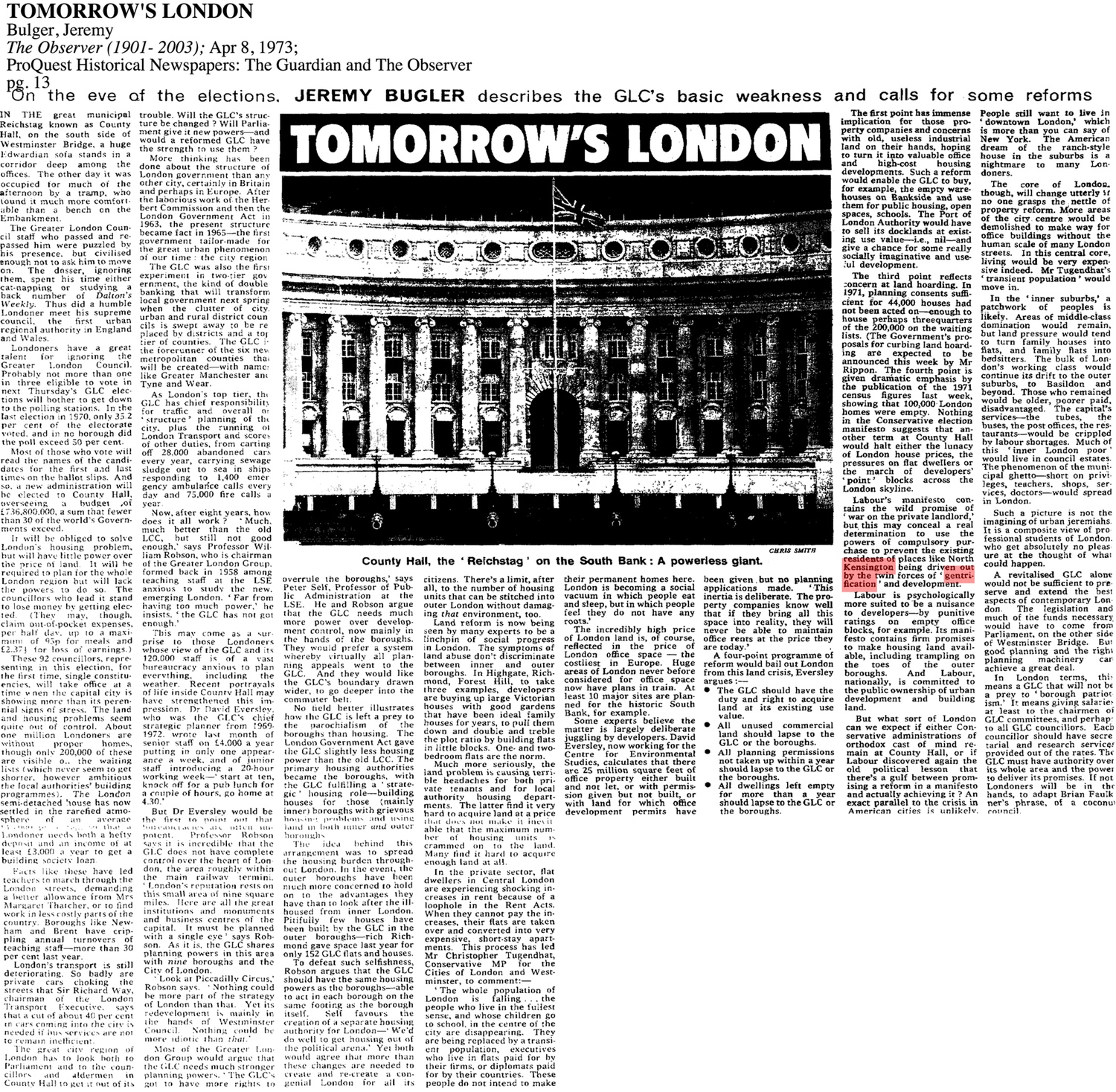
The scarcity of affordable housing, apparently exacerbated by gentrification, led the Labour government to consider the blunt tool of compulsory purchase to control of the capital’s housing stock.
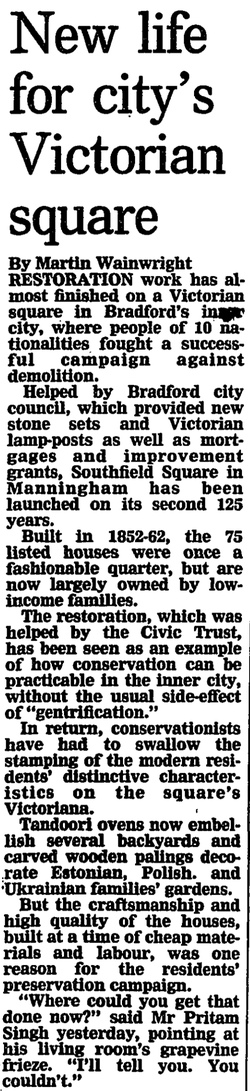
The thorny issue of gentrification wasn’t confined to London. In Bradford, in the 1980s, Southfields Square, a run down two-storey mid-Victorian square was saved thanks to locals working with the council. Gentrification had threatened to force out the poorer, diverse group of residents already living there.

Some local people, fearing their local authority wasn’t doing enough to ease their fears over creeping gentrification, took matters into their own hands. In 1987, the Guardian reported that a small anarchist group, Class War, along with local activists, aimed to make life uncomfortable for the ‘yuppie invaders’ of Stoke Newington, north London.
Gentrification not only impacts on the housing stock but it changes the look and feel of an area, so say its opponents. In 2011, riot police converged on Stokes Croft in Bristol as violence broke out over the opening of a new Tesco. For some, the supermarket came to symbolise an unwanted drift towards mass commercialisation of their neighbourhood.

But could the ‘unstoppable’ march of gentrification in our towns and cities be as bad as is often reported? Far from ruining where we live, some have argued that gentrification is not only inevitable but it can, in fact, bring benefits across the board to a rundown area.