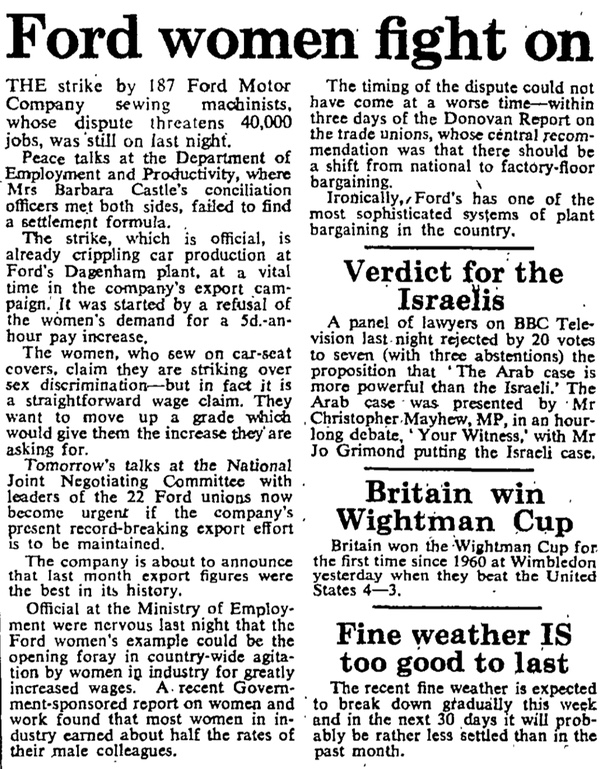
7 June 1968 In a landmark battle over equal pay, nearly 200 women workers at Ford’s Dagenham plant go on strike, angry at being paid less than male colleagues who do the same job.
17 June The dispute happens at a time when research into the pay of UK workers reveals that most women in British industry are earning half that of men.

The Guardian backs the Ford women. In an editorial, it says female workers “form a vital, and clearly under-valued slice of our labour force”

20 June With no resolution in sight, the Labour government’s Employment Secretary Barbara Castle tries to help break the deadlock between Ford bosses and the women.
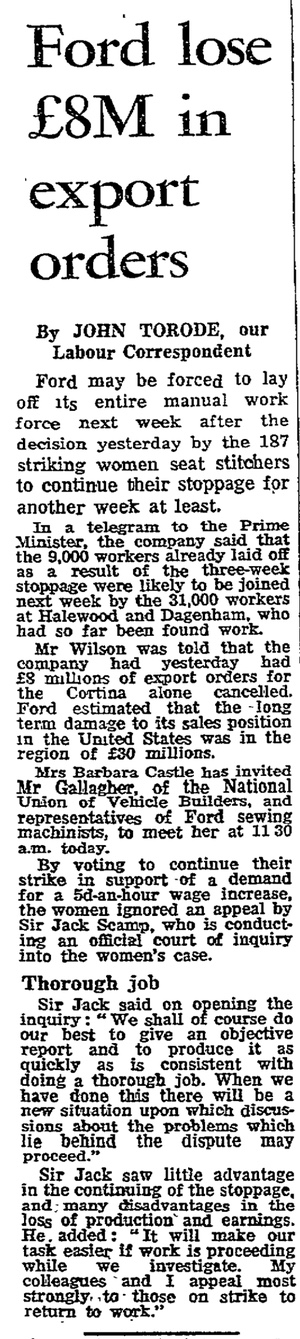
27 June 1968 As the strike rumbles on, women at other Ford plants in the UK voice their unhappiness at being paid less. The disruption costs the company £8 million in lost export revenue.
9 July 1968 Ford finally yields to the women’s demands. Although the strikers initially accept a pay offer that gives them 8% less than men, future negotiations lead to pay parity.
29 May 1970 The women’s victory helps bring about The Equal Pay Act, which outlaws discrimination on pay and conditions between men and women.

28th June 1968. Photograph: Wesley/Getty Images