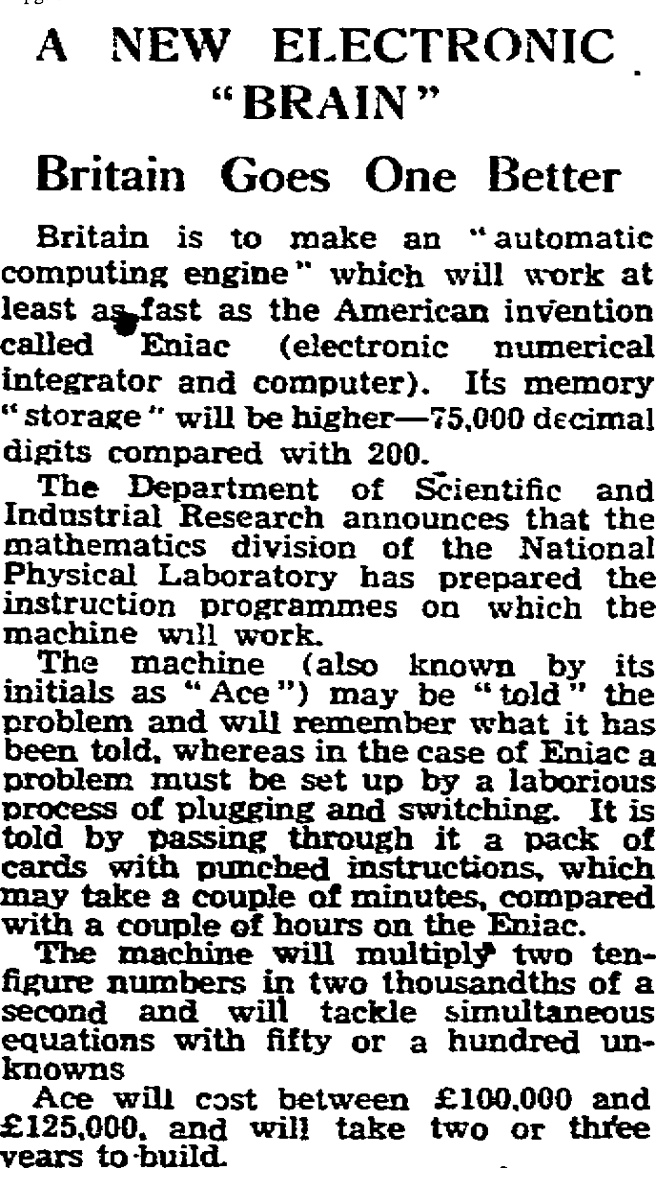
7 November 1946: Britain is to make an “automatic computing engine” which will multiply two ten-figure numbers in two thousandths of a second.
7 July 1951: A machine able to multiply two 12-figure numbers in .003 seconds is to be officially ‘opened’ at Manchester University.

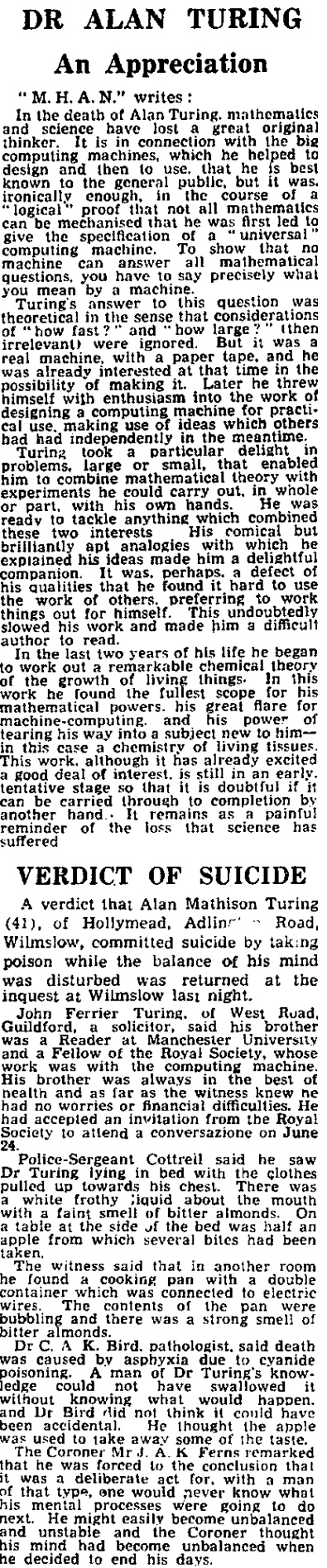
11 June 1954: An appreciation of Dr Alan Turing, the brilliant mathematician and scientist, who committed suicide aged 41.
27 September 1954: Lyons Electronic Office, or Leo for short, is what is popularly known as an “electronic brain” which changes the way clerical tasks are shared.

13 August 1966: A new chapter begins as libraries welcome technology.
29 October 1979: A young Soviet mathematician, apparently totally unknown to the world’s senior practitioners, has found an answer to one of the most baffling problems in computer calculation.
25 January 1984: The Macintosh computer is launched by Apple.

18 February 1988: The Tandy is love at first sight in the newsroom, a godsend for journalists whose traditional method of filing copy was shouting words down a telephone.

6 December 2011: Steve Jobs, technology guru and the face of Apple, dies of pancreatic cancer aged 56.

29 May 2016: Early computers as objets d’art – eye-catching design didn’t begin with Apple, as a new, digitally aided photography series illustrates.