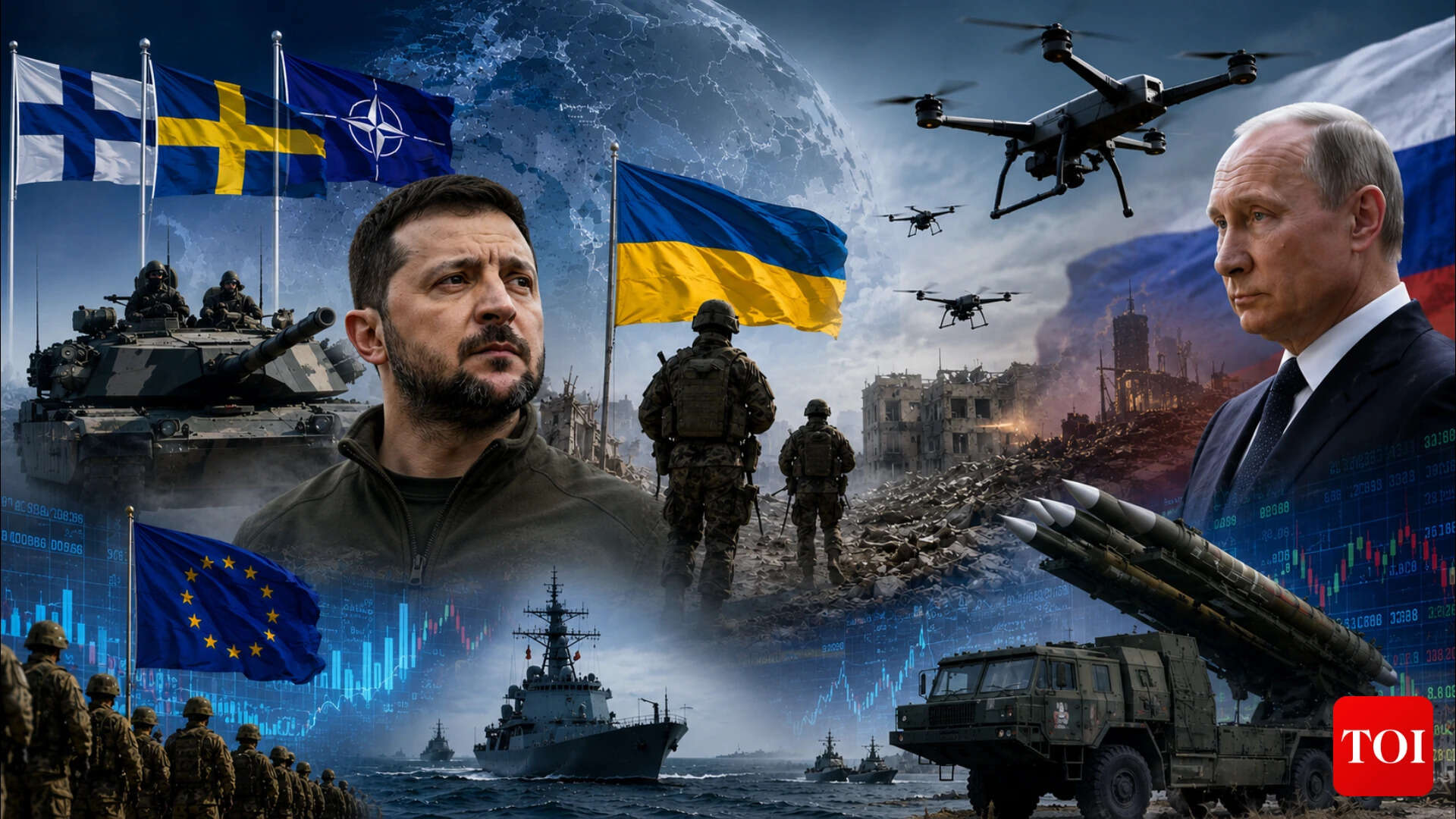
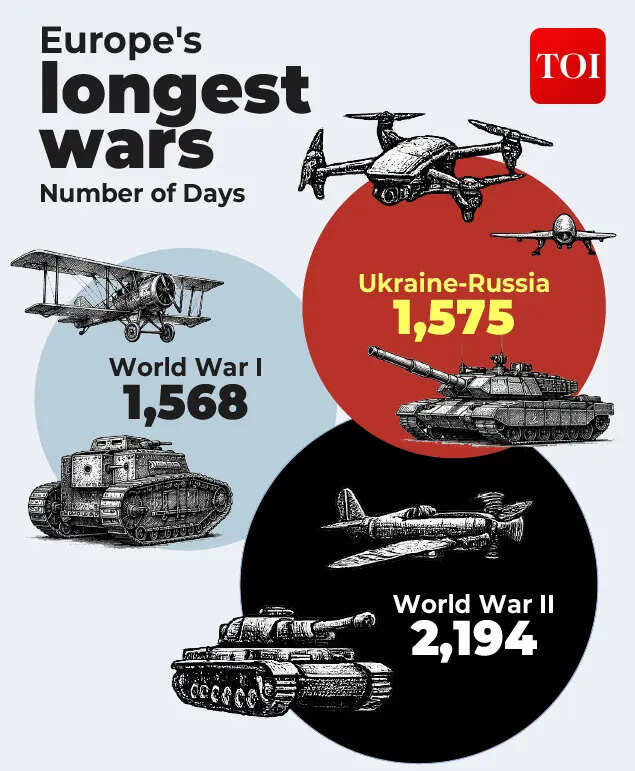
The Russia–Ukraine war has now lasted 1,575 days as of June 17, 2026 — a grim milestone that makes it longer than World War I (1,568 days).
Get breaking news anytime, anywhere. Download the TOI app now!
That comparison matters: World War I didn’t just redraw borders; it shattered old assumptions about how wars are fought, introducing tanks, widespread aerial bombardment, chemical weapons, mass conscription, and industrialised logistics that rewrote military doctrine for a century.
Today’s conflict is doing the same kind of structural work.
It is Europe’s deadliest fighting since World War II, and its reverberations are reshaping geopolitics, doctrine, and alliances. With peace talks stalled and no end in sight, the war could yet rival World War II’s six-year span (2,194 days) if it continues into 2027.
Below are 10 ways this single, protracted war is transforming the world order — the kind of wrenching change that historically redefines how states plan, arm, and wage war.
1. Staggering human cost
Millions displaced, communities erased, and a generation of lives scarred — the human toll of this conflict will shape politics, demographics, and migration for decades in Europe.
Exact figures remain disputed but according to a January 2026 CSIS study, Russia has incurred approximately 1.2 million casualties, including an estimated 280,000 military deaths, from February 2022 through December 2025.
Ukraine's losses remain less precisely documented but equally devastating.
The CSIS report estimates Ukraine has suffered between 500,000 and 600,000 casualties, including up to 140,000 fatalities.
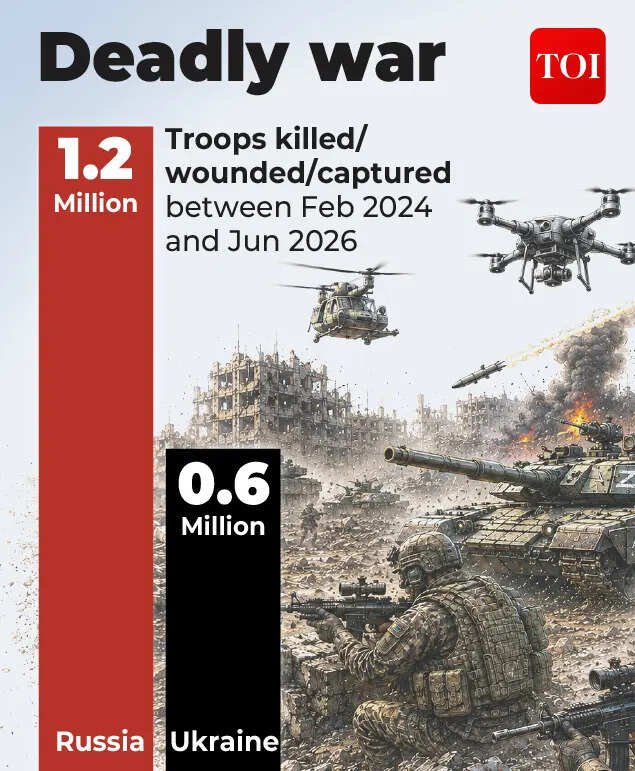
Combined casualties for both forces could reach as high as 1.8 million, potentially climbing to 2 million by spring 2026.
Civilian casualties present even greater uncertainty.
UN monitors have verified nearly 15,000 civilian deaths in Ukraine, though the actual figure is believed to be much higher due to unrecorded deaths in occupied territories. At least 600 deaths have been reported in Russia.
The displacement figures are far more shocking — nearly 11 million Ukrainians displaced (6.9 million refugees abroad and 3.7 million internally). Ukraine's population shrunk by around 10 million (25% of pre-war total).
These conflicting numbers reflect the war's opacity, with both Moscow and Kyiv treating casualty figures as sensitive state information while controlling access to battlefield data.
2. Nato expands
Russia's invasion triggered the most significant Nato expansion in decades, fundamentally altering Europe's security architecture.
Finland joined Nato in April 2023, and Sweden formally joined in 2024, dramatically expanding the alliance's eastern flank along the Baltic Sea and Russian border.
This expansion brought Nato's member count to 32 nations, adding nearly 1,400 kilometers of new border with Russia.
The geopolitical consequence was immediate and severe for Moscow.
Finland's accession transformed the Baltic Sea into what Nato officials call a "Nato lake", while Sweden's membership closed critical gaps in Arctic and Baltic defense coverage.
This expansion directly contradicted Putin's stated war aim of preventing Nato encroachment on Russia's borders.
Instead of creating a buffer zone, the invasion produced exactly what Russia sought to prevent: a more robust, expanded Nato with new members willing to commit troops and resources to eastern European defense.
3. A new arms race in Europe
The war also energised decades of German and European hesitation about military spending and alliance commitment.
European defense spending has surged to historic levels, representing arguably Russia's single biggest strategic miscalculation.
EU Member States' defence expenditure reached an estimated $442 billion in 2025, a rise of almost 63% compared to 2020.
Expenditure grew from 1.6% of GDP in 2023 to 1.9% in 2024 and is expected to reach approximately 2.1% in 2025.