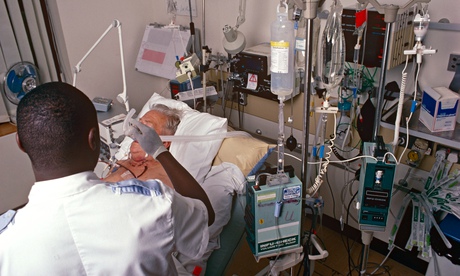
A staggering 15 million people in England are living with at least one long-term health condition, such as type 2 diabetes, heart disease, asthma or the long-term effects of stroke or cancer. This is putting tremendous strain on the NHS budget and posing a real threat to the sustainability of our health service. While there are some excellent examples of care, these are overshadowed by dangerous gaps in diagnosis, treatment and coordination of care for patients which puts their physical and mental health at risk and is extremely costly to our health service. The NHS spends £75bn a year on treating people with long-term conditions, accounting for £7 of every £10 spent by the health service.
Our new report published on Friday, Vital Signs: Taking the temperature of health and care services for people living with long term conditions, reflects an urgent need for the NHS to address the issues and get the necessary services in place to stop people suffering avoidable health complications, and give them the best chance of living healthier, longer lives. We know what needs to happen to achieve this – for example, helping people to better manage their condition, and joining up services around the person’s needs.
The NHS’s Five Year Forward View has set out a road map as to how we can achieve this. But we need a great deal of work from a future government and health leaders at all levels to turn this vision into reality. This is important both politically and for the sustainability of the NHS in the run up to the next election. Neither people living with long-term conditions nor the already stretched NHS budget can afford to wait any longer.
Tom Wright Chief executive, Age UK
Kay Boycott Chief executive, Asthma UK
Chris Askew Chief executive, Breakthrough Breast Cancer
Simon Gillespie Chief executive, British Heart Foundation
Penny Woods Chief executive, British Lung Foundation
Barbara Young Chief executive, Diabetes UK
Lynda Thomas Chief executive, MacMillan Cancer Support
Arlene Wilkie Chief executive, The Neurological Alliance
Mark Winstanley Chief executive, Rethink Mental Illness
Jon Barrick Chief executive, The Stroke Association
• The NHS budget is not keeping pace with demand (NHS needs an extra £8bn a year to survive, Letters, 16 March). In 2002 Derek Wanless reported that the NHS was spending 7.7% a year, as a percentage of GDP, and that that should rise to 10-11% by 2012-13 and 11-12% by 2017-18. However, this month John Appleby the chief economist at the King’s Fund pointed out that the government’s austerity programme had cut NHS funding by 0.4% a year on average for the years 2010 to 2012 and that this has led to a fall in NHS spending as a percentage of GDP from 7.7 to 7.3%. So in relative terms the UK is currently spending less on the NHS than it did in 2002.
Morris Bernadt
London