I was one of the signatories to an open letter this week calling on the government to reform police bail (see here and here). It is fair to say that the media spotlight on this iniquitous treatment follows its use against journalists, mainly involving staff on the Sun.
But it would be wrong to see the current campaign to prevent its misuse as a form of special pleading by hacks. Firstly, it is too late to help them. Secondly, and most importantly, it affects many more people, with some 70,000 people now on police bail.
That is why I strongly support the cross-party campaign, “Justice delayed, justice denied”, which is calling for police bail to be limited to 28 days.
It is a peculiar form of legal limbo in which a person who is merely suspected of a crime can suffer for months, sometimes years, from arbitrary restrictions on their freedoms. Frankly, it is a disgrace in a democratic society.
A recent study has shown that 5,930 people in England and Wales have spent more than six months on pre-charge bail. Some have spent three years on bail.
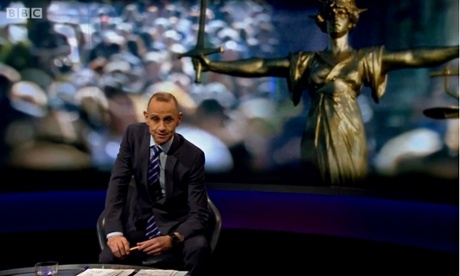
One of the significant factors to notice about the signatories to the letter was that it crossed the political spectrum, involving politicians, journalists and lawyers. Similarly, in a revealing segment on BBC2’s Newsnight on Monday, the interviewees were anything but normal political bedfellows.
The reporter, Nick Hopkins, pointed out that the police can impose a range of conditions on people they bail: they can restrict their movements, remove their passports, take away their computers and mobile phones and even suspend their bank accounts. Many people are suspended from their jobs while on bail because of the nature of the accusations against them.
Yet, after months of this treatment, when the police conclude that there is no evidence against a person, he or she is simply told that there will be “no further action” (known in the jargon as being NFAed).
Police can do all this without needing to seek permission from a court. Bailed people have no rights of protest. They are at the mercy of the police force that arrests them.
As Richard Garside, director of the centre for crime and justice studies, told Newsnight, police bail has “morphed into police officer justice” in which police can restrict people’s liberties and freedoms prior to any charge being brought. And all too often there is no charge.
Rachel Robinson of Liberty suggested the police were taking advantage of unlimited powers by not using bail in a targeted and focused fashion.
During the months in which police are supposed to be carrying out their investigations, people are forced to live under a cloud of suspicion. One teacher, who was cleared of charges against him, told Newsnight that he was unable to live in his own home because it was located on school grounds.
So why do the police use such long periods of bail for people only suspected of crimes? Nottinghamshire Chief Constable Chris Eyre said that digital inquiries are complicated and lengthy, especially at a time when the police are facing “huge cuts.”
But another chief constable, Alex Marshall, the chief executive of the College of Policing, denied that cuts were the reason for the delays.
Garside was also sceptical about manpower being a problem. “The police remain a very well resourced public service,” he said. “In the decade to 2010, police funding went up in real terms by 50%.”
Police bail did not exist when I was a reporter. It was introduced under the Police and Criminal Evidence Act of 1984 and it would appear that, over the past 30 years, the police have gradually come to rely on it more and more.
One aspect not touched on by Newsnight is the way in which suspects feel intimidated by being on bail. It could therefore be used as a way of pressuring people to confess, despite their innocence.
See also the reports on the BBC website and on Sputnik News