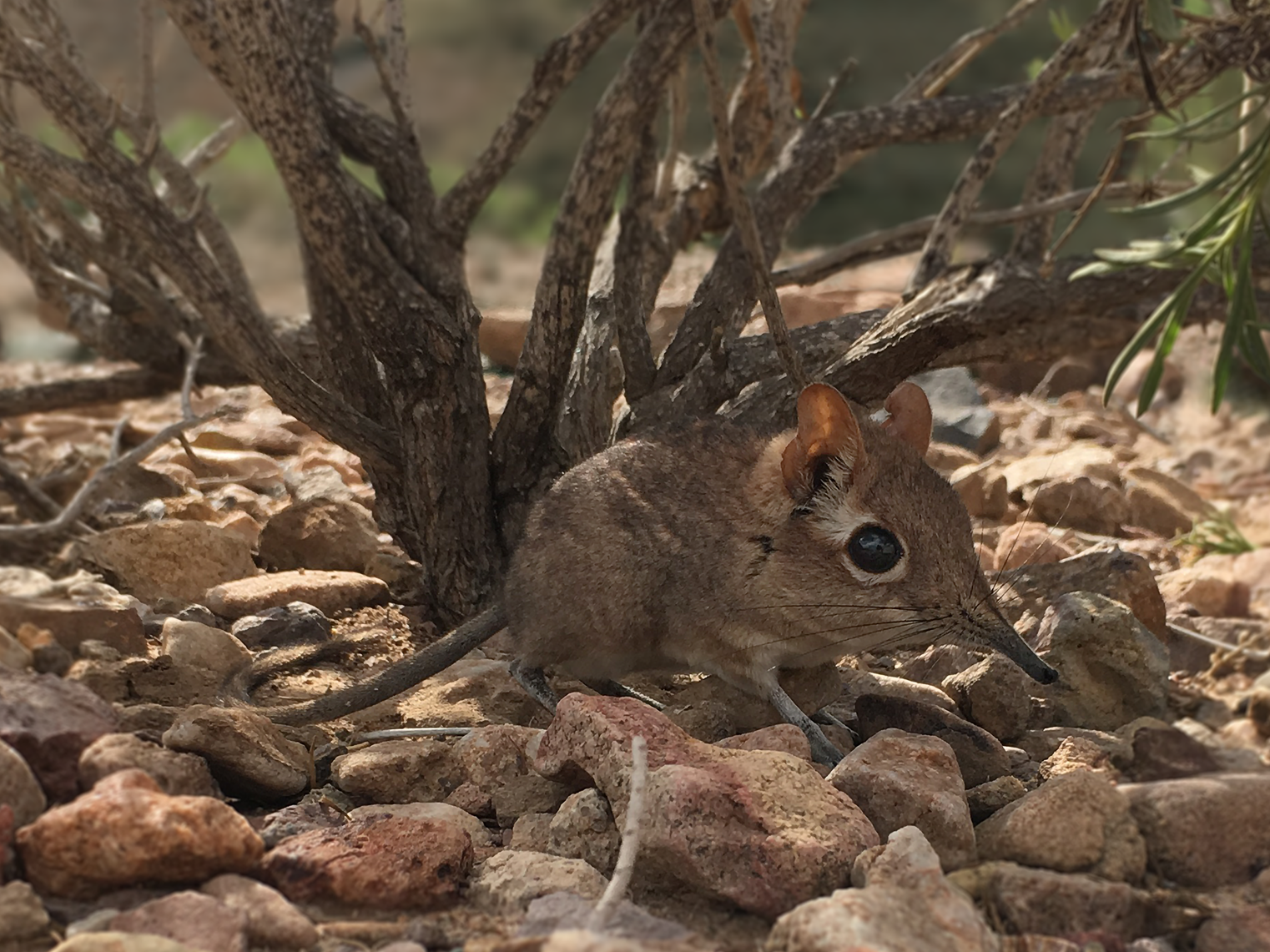
It is related to aardvarks and elephants, and feasts on insects with its long, trunk-like nose.
But Sengis, known as the elephant shrew, is only a few inches long, resembling a mouse, and it was lost to science for at least half a century – until being rediscovered in the Horn of Africa.
The species had last been seen in 1968 in Somalia, and scientists had collected only 39 specimens up to hundreds of years old, stored in museums.
The Somali sengi mates for life, sharing a small territory with its partner, and has hind limbs built more for gazelles than small mammals.
The US-based Global Wildlife Conservation group even put the animal on its 25 most wanted lost species, saying it was “one of the last big mysteries of African mammalogy”.
But last year, following tips that it could be in Djibouti, which neighbours Somalia, scientists set out in search of the eccentric insectivorous mammal.
Local people identified the animal from photographs during interviews and the team caught 12 sengis in traps.
The researchers, whose findings are published in the peer-reviewed journal PeerJ, say they did not see any looming threats to the species’ habitat, which is dry and largely inhospitable to humans.
“Sengi biology is a science of passion,” said Steven Heritage, a research scientist at the Duke University Lemur Center and lead author on the paper. “It takes somebody that’s motivated by passion for sengis to go out looking for this lost species. They are not well-known animals, but when you see them, it’s impossible not to adore them.”
Robin Moore, of GWC, said: “Usually when we rediscover lost species, we find just one or two individuals and have to act quickly to try to prevent their imminent extinction. This is a welcome and wonderful rediscovery during a time of turmoil for our planet, and one that fills us with renewed hope for the remaining small mammal species on our most wanted list.”
Houssein Rayaleh, a Djiboutian research ecologist and conservationist, said: “For Djibouti this is an important story that highlights the great biodiversity of the country and the region and shows that there are opportunities for new science and research here.”