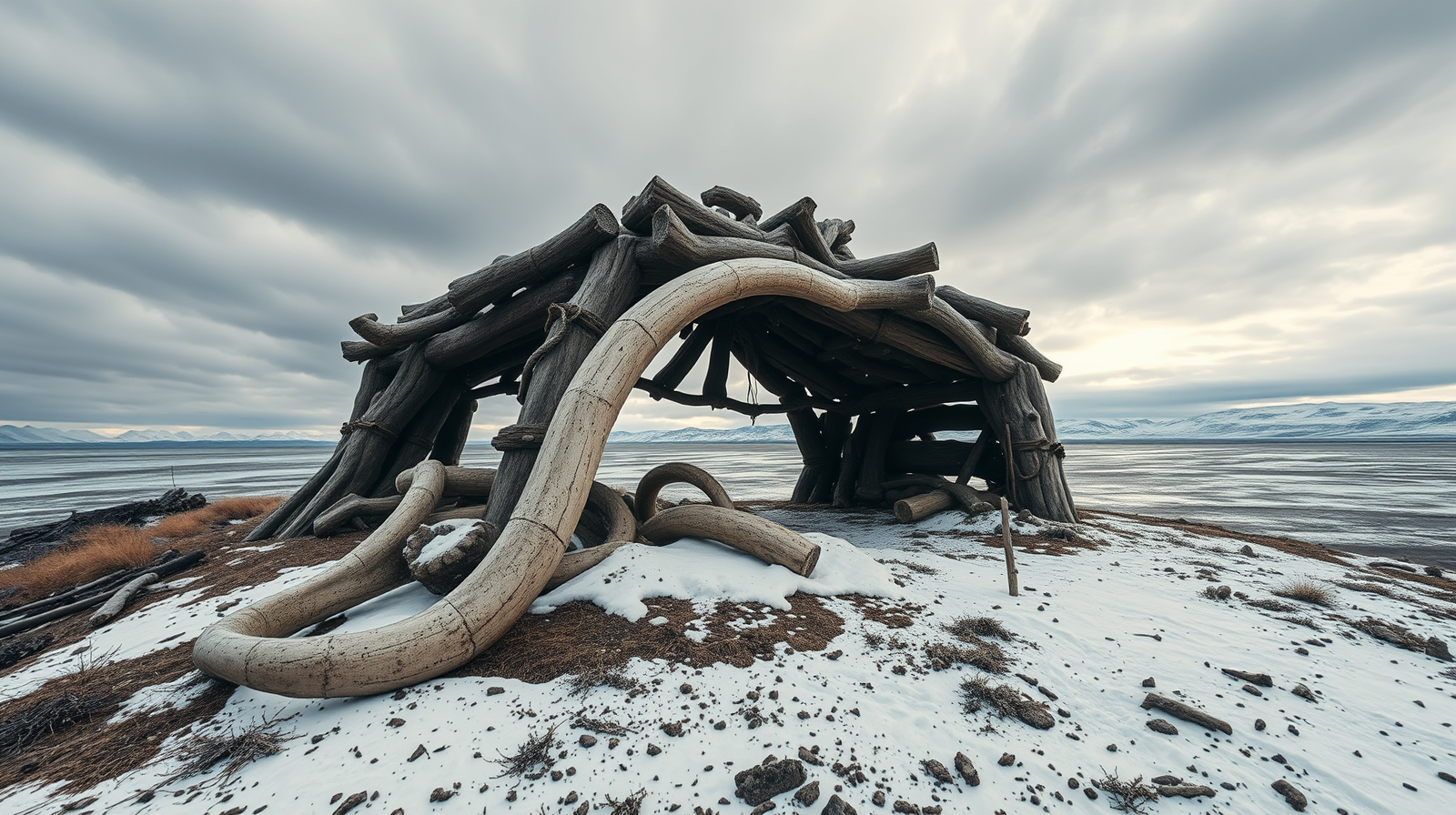
On a windswept bluff above the Ros and Rosava rivers in what is now central Ukraine, ice age hunter-gatherers once built shelters entirely out of the bones of woolly mammoths, using the remains of the largest land animals of their time to survive some of the coldest conditions the last glacial period ever produced. The site, known as Mezhyrich, was first excavated between 1966 and 1974 near the village of Mezhyrich, about seventy miles southeast of Kyiv, and it remains one of the best-known examples anywhere in the world of prehistoric architecture built from animal bone rather than wood or stone. A new study has now pinned down exactly when these remarkable structures were actually used, and for how long.
Get breaking news anytime, anywhere. Download the TOI app now!
Mystery behind the giant mammoth bone structures at Mezhyrich
Archaeologists uncovered four separate circular structures at Mezhyrich, each built from hundreds of mammoth bones and tusks and surrounded by pits, workshops and debris zones that together suggest a genuinely busy site of ice age activity. Structures like these, built from carefully stacked mammoth bones with hearths at their centre, have been documented at several other sites across central and eastern Europe as well, and for decades researchers have debated exactly what these circular bone arrangements actually represent, genuine dwellings people lived in, storage facilities, or possibly sites tied to ritual or symbolic purposes rather than everyday habitation. Earlier dating attempts at Mezhyrich only added to the uncertainty, producing a broad range of possible ages stretching from roughly 19,000 to 12,000 years ago.
How researchers finally nailed down a precise timeline
To resolve this uncertainty, archaeologists led by Wei Chu of Leiden University returned to the site and took a different approach to dating it. Rather than relying directly on the mammoth bones that made up the structures themselves, the team dated the remains of about a dozen small animals recovered from the layers in and around the dwellings. According to the study published on the Open Research Europe platform , this approach placed the largest structure at the site, known as MBS4, at between roughly 18,248 and 17,764 years old, putting its construction and use squarely within the harshest phase of the last Ice Age, just after the coldest stretch of the entire glacial period known as the Last Glacial Maximum.
Why the shelter was likely used only briefly
Perhaps the most striking finding to come out of the new dating is what it reveals about how long people actually lived in this particular structure. The researchers found that the radiocarbon evidence recovered from in and around MBS4 overlaps so closely in time that no clear gaps appear in the record, a pattern that points toward a relatively brief period of use, possibly no more than a handful of separate visits, even though the wider dating window suggests the structure could theoretically have been associated with the site for up to 429 years. As the researchers themselves put it, the occupation span was short, possibly a single or a few visits over centuries, concluding that these bone built shelters functioned as practical solutions for survival rather than permanent, continuously inhabited settlements.
What life at Mezhyrich actually looked like
Despite the apparently brief periods of occupation, the surrounding site paints a picture of genuinely intensive activity whenever people were actually present. Around the mammoth bone structures, researchers have documented pits filled with tools and animal remains, along with distinct areas set aside for butchering carcasses and crafting stone implements, features that have led some archaeologists to describe the site as a kind of economical settlement unit, tightly organised around the practical demands of survival in an extremely harsh environment. Researchers involved in the new dating work have also found evidence of a range of other animals at the site, including boar, deer and bear remains, suggesting the people who periodically returned to Mezhyrich relied on a genuinely varied diet rather than mammoth meat alone.
Why mammoth bones made sense as a building material
Building shelters from mammoth bone was not simply an eccentric choice, it reflected a practical response to the environment ice age hunters actually inhabited. Wood was extremely scarce across the open, treeless tundra landscapes of ice age Europe, while the bones and tusks of mammoths, animals that were both hunted directly and scavenged from natural deaths, offered a genuinely abundant and structurally useful alternative building material. Skulls, ribs and tusks could be carefully stacked and arranged into sturdy circular frames strong enough to support some kind of covering, likely animal hide, creating a shelter capable of offering real protection from the wind and extreme cold of the surrounding tundra.
Why this new chronology matters for understanding ice age life
By tightening the timeline at Mezhyrich so precisely, researchers have made it considerably harder to treat the site as a long lived ice age village in the way some earlier interpretations had assumed. Instead, the new dating pushes the interpretation firmly toward short, purposeful occupations tied to the harshest, most volatile conditions of the last glacial period, offering a clearer sense of how ice age communities moved through and used a genuinely hostile landscape rather than settling in one place indefinitely. The findings add fresh, more precise evidence to a site that has fascinated archaeologists for decades, showing in concrete detail exactly how ice age people turned the remains of the giant animals around them into the very architecture that helped keep them alive. Shelters built from mammoth bones during the coldest phase of the last Ice Age, used briefly on a handful of visits across potentially centuries, and precisely dated by the small animals found in the debris around them rather than the bones of the structure itself: the methodology is as interesting as the finding. The brevity of occupation makes the site more remarkable, not less, since it means these people planned, built, and dismantled an elaborate survival strategy for temporary use in one of the most hostile environments humans have ever inhabited.