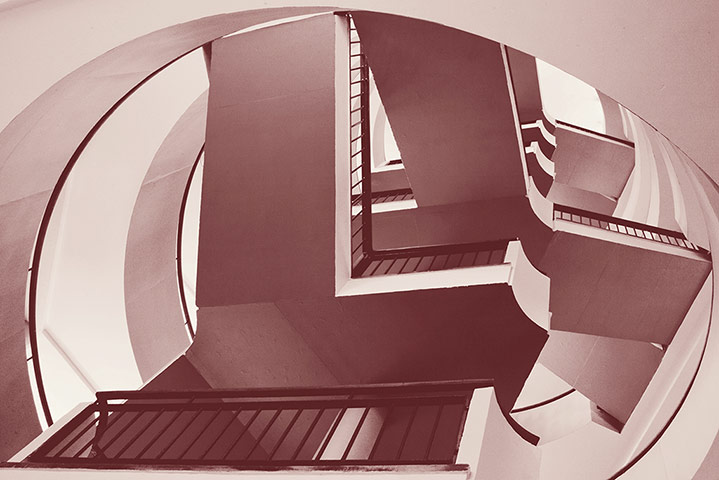
Nominated by Tom Dyckhoff from BBC’s The Culture Show, who said of the building: 'We walked in and entered … what? Another universe. Whoosh. That staircase! Now, most staircases in postwar blocks of flats are nothing to write home about. This one, though, was plucked from an Escher print. Imagine coming home from work to this. Imagine popping out for a pint of milk' Photograph: Theo Simpson
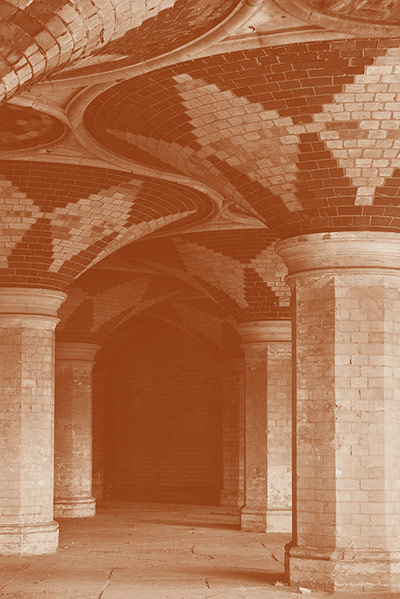
Nominated by Rory Olcayto from the Architects’ Journal, who says: 'An extraordinary pedestrian underpass of octagonal columns fashioned from cream and orange brickwork, it is one of the few elements of the vast exhibition complex to have survived the great inferno of 1936 that left Joseph Paxton’s glass and iron marvel in ashes …' Photograph: Theo Simpson
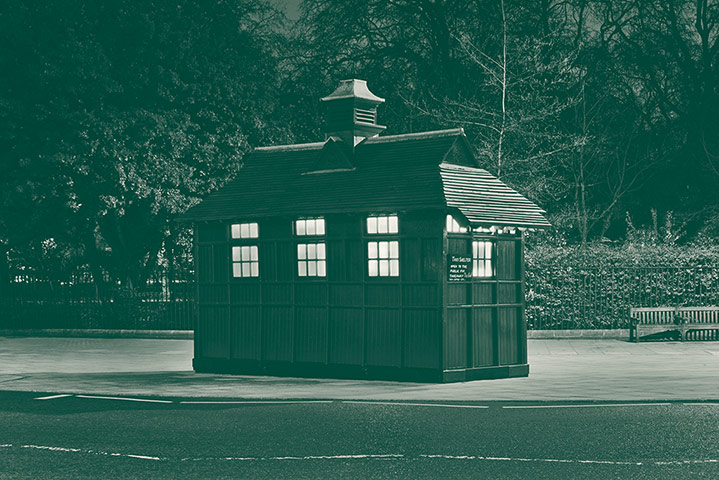
Nominated by Oliver Wainwright, who says: 'Like a cross between a quaint country cricket pavilion and a garden shed, the Cabmen’s Shelter is an enigmatic part of the London streetscape. There are only 13 of these mysterious structures left, but at their height there were more than 60 across the city, built at a cost of £200 each …' Photograph: Theo Simpson
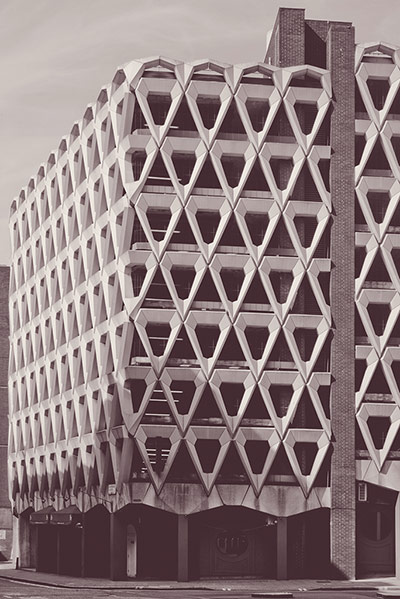
Nominated by Sam Jacob, Dezeen and director of FAT Architecture, who says: 'This multistorey car park sits like a block-size sculpture, its diamond-shaped concrete panels locked together into mesmeric and scaleless pattern … It is part of a small gang of buildings produced in a small window when car parks were treated as civic monuments that expressed the modernity of the moment' Photograph: Theo Simpson
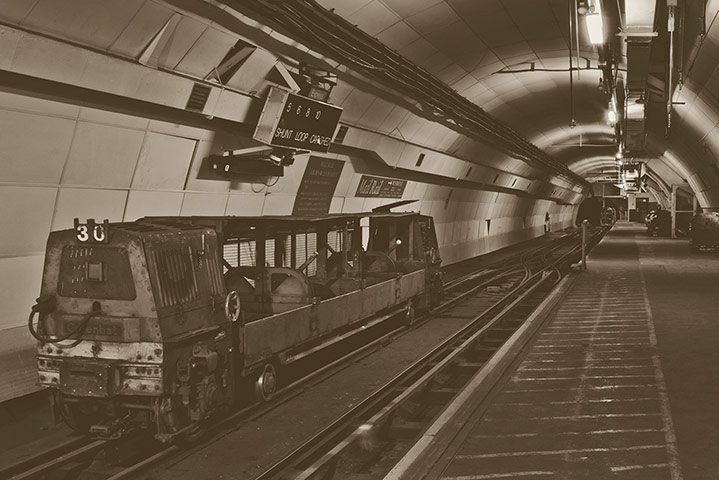
Nominated by Ellie Stathaki, Wallpaper* magazine, who says: 'The Post Office Underground Railway, aka Mail Rail, was built for the post to bypass the capital’s congested streets. It was the world’s first driverless electrified railway and connected the capital’s sorting offices from 1927 until it closed in 2003. It remains the world’s only dedicated underground mail transport system' Photograph: Theo Simpson
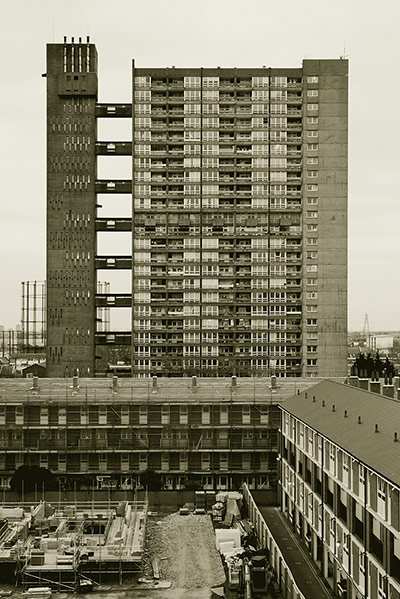
Nominated by Owen Hatherley, who says: 'The Balfron Tower is surrounded by an entire estate of Goldfinger structures, all designed with an attention to detail and quality of materials unusual for the 60s or any other decade … The Brownfield Estate as a whole is still remarkable as an example of a time when public housing could be valued as much, or rather more, than any other form of building …' Photograph: Theo Simpson
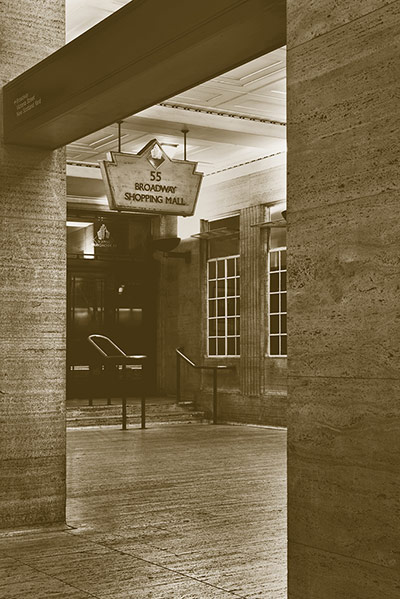
Nominated by Edwin Heathcote, Financial Times, who says: 'The London arcades that interest me are the almost anonymous ones built above tube stations that even Londoners barely notice. The best is a modest art deco gem beneath the blocky mass of Underground HQ, 55 Broadway, above St James’s Park tube. Travertine-clad and bronze-detailed, it chimes with the faintest echo of New York' Photograph: Theo Simpson
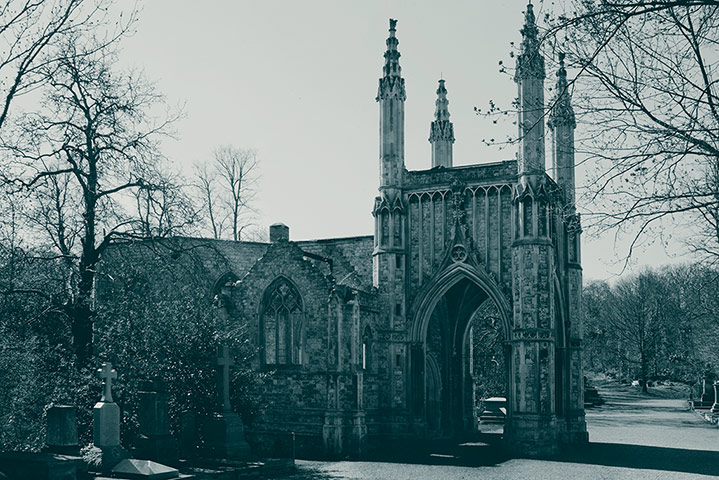
Nominated by Hugo Macdonald, Monocle, who says: 'Between 1832 and 1841, the Magnificent Seven cemeteries were opened in a loose ring around the outskirts of London. Nunhead – formerly All Saints – in the south-east was consecrated in 1840 and, at 52 acres, is the second-biggest yet least famous. A gap in the trees there gives one of the most spectacular, unbroken views across London to St Paul’s' Photograph: Theo Simpson
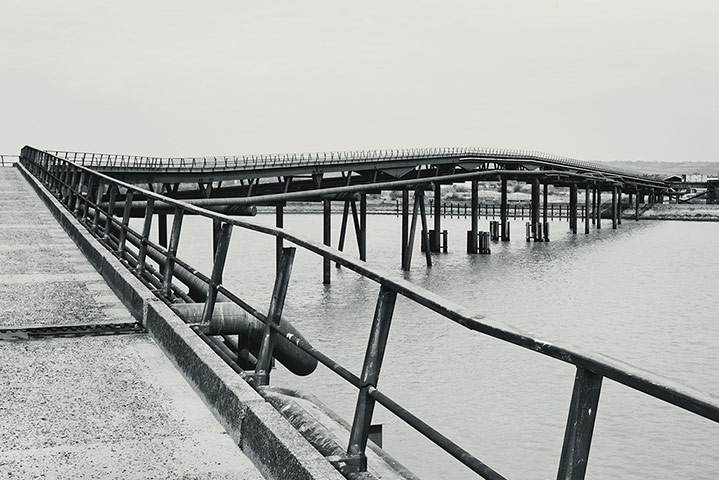
Nominated by Owen Hatherley, who says: 'The exceptionally long, spindly, worn jetty that was once part of the Occidental Petroleum site is both a remnant of (and currently provides a view of one of) the least commented-on but most astonishing ‘unknown architectures’ around – the buildings of the petrochemical industry. Anonymous and hardly even strictly definable as ‘architecture’ …' Photograph: Theo Simpson
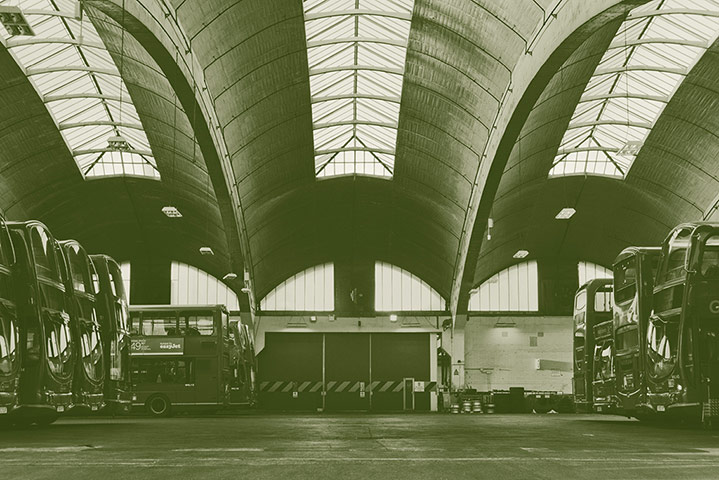
Nominated by Tom Dyckhoff, who says: 'In the 1950s another future was still possible. We still built bus garages like palaces for the ordinary man on the Clapham omnibus, quite literally in this case. Bus garages, mind. Stockwell Bus Garage isn’t even a bus station, but a bus depot. Commuting dolts like you and me weren’t meant to see this beauty. It was saved for the bus drivers at the beginning and the end of their shifts' Photograph: Theo Simpson