London Road (2015)
Director: Rufus Norris
Entertainment grade: B+
History grade: A
In late 2006, five women were found murdered near Ipswich. The women were aged between 19 and 29, had all worked as prostitutes and had histories of drug abuse. Forklift truck driver Steven Wright, then 48, was found guilty of their murders. He is now serving life imprisonment.
Style
In Robert Altman’s The Player (1992), Hollywood executives demand that movies be pitched to them in “25 words or less” (yes, grammatically that should be “25 words or fewer” – but the phrase has stuck). Pity anyone who had to pitch London Road in 25 words. “It’s a film about the Ipswich serial killings, only it doesn’t feature the killer or any of the victims. Oh, and it’s a musical.” That’s 24, but you wouldn’t have time for a 25th before you were booted out of the office. Furthermore, the song lyrics are verbatim dialogue taken from recorded interviews with the residents of London Road, where Wright was living when he killed the women. The performances preserve every hesitation and repetition of the residents’ speech. Some of the recorded interviews are played over the end credits, so you may compare. The film builds up a sense in song and dance of how a community dealt with the shock of what happened.
Memory
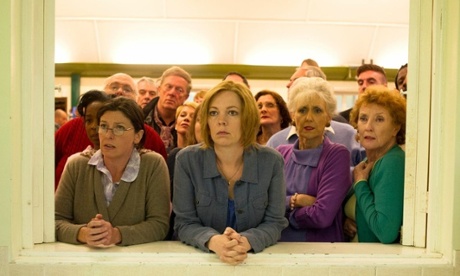
Using primary source testimony in this way – verbatim, but re-enacted and set to music – is a radical way to make a historical movie. London Road isn’t a documentary: though the dialogue is real, it has been dramatised and switched around between characters, and those characters and their settings have been reimagined (in place of the real London Road, the film was shot on Sutherland Road in Bexley). Yet it feels close to oral history, a collection of spoken memories. One reason many historians love oral history is that people may be a lot less guarded about what they say out loud, compared with what they would be prepared to write down. “They certainly weren’t angels,” says one of the residents, talking about the victims. “In all our experience they were foul-mouthed slags.” Others are kinder; some are crueller still. On the other hand, oral history is a tricky thing to handle – for even the sanest and most honest people’s memories of traumatic events are often unreliable and partial.
Slant

This isn’t to suggest any of these interviewees were making things up: their reactions are authentic. But even a collection of first-hand testimonies doesn’t provide the full historical picture. The voices here have been selected and edited to tell a particular story. Other stories would have been possible, too. This is apparent during the film’s one song told in the voices of women who worked as prostitutes in Ipswich alongside the murder victims. It’s a valid choice to focus on the stories of residents rather than these women, but the fleeting glimpse into their lives feels a little trite. When it focuses on the residents, though, the film is hauntingly effective: the dialogue selected and compiled with a sense of poetry and resonance, the score imaginative and memorable, the performances sublimely judged.
Theatricality
London Road was a huge success as a stage show at the National Theatre. Many of the original cast reprise their roles for the film – alongside a few bigger names, including Olivia Coleman, Anita Dobson, and Tom Hardy as a serial killer-obsessed cabbie. Though there has been an effort to make the production more cinematic (it’s nicely filmed by Danny Cohen, who was director of photography on Les Misérables and The King’s Speech), London Road still comes across as something conceived for the stage. A couple of the more theatrical flourishes – the road literally blooming from grey depression into vibrant colour, and a sequence before the end credits that is rather too reminiscent of a Banksy cartoon – risk toppling into mawkish overstatement on screen.
Verdict
A fascinating and mostly very successful experiment in historical filmmaking – though Hollywood executives might not rush to make more movies just like it.