“It is going to be a tough campaign,” writes the Conservative candidate for London mayor in his latest email to supporters. “Jeremy Corbyn’s Labour Party are going to throw everything at this to try to get their candidate elected.”
Have they noticed something? Could Zac Goldsmith and his team suspect that the new leader of Labour is shaping up as a liability in London, the city where his party made general election gains just six months ago while falling to defeat everywhere else?
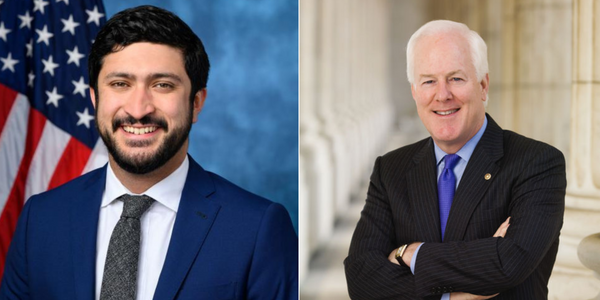
Pay attention to the email’s wording. It’s not simply the Labour Party that Goldsmith’s missive mentions, but “Jeremy Corbyn’s Labour party.” The reference to Labour’s City Hall contender Sadiq Khan as “their candidate” pointedly yokes him to the Corbyn project.
Yes, it’s just one sentence in one email designed to rally those already converted to the Conservative cause rather than a message for London’s electorate as a whole. But it’s not hard to see why linking Labour’s Khan to Corbyn’s Labour might hold appeal for Goldsmith as a wider campaign ploy.
Consider the London detail of a recent YouGov national poll. Just 33% of the Londoners surveyed thought Corbyn was doing well in his new job compared with 49% who judged him to be doing badly. The latter is the same percentage of Londoners that reckoned David Cameron to be doing well as prime minister – a perhaps surprising 6% more than think he’s doing badly.
True, the London representation in the poll is very small - a weighted sample of just 211. But it is noticeable that Cameron’s ratings in the capital are the exact reverse of those found by YouGov for all of Great Britain while Corbyn’s are only fractionally better than those he was given by the country at large.
Also of interest is the London sub-sample’s view of Corbyn’s values. Asked if they regard him as a dangerous extremist or a refreshing man of principle, the group split exactly evenly. Again, Corbyn did a bit better in London than nationally by this measure, but the finding does not suggest he’s hitting the heights in the city where his party prospered only six months ago.
What might this mean for Sadiq Khan? Will any enduring doubts about Corbyn in London weaken him and strengthen Goldsmith? After all, Khan was one of the Labour MPs whose nomination enabled Corbyn to scrape into the leadership race in the first place (although Khan’s actual vote went to Andy Burnham).
The votes of Corbyn supporters also helped him to some extent to win the mayoral candidate race. The pair are not from the same part of their party’s philosophical spectrum, but each owes something to the other for getting to where they are now. Goldsmith and advisers would be daft not to explore how this association, however indirect, might be exploited.
Khan, though, is already in position to repel such a line of attack. A striking feature of his campaign from the moment Corbyn ascended to the Labour summit has been his eagerness to make public displays of independence from him. Khan has placed on record his doubts about the economic stance of shadow chancellor John McDonnell and loudly proclaimed that he intends to be “the most business-friendly mayor ever.” As well as boldly colonising natural Tory territory, this difference in approach from that of Corbyn has been approvingly remarked on in business circles. It would be “as welcome in his party leader’s office as a portrait of Thatcher,” according to a friendly City AM editorial.
It’s hard to say how much all of this might matter. The electoral benefits of London mayors and those aspiring to the post being at odds with their national party leaders - as Ken Livingstone often was and Boris Johnson has been persistently made out to have been - are probably overstated. Competence, vision and likeability probably rank higher. But in a contest where party labels might count for relatively more than they did during the era of “Boris” and “Ken” both Goldsmith and Khan will be mindful of how the top men in their respective parties are faring and refine their campaigns accordingly.
Goldsmith’s email shows that he believes Corbyn can be used as a red spectre to mobilise Tory activists in his battle against Khan. But how good a friend to Goldsmith can Corbyn be? Can doubts about the Labour leader be used to stir floating and indifferent Tory-leaning London voters to go to the ballot box and thwart Khan? Would such a tactic simply create more opportunities for Khan to profitably re-emphasise his differences with Corbyn - opportunities that Khan might welcome with extra enthusiasm if Corbyn’s polling numbers don’t improve?
Amid these many maybes one thing is clear. It is that Corbyn’s fortunes as Labour leader are bound up with Khan’s bid to become London mayor. Should Khan win, Corbyn’s position will look more secure. Should Khan lose and Labour do badly in elections elsewhere in the country next May, criticism of Corbyn’s leadership will grow. It could be that the more Khan contrasts himself from Corbyn, the better for Corbyn it is. I’m sure there’s an irony in there somewhere.