Over in Greece, and signs that prime minister Antonis Samaras may not be out of the running in next month’s election, despite the poll lead held by anti-austerity party Syriza. Helena Smith writes:
Opening the four-week campaign, Samaras insisted that crisis-plagued Greece had been pushed into holding the poll after Athens’ 300-seat House failed to endorse Stavros Dimas, his candidate for president.
“People don’t want these elections and they aren’t necessary,” Samaras told the nation’s outgoing head of state Karolos Papoulias. “They are happening because of party self-interest … and this struggle will determine whether Greece stays in Europe.”
With debt-burdened Greece dependent on international rescue funds, officials said Syriza would “pay a heavy price” for triggering the elections after joining forces with the neo-Nazi Golden Dawn to block Dimas’ election.
On the back of popular discontent over grueling austerity – the price of €240bn in aid - Syriza has lead polls since European elections in May.
But the gap has narrowed since Samaras took the high-risk gamble of bringing forward the presidential election. A Marc survey on Tuesday showed Syriza’s lead had dropped to 3.0 percentage points over Samaras’ New Democracy party after the Greek finance minister Gikas Hardouvelis warned of economic sanctions by the European Central Bank if the anti-austerity party won.
Analysts predicted that Samaras, who has better personal ratings than his rival Syriza leader Alexis Tsipras, could win the elections yet.
“The gap has been narrowing, due to the fear factor. The more fear the better for [Samaras’]New Democracy,” said the political science professor Dimitris Kerides. “ND is running the government and can manipulate the fear factor in its favor.”
On that note it’s time to close up the blog for the evening. Thanks for all your comments, and we’ll be back again tomorrow.
Updated
European markets end on downbeat note
Worries about the outcome of the forthcoming Greek election for the eurozone have sent shares sharply lower as 2014 grinds to a close. A volatile oil price, which saw Brent tumble below $57 a barrel before recovering to its current $57.49, also hit sentiment, with energy companies among the market losers. The final scores showed:
- The FTSE 100 finished 86.51 points or 1.3% lower at 6547.00
- Germany’s Dax dropped 1.22% to 9805.55
- France’s Cac closed down 1.68% at 4245.54
- Italy’s FTSE MIB lost 0.62% at 19,011.96
- Spain’s Ibex ended 1.11% lower at 10,279.2
- The Athens market closed 0.45% down at 816.15
On Wall Street the Dow Jones Industrial Average is down 43 points or 0.24% at the moment.
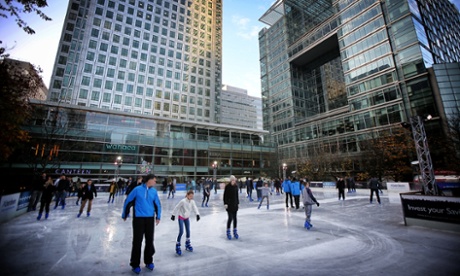
Back in the corporate world, and the nearly £3bn Qatari-led bid for property group Songbird Estates is hotting up.
US fund manager Franklin, which owns 7% of Songbird, is backing the 350p a share offer from the Qatar Investment Authority and its American bidding partner Brookfield Property Partners, according to the final offer document just published.
QIA owns 29% of Songbird, which in turn owns 69% of Docklands developer Canary Wharf, but it needs the backing of other key investors including China’s sovereign wealth fund and New York investor Simon Glick.
Songbird responded to the offer document by repeating that the offer undervalued the company and advised shareholders to take no action until they had received the board’s formal response.
In the market Songbird shares are currently down 3.5p at 317p.
The rise in consumer confidence has not done much for the US stock market.
With Europe heading lower on concerns about the eurozone in the wake of the forthcoming Greek elections, as well as the sliding oil price, American investors are also in a downbeat mood in early trading. (US markets have however been hitting new peaks in recent days, so a dip every now and then is not completely unexpected.)
The Dow Jones Industrial Average is currently down 55 points or 0.31% while the S&P 500 is down 0.3%.
In Europe the FTSE 100 is 1.4% lowers, Germany’s Dax is down 1.2% on the last day of trading for the year, while France’s Cac has fallen 1.1%.
Over in the US, consumer confidence rose in December, according to the latest Conference Board report, but not by quite as much as expected.
The board’s index climbed to 92.6 from 91 in November (itself revised up from 88.7). But this was slightly below forecasts of a level of 93.9.
Consumers’ view of current conditions was more favourable in December, with those saying business conditions were good unchanged at 24.8% but those saying they were bad falling form 21.8% to 19.6%. The board’s Lynn Franco said:
Consumer confidence rebounded modestly in December, propelled by a considerably more favourable assessment of current economic and labor market conditions. As a result, the Present Situation Index [at 98.6] is now at its highest level since February 2008 (Index, 104.0). Consumers were moderately less optimistic about the short-term outlook in December, but even so, they are more confident at year-end than they were at the beginning of the year.
Slight miss. Confidence rises to 92.3 vs. 93.9 expected. Still a big jump.
— Joseph Weisenthal (@TheStalwart) December 30, 2014
The full report is here:
The Conference Board Consumer Confidence Index Bounces Back
Updated
Summary
Time for an afternoon summary
- House price growth has slowed down in almost all parts of the UK, but the gap between London and the rest of the country has widened.
- Network Rail’s boss, Mark Carne, has given up plans to claim a £33,000 bonus, after delayed engineering works threw the rail system into chaos over Christmas.
- Italy’s economy minister has said the country has started to grow again. Yields on Italian 10-yr bonds dropped to a record low despite fears of contagion from Greece.
- The European Commission official in charge of the eurozone has said he respects the “democratic choice” of European voters, in response to the announcement that Greece will hold elections in January.
- US stock markets have opened slightly down on a day of low-volume trading, after the S&P hit a record high on Monday.
- In Europe markets are even more depressed, after oil prices tumbled to $57.7, a five-and-a half- year low. By mid-afternoon the FTSE100 was down 1.07% to 6,562 points. Germany’s DAX was down 1.22% and France’s CAC was down 0.87%.
That’s all from me today. I am now handing over to Nick Fletcher.
Thank you for following so far.
It had to happen sooner or later.
First Tesco created an ‘indie’ coffee shop; now McDonald’s has opened a hipster cafe.
The Corner cafe located in an inner-city Sydney suburb is so far a one-off. Serving pulled pork, chorizo and egg rolls and quinoa salads, it sounds a long way from a milkshakes and a happy meal.
Our colleagues in Sydney have been to check it out.
While the staff are dressed in chambray shirts and dark jeans – a far cry from the usual McDonald’s uniform of high pants in surgical green, it still looks like a McDonald’s which is trying not to be a McDonald’s. The hipster touches include tiled walls and a herb garden – and the food is served on those awfully impractical wooden sandwich boards. What will come next? Green juice in Mason jars?
The only McDonald’s branding evident is a tiny “McCafe” logo in small font on the takeaway bags. The logo is minuscule on the sign outside, which in black lettering on a white background proclaims The Corner....
It could be the only cafe in Sydney’s inner west not to offer macchiatos – possibly to get around any Mac-squared name – and there’s the porridge with poached pear to give you and your university-educated friends the extra frisson of some alliteration with your grains-based breakfast.
As far as we know the concept hasn’t arrived in Shoreditch, where the hipster breakfast may have already peaked.
But it is likely that McDonald’s will take its experiment elsewhere: the company has vowed to correct “misperceptions” about its food to arrest sinking sales in some of its biggest markets.
Gold prices rise on stock market jitters
In uncertain times, buy gold.
That mantra seems to have been holding up today. Traders have been buying gold and selling European shares, amid falling oil prices and worries over a renewed flare-up of the eurozone crisis.
The spot price of gold has ticked up 1.4% today to $1,200.70
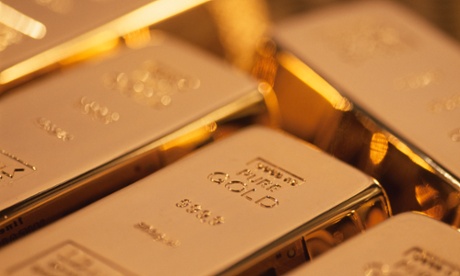
The price of gold soared during the financial crisis, but dropped off sharply on the back of an economic recovery and higher share prices.
The latest, modest increase in gold prices is a sign that investors think risks to the global economy have not gone away.
Thatcher warned City deregulation would unleash “unscrupulous” behaviour
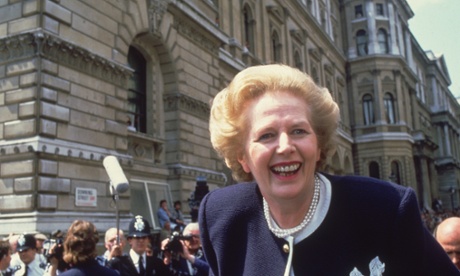
Margaret Thatcher was warned that sudden deregulation of the financial sector would give rise to a new culture of “unscrupulous” practices in the City, according to declassified government papers that have been hidden away for 30 years.
The Press Association has a good take on the story.
Sir Robert Armstrong, the Cabinet secretary, took the unusual step of setting out his personal concerns about “the things that people think are going on in the City” in a highly prescient memorandum to No 10, PA writes.
It continues:
1986 was the year of “Big Bang” - the deregulation of the London Stock Exchange which swept away the old gentlemanly world of “jobbers” and “brokers”, bringing in electronic trading floors and a wave of foreign incomers armed with sack-loads of cash.
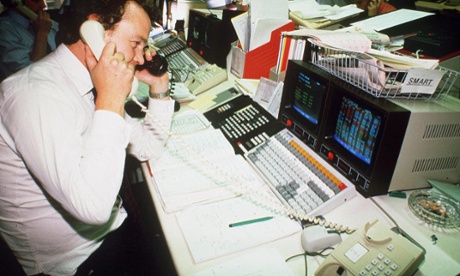
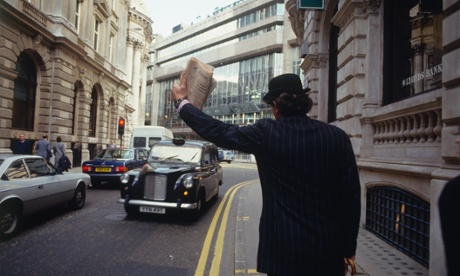
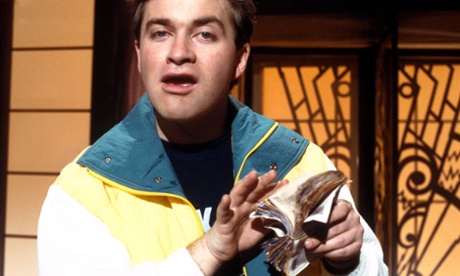
It ensured London’s pre-eminence as an international financial centre and ushered in the “loadsamoney” era of conspicuous consumption which characterised the late 1980s as the newly-rich City boys and girls revelled in their wealth.
But it was a period also of financial scandals - most notably the Guinness share-rigging affair - and, in the eyes of critics, it helped sow the seeds of the great crash which engulfed the world some two decades later in 2008.
In an extraordinary memorandum contained in files released by the National Archives in Kew, west London, Sir Robert put down on paper his doubts about the effect the changes were having.
His note, dated March 17 1986, seven months before Big Bang, was addressed to Mrs Thatcher’s private secretary Nigel Wicks, who would almost certainly have shown it to her.
While he acknowledged his concerns were “pretty vague and unspecific”, he said that he was by no means alone in harbouring such doubts.
Sir Robert Armstrong
I do not know whether you are having the same experience but I am finding, among people who work outside the City of London but whose activities bring them into touch in some degree with the City, that there is increasing disquiet about the things that people think are going on in the City.
I do not just mean the levels of remuneration; a lot of people, including some from inside the City, think that is a bubble that will be pricked in a year or two.
They think more about the way in which corners are being cut and money is being made in ways that are at least bordering on the unscrupulous.
It tends to be summed up by the people saying that they doubt whether it really is good enough any more to leaving the policing of the City to self-regulation.
Thirty years on the same doubts are nagging.
Rouble gains against the dollar
The Russian rouble has made modest gains agains the dollar, most likely propped up by state intervention.
The Russian currency is currently trading at around 57.4 against the dollar, having gained 1.5% on Tuesday, the final day of trading before Russia begins New Year holidays.
Analysts think the Russian authorities have ordered state companies to sell dollars to support the currency.
Vladimir Miklashevsky at Danske Bank said the authorities will do everything to ensure the rouble stays below 60 to the dollar.
We think that state companies were ‘explicitly recommended’ to sell foreign currency so that the rouble ends the year on a beautiful note.
Updated
Italian and Spanish bonds fall to record lows
So much for the eurozone crisis.
Italy and Spain, the countries deemed to be most at risk from the ripple effects of a Greek default, have seen yields on their 10-year bonds fall to all time lows.
Yields on Italy’s 10-year bonds have fallen below 1.9% for the first time, while Spain’s are below 1.6%, according to Reuters.
Falling bond yields indicates that investors see the debt of these governments as less risky.
Network Rail chief forfeits bonus after rail chaos
Network Rail’s chief executive will not get a bonus this year, following Christmas travel chaos caused by overrunning engineering work.
Mark Carne, who was criticised for being on holiday at the time of the disruption, could have picked up a £33,000 bonus.
Today he said he would not be collecting a bonus
I am accountable for the railways and the performance (over Christmas) was not acceptable so I have decided that I should not take my bonus this year.
He earns a salary of £675,000 and was on holiday in Cornwall while engineers were undertaking repair work.
Other top executives at Network Rail are entitled to annual performance-related bonuses of up to 20% of salaries.
Manuel Cortes, leader of the TSSA rail union, said:
We welcome this decision by Mark Carne but, like many of his trains, it is running late - 72 hours late in this case.
He should have announced it on Sunday when it became clear of the level of chaos suffered by tens of thousands of passengers caught up in the King’s Cross shutdown.
We hope that his fellow executives will now follow suit and announce they will also be giving up their large bonuses as well.
Via Press Association
Labour’s shadow transport minister, Michael Dugher, has welcomed the decision, but wants to focus blame on the government.
Following my letter yesterday, welcome NR boss won't take bonus. But time ministers acknowledged their responsibilities for rail chaos too.
— Michael Dugher (@MichaelDugherMP) December 30, 2014
Updated
Lithuania counts down to euro membership
A Greek exit from the eurozone might be back on the agenda, but in one Baltic country the talk is all about joining the currency.
Lithuania will become the 19th member of the currency union on Thursday. The country, with a population of 3m people, is the last of the Baltic states to join, following Estonia and Latvia.
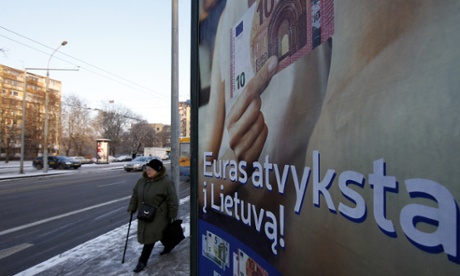
In an interview with the Financial Times, Rimantas Sadzius, Lithuania’s finance minister, described joining the euro as “the final step in Lithuania’s integration into the western world” that began 10 years ago with its entrance into Nato and the EU.
Joining the eurozone finalises this very important process. The advantages of being the Nato member, the EU member, the eurozone member are absolutely evident for everyone.
As the Wall Street Journal has noted, Lithuania’s membership brings an important procedural change to the European Central Bank.
Up to now, all members of the central bank’s policy-setting Governing Council have had a vote on policy. This will change next year with Lithuania becoming the currency bloc’s 19th member.
Voting rights will now be divided according to the size of countries. The largest five countries will share four votes, while the smaller 14 countries will share 11 votes.
The change is important because it means that Germany’s representative on the ECB, Jens Weidmann, will be denied a vote once every five meetings.
Under the new rules, ECB members will still attend the meetings.
It seems highly improbable that the ECB would use Weidmann’s month on the sidelines to push through a policy that Germany opposed, such as monetary stimulus, or QE.
But it will be interesting to see how the new dynamic plays out.
Italy "starting to grow again" - economy minister
The slowdown in the Italian economy has ended, according to the country’s economy minister Pier Carlo Padoan.
The minister told Corriere della Sera he expected a boost to consumer and business confidence.
“After three years of recession ... employment is starting to grow again.
Italy’s economy, the most sluggish in the euro zone for more than a decade, has not posted a single quarter of growth in the last three years.
The government is forecasting economic output will fall 0.3% this year, before rising a meagre 0.6% in 2015.
Via Reuters
Updated
Ukraine's inflation forecast for 18% in 2015
Russia’s economic troubles are getting so much attention that it is easy to forget that Ukraine is also at risk of financial meltdown.
Ukraine’s currency, the hryvnia, has plummeted in value against the dollar in 2014, putting huge strain on the country’s reserves.
The simmering conflict in eastern Ukraine has knocked out factories in a region that once produced almost one fifth of the country’s economic output.
This morning Ukraine’s central bank revealed that inflation may rise to 17-18% in 2015.
The bank also said it expects to receive three tranches of credit from the International Monetary Fund after a visit by the fund on 8 January. Ukraine’s reserves are expected to rise to $15bn next year thanks to IMF loans, having dwindled to $9.9bn in November.
Updated
Greek election raises financial risks
Greece’s early elections risk damage its creditworthiness. So far, so unsurprising, but when the warning comes from a ratings agency it is worth paying attention.
In a statement issued today, Fitch predicts that political uncertainty will remain high for months after the 25 January election.
If the left-wing opposition Syriza party wins the largest share of the vote, it will receive a 50-seat bonus and will therefore be part of any government that is formed.
Syriza has maintained a lead in the opinion polls over the incumbent centre-right New Democracy party since coming top in May’s European elections.
However, this lead has narrowed in recent weeks making the election a close call and an overall Syriza majority unlikely. If the formation of a new coalition is not possible, Greece (‘B’/Stable) will return to the polls, which would further prolong the political uncertainty.
There are two main channels through which political risk could put pressure on Greece’s credit profile. Firstly, prolonged deadlock with the Troika combined with a lack of market access would strain the government’s cash-flow by the summer, even assuming the budget was kept under tight control. Secondly, depending on the reaction of bank depositors to developments, the wider Greek economy could come under pressure from renewed capital outflows. Both of those factors would also put pressure on the new Greek government and its foreign creditors to reach an agreement.
Intriguingly, Fitch see room for compromise between the troika (the IMF, the European Commission and European Central Bank) and a Syriza-led government.
Syriza’s leader, Alexis Tsipras, has moderated his party’s stance since 2012 and has committed to maintaining a budgetary primary surplus and to honouring Greece’s obligations to IMF and private creditors. However, the privatisation programme would most likely stall completely under a Syriza-led government and there would be upward pressure on the public sector wage bill. The property tax may also be targeted for removal and overall fiscal risk would increase.
Updated
Weather watch
It's snowing in #Athens! No doubt, SYRIZA is responsible for this #Greece
— Nick Malkoutzis (@NickMalkoutzis) December 30, 2014
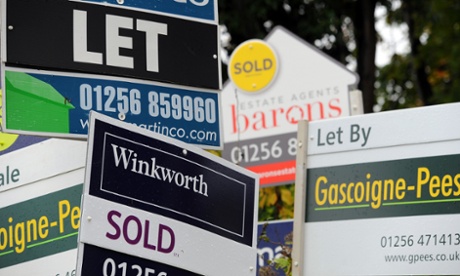
St Albans is UK's latest property hotspot
Let’s take a closer look at this morning’s house price data and depress anyone who wants to get on the housing ladder.
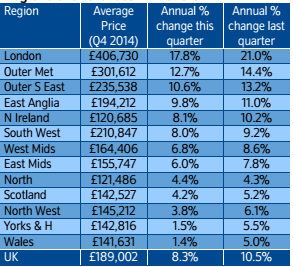
House price growth is slowing in every single UK region except the northeast of England.
But average UK prices are still 8.3% higher than one year ago.
Prices are soaring away in London and the south east, underlining how the capital and surrounding areas are becoming increasingly detached from the rest of the UK.
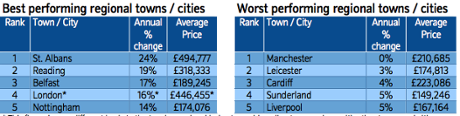
Prices were rising fastest in St Albans, Reading, Belfast, London and Notthingham.
Prices were static in Manchester, which topped Nationwide’s list of worst-performing towns and cities - followed by Leicester, Cardiff, Sunderland and Nottingham.
Howard Archer, senior UK economist at IHS, expects recent price rises to deter buyers, but thinks there could be a pick-up in demand in 2015.
Looking ahead, significant restraint on house buyer interest and prices is still expected to come from more stretched house prices to earnings ratios, tighter checking of prospective mortgage borrowers by lenders and the prospect that interest rates will eventually start to rise in 2015. Many people may also be deterred from buying houses because they look pricey in a number of areas after recent sharp rises.
Even so, the weakening of buyer interest in houses may be close to bottoming out and we see it picking up to a limited extent in 2015 from current levels.
Updated
Eurozone lending shrinks in November
If bank credit is anything to go by, the eurozone economy is still in the doldrums.
Lending to households and firms in the eurozone fell in November, albeit at a slower pace than previous months.
Credit extended to the private sector fell 0.9% in November on the previous year, compared to a fall of 1.3% in October.
The full data release from the European Central Bank is available here.
"Nothing to fear" in eurozone - Moscovici
The European Commission is toeing a diplomatic line ahead of Greek elections triggered by the loss of yesterday’s presidential vote.
Pierre Moscovici, the European commissioner for economic and financial affairs, has been interviewed on French television this morning. Moscovici was criticised last month for interfering in the Greek presidential vote, by praising the Greek government.
Today he is being especially careful.
I want, we want, Greece to remain in the eurozone; it is good for the zone and it is good for Greece
I fully respect the democratic choices freely made by the peoples of Europe.
We must preserve the euro, our single currency, which is a common good.
The statement that stood out most was this one.
The eurozone is today more solid than in 2009-10... There is nothing to fear
Discuss.
Solid, not spectacular. That pretty much sums up retail analysts’ verdict on Next’s latest trading update.
The retailer also gets credit for not resorting to Black Friday discounting.
Nick Bubb, independent retail analyst
Just like last year, Next has managed to allay fears about the impact of the apparent discounting frenzy pre-Xmas on the High Street, delivering solid +2.9% sales growth in the period from Tuesday October 28th to Wednesday December 24th.
Next’s initial view on 2015/16 is cautious, despite a relatively benign UK economic outlook, but it is still confident enough to declare another 50p special dividend and raise its indicative share buyback limit from £64.25 to £67, so there is plenty here for the City to be pleased with.
Neil Saunders, managing Director of Conlumino
Kicking off the festive reporting season, Next has posted a solid set of numbers, especially so given that they are measured against some tough year on year comparatives (last year total sales were up 11.9%).
The figures are a vindication of Next’s refusal to engage in pre-Christmas discounting, including the popular Black Friday event. While this may have cost Next some sales growth over the reported sales period, we believe that it has not lost it much, if anything, in terms of profits. Indeed, this is reflected the profit guidance which is some £5m ahead of where it was in October.
European stocks down as oil prices tumble to new lows
European stock markets, including the FTSE100, have opened on a downer.
Market watchers are blaming oil prices, which fell to a new five and a half year low on Tuesday.
A barrel of Brent crude is now around $57 and is expected to drop further.
Here is a snapshot of the markets:
- FTSE100 -0.6% at 6,596 points
- France’s CAC 40 -0.86% at 4,280 points
- Germany’s DAX -0.57% at 9,870 points
- Spain’s IBEX -0.4% at 10,352 points
- Italy’s FTSE MIB -0.5% at 19,032 points
Next shares rise on sales growth
Shares in Next are up 2.7% this morning, after it reported healthy sales in the run-up to Christmas.
Next said total sales rose 7.7% in the year to 24 December. Full-price sales were up 2,9% in the final quarter, at the upper end of the company’s expectations.
Next shareholders will be getting a late Christmas present in the form of a special dividend worth 50p per share.
But the retailer is not getting carried away with the festive spirit, warning that it remains “very cautions” in its sales budgets for the year ahead.
Summary
Good morning, and welcome to our rolling coverage of the world economy, the financial markets, the eurozone and the business world.
The gap between the London property market and the rest of the country is growing wider, with house prices in the capital accelerating faster than anywhere else.
The average price of a London home reached £406,730 in 2014, with prices up 17.8% over the last twelve months, according to data released by Nationwide.
The average house price for the UK was £189,002, a rise of 7.2% over the year.
However, house price growth was slowing in every region, apart from the north east of England.
Robert Gardner, Nationwide’s chief economist, said:
This marks the fourth consecutive month in which annual growth has moderated, despite house prices increasing by 0.2% month on month in December. The 7.2% increase recorded over the year as a whole, is modestly lower than the 8.4% gain recorded in 2013.
While cooling in the London market is a part of the story, this is not the main explanation for the slowdown evident in the UK figures in recent months. Indeed, annual price growth in the capital continued to outpace every other region in the UK, at 17.8% in Q4. Overall, 12 of the 13 UK regions saw the pace of annual price growth slow.
He also describes the slowdown in house prices as surprising, but expects things to pick up next year.
If the economic backdrop continues to improve as we and most forecasters expect, activity in the housing market is likely to regain momentum in the months ahead. Supply side developments will be crucial in determining the trajectory for prices. There are encouraging signs that construction is starting to pick up.
Hopefully, this will set the stage for house price growth gradually converging with income growth in the quarters ahead.
Meaning wage growth is weak and houses are increasingly hard to afford.
Apart from that we will be taking a closer look at Next’s trading statement. The high street veteran has reported total sales were up 7.7% up to and including Christmas Eve.
Next are the first of the big retailers to report their Christmas trading.
All that and more to follow...