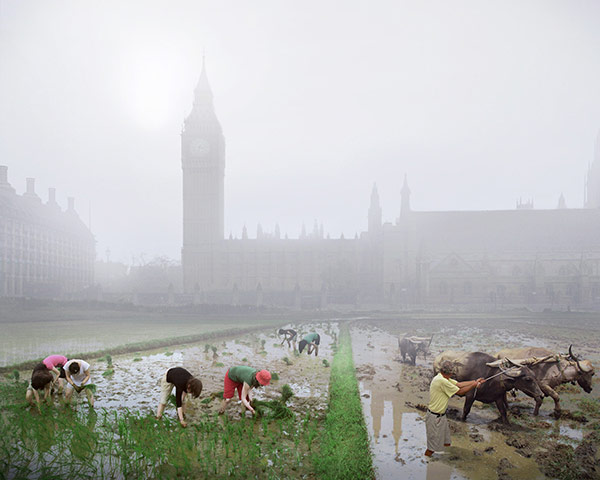
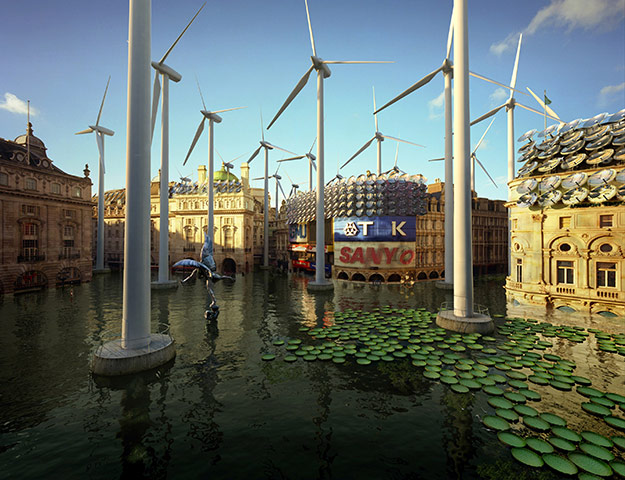
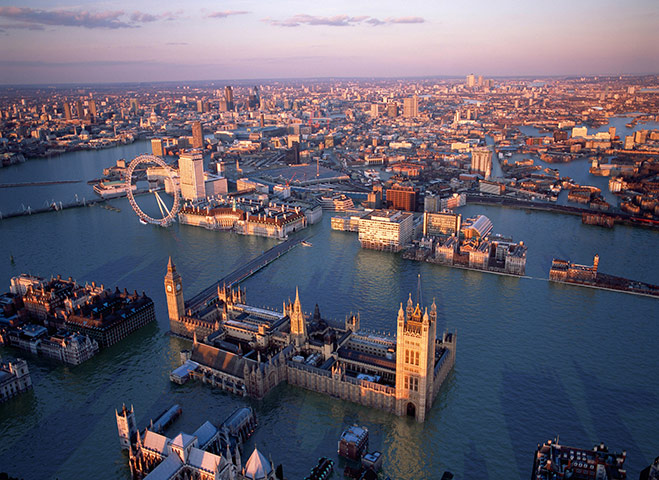
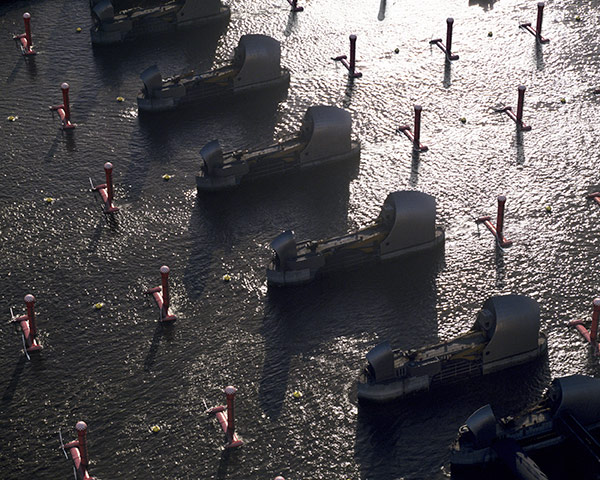
Parliament Square, an area once used for political protest, is now part of the city's flood protection effort and for growing rice as self-sufficiency becomes necessaryPhotograph: Robert Graves /Didier Madoc-Jone/Museum of LondonPiccadilly Circus is a haven of calm as water levels rise ever-higher providing water lilies and fish a new habitat. The wind turbines fight a losing battle on behalf of a civilisation with empty buildings used to support the infrastructure of power generationPhotograph: Robert Graves /Didier Madoc-Jone/Museum of LondonLondon becomes uninhabitable, as every year the Thames Barrier is overwhelmed by spring tides. This image was created by flooding the GMJ London CityModel to 7.2 metres which is the flood level required to breach the Thames BarrierPhotograph: Robert Graves /Didier Madoc-Jone/Museum of London
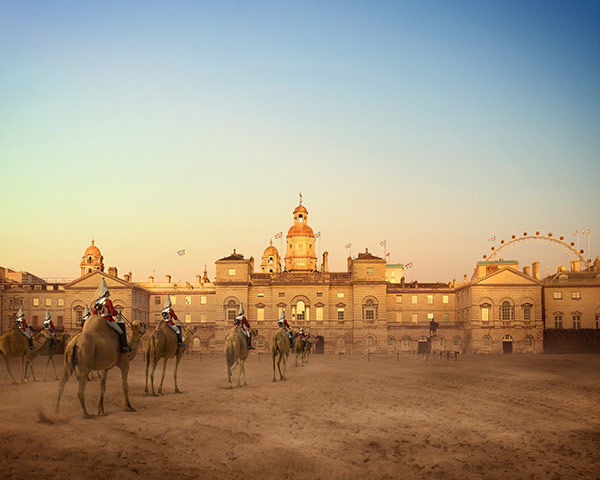
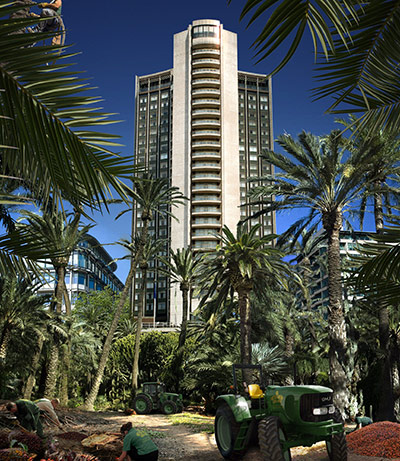
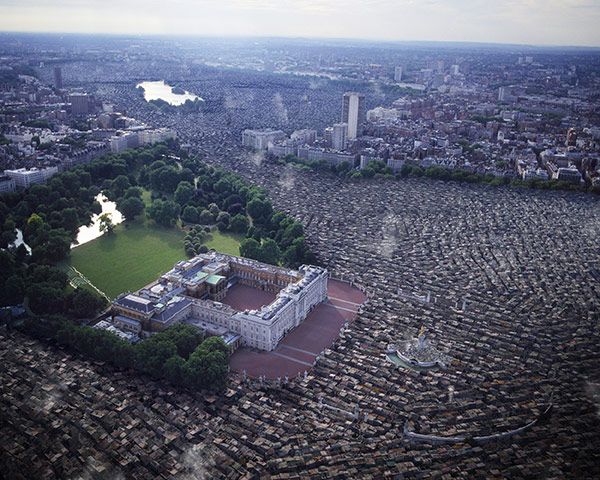
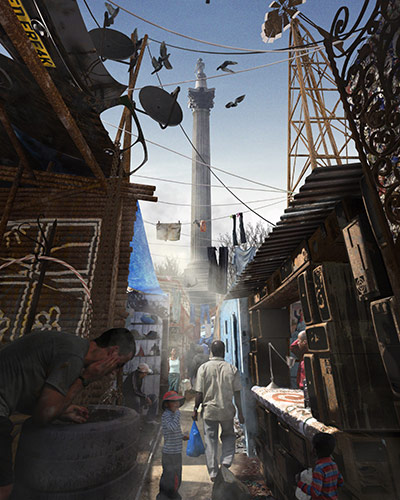
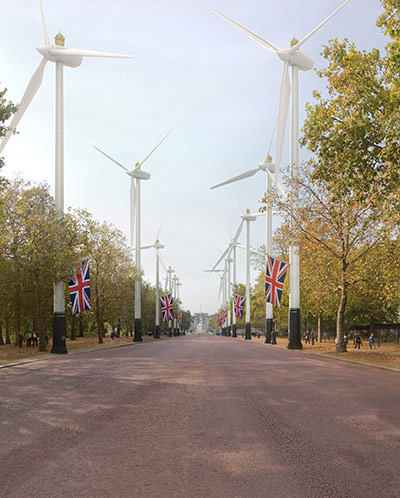
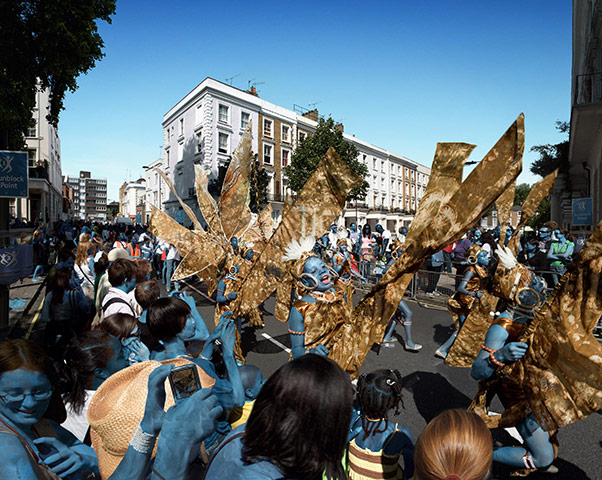
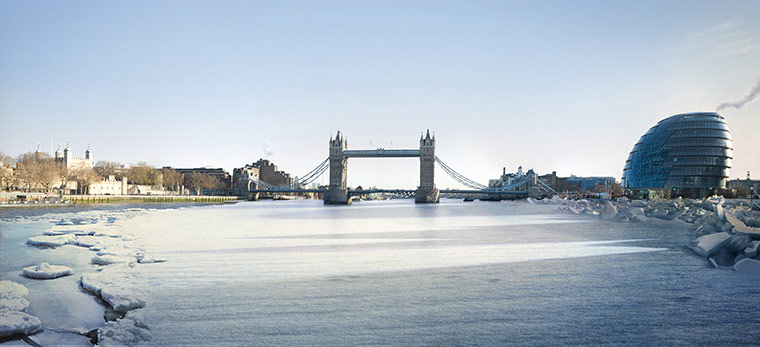
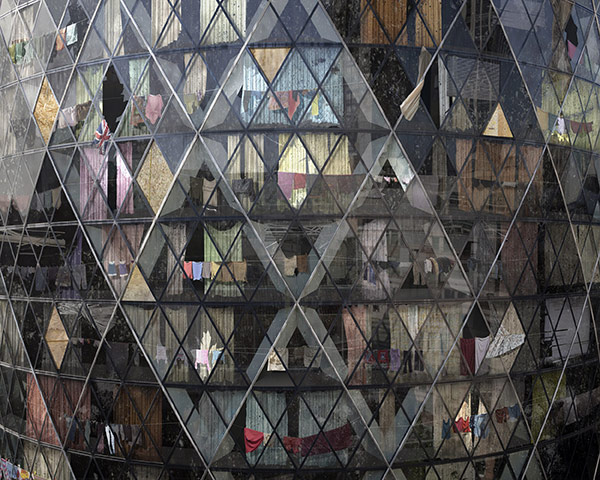
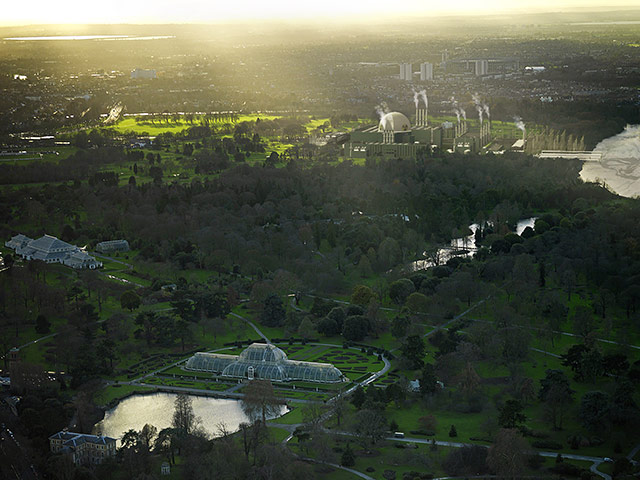
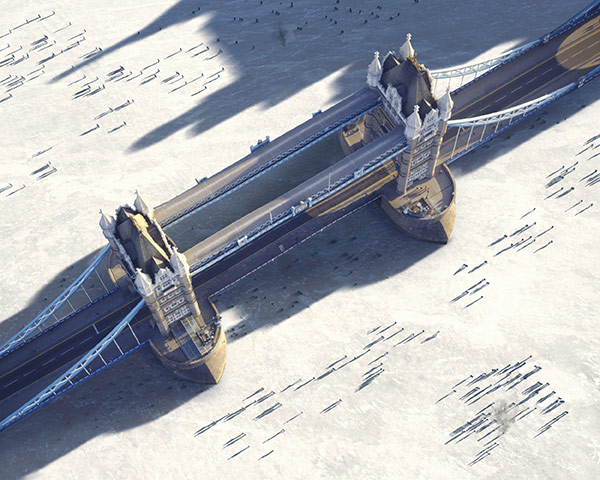
Traditional rituals have altered beyond recognition, along with the climate. On Horse Guards Parade, horses have been replaced by camels - animals able to withstand the heat of the parade groundPhotograph: Robert Graves /Didier Madoc-Jone/Museum of LondonLondon's open spaces start to resemble tropical plantations with the costs of food production increasing and cultivatable land becoming scarce. More and more parks are given over to agriculture, with Hyde Park being used to farm palm oilPhotograph: Robert Graves /Didier Madoc-Jone/Museum of LondonThe climate refugee crisis reaches epic proportions as a vast shantytown stretches across London, leaving Buckingham Palace maroonedPhotograph: Jason Hawkes/Museum of LondonNelson looks down onto a shantytown of climate refugees driven north in search of food as the equatorial belt becomes uninhabitablePhotograph: Robert Graves /Didier Madoc-Jone/Museum of LondonThe Mall becomes as valid a wind-farming site as any bleak moor or fieldPhotograph: Robert Graves /Didier Madoc-Jone/Museum of LondonThe river remains a focus of power generation, just as it was for the coal-powered power stations of old. Around the Thames Barrier a new tidal power stations are using the tidal flows up and down the Thames to generate electricity for thousands of London businesses and homesPhotograph: Jason Hawkes/Museum of LondonThe Notting Hill Carnival is still going strong but being out in the sun is now posed a health risk. Everyone is provided with standard issue - blue - sunblock to protect exposed skinPhotograph: Robert Graves/Didier Madoc-Jone/Museum of LondonAs the Arctic warms, the Gulf Stream begins to slow. Temperatures in the UK plummet and winters become harsh. The Thames freezes each winter and becomes the country's longest, widest skating rink which melts every summer and floods the cityPhotograph: Robert Graves /Didier Madoc-Jone/Museum of LondonThe iconic City office tower is now high-rise housing. Originally converted into luxury flats, the Gherkin soon slid down the social scale to become a high-density, multi-occupation tower blockPhotograph: Robert Graves /Didier Madoc-Jone/Museum of LondonThe sunset over Kew Gardens catches London's brand new nuclear power station on the banks of the Thames. Nuclear power is now widely accepted as the only viable alternative to fossil fuels.Photograph: Robert Graves/Didier Madoc-Jone/Museum of LondonAs the Gulf Stream slows a mini ice-age brings temporary relief to heat-weary Londoners. Winter skating becomes London's most popular sport and Tower Bridge is a favourite spotPhotograph: Jason Hawkes/Museum of London
Sign up to read this article
Read news from 100’s of titles, curated specifically for you.