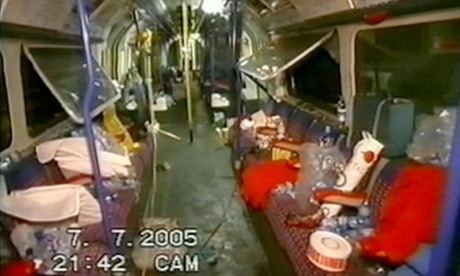
A fire chief working on the day of the 7/7 bombings in 2005 has insisted that London is now better equipped to deal with another act of terrorism as the capital approaches the 10th anniversary of the attacks. The London fire commissioner, Ron Dobson, who was the brigade’s gold commander on 7/7, said that improvements to radio communication, equipment and training with other agencies would “help firefighters at any emergency and especially when faced with a large-scale incident like those that happened on 7 July 2005”.
This followed the recommendations made by Lady Justice Hallett at the 2011 inquest into the deaths of the 7/7 victims, which although did not refer to the fire brigade, said emergency services should implement changes to improve how they deal with terrorist attacks. Fifty-two people were killed in the 2005 attacks, when four suicide bombers detonated explosives on tube trains and a bus during the morning rush hour.
Dobson said that the 10th anniversary of the attacks gave the brigade an opportunity to reflect on the changes it had implemented since then. “I feel proud to say that the brigade is more equipped and prepared than ever to deal with a major incident in the capital. The improvements we have made are a testament to all of our staff who worked on that day and cements our reputation as the best fire and rescue service in the world,” he said.
London fire brigade can now communicate from deep tube tunnels across the network to officers on the ground, and from 2007 all firefighters were given their own hand radio with a dedicated channel for firefighters to share information and updates with each other throughout an incident. The brigade has also doubled the number of radios that can operate in potentially explosive atmospheres.
The inquest also found that there was some confusion and a lack of clear communication between emergency services during the 2005 attacks. Since then, a national joint emergency services programme designed to ensure that they work together effectively in the event of an attack has been launched.
Further improvements include all firefighters now being trained to deliver a higher level of first aid, and every fire engine in London now equipped with a defibrillator. A specialist team has been created to respond to incidents where chemical, biological, radiological or nuclear materials are suspected.
Dobson also paid tribute to the firefighters who were on call during the 7/7 attacks. He said: “I’m incredibly proud of our firefighters and control room staff who dealt with the traumatic incidents on the 7 July 2005. They went above and beyond the call of duty. It wasn’t just the first responders who showed strength and courage that day – London as a city pulled together, and over the years, lots of stories have surfaced about members of the public helping the injured and distressed.”
Last year, the home secretary, Theresa May, revealed that that British security services had foiled 40 terror plots since the 7/7 attacks.