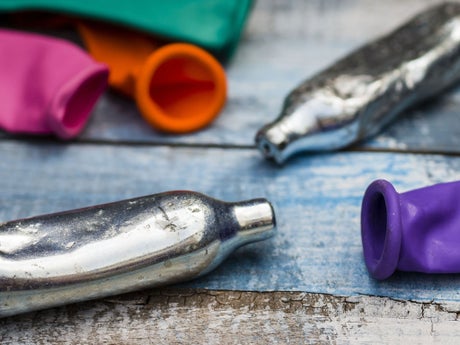
The mayor complained of the canisters creating a litter problem
An east London borough has banned the use of nitrous oxide canisters, which it said are linked to “antisocial behaviour”.
Tower Hamlets’ mayor and council approved a Public Spaces Protection Order to ban the use of laughing gas across the borough, with officers able to issue a £100 fixed penalty notice or prosecute individuals, although it said enforcement will be a last resort.
The offence can carry a fine of up to £1,000 in court.
The council said in a statement that it would identify “problem hotspots” through using intelligence, CCTV, and neighbourhood tasking.
The order follows a public consultation of Tower Hamlets residents, in which 98 per cent said they were in favour of making the use of laughing gas an offence in the borough.
It also follows the council’s No Laughing Matter campaign to stop shops selling nitrous oxide and those misusing it.
The council said the use of nitrous oxides leads to litter, with the little silver canisters lining the borough’s streets.
In a statement, Tower Hamlets mayor John Biggs said: “Using this substance can be harmful. People taking ‘laughing gas’ leave a mess of canisters making areas untidy, so we are committed to taking action against those who have a negative impact on people’s lives.”
One of the most commonly used drugs among 16 to 24-year-olds, laughing gas has increasingly come under scrutiny in recent years. Last July, Labour MP Rosie Duffield told parliament she wanted tighter regulations on its sale, claiming that its use has become “much more prevalent” during the coronavirus pandemic.
The inhalation of nitrous oxide resulted in the deaths of 25 people between 2010 and 2016, according to the Office of National Statistics. Inhaling the gas directly from a canister can be dangerous due to the level of pressure, which is why it is often discharged using balloons.
However, Prof David Nutt, the former government drug tzar has downplayed the scale of the issue, describing laughing gas as “less toxic and less addictive” than alcohol.