London’s homes are still highly exposed to potential floods if extreme weather hits the city despite warnings years ago that more needs to be done to protect them, new research suggests.
The capital has been named among the British cities most vulnerable to floods and storms, and which have the most dwellings within “danger zones”. Flooding risks affect almost 580,000 homes in London – more than a seventh of the total number of households – due to aged sewer systems and the city’s location.
Research from Tradefix Direct, a building materials supplier, also found that just 17,000 homes in the entire capital are marked as “well protected” by flood defence programmes. In particular, surface water flooding from sudden heavy downpours – or flash flooding – is a threat in London.
On average, London experiences 722mm of rainfall – considered relatively “moderate” compared to other UK cities – with 120 rainy days, which is considered low, and a wind speed of 7.77 knots, judged as moderate. Overall, this gives it a weather exposure rating of six out of 10.
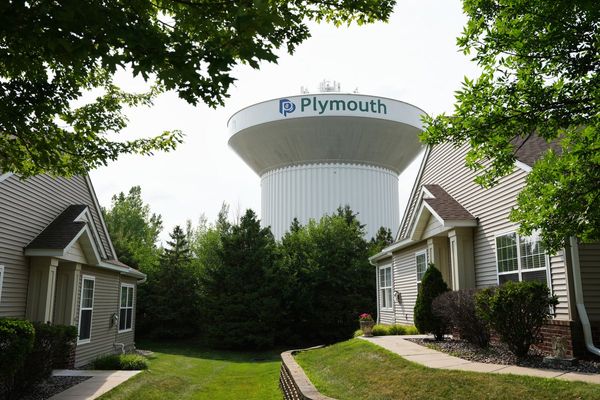
But the study suggests that London’s homes are more poorly defended than its coastal counterparts which face worse conditions, such as Plymouth and Exeter.
Paul Kershaw from Tradefix Direct said: “People in big cities often think that they’re more protected than small-town residents, but it isn’t true.
“Even with entirely new neighbourhoods, London still has old sewers that have been in use since Victorian times. Add to that the population growth: a system that was made to serve four million people max, now has to deal with over nine million.”
In 2024 the London Climate Resilience Review warned that London should prepare better for severe floods and heatwaves after finding that both government and firms had not adequately planned for disruption caused by freak weather. That same year, the Greater London Authority (GLA) identified flash flooding as the main environmental risk to Londoners.
Officials have also warned that the Thames Barrier, which has been closed hundreds of times to protect the city from flooding in the last four decades, needs to be upgraded and then entirely replaced by 2070.
But warnings have been sounded for over a decade. In 2016, a GLA document warned that London’s drainage system needed to be overhauled to protect against future flooding.
“Whilst London is currently very well protected against flooding from the tidal Thames, it has a relatively lower standard of protection against surface water flooding,” the authors said.

“Surface water is the rainwater that falls on the city’s surfaces; on the ground, streets, pavements, roofs, parks, and gardens.
“When this water does not soak into the ground or drain through normal drainage systems, but lies on or flows over the ground instead, it can cause surface water flooding.”
In March 2026 a £1.4 million funding boost was approved for 20 sustainable drainage schemes to be delivered through the Flood Ready London partnership, giving the green light to on-the-ground projects to reduce surface water flooding across the Central London and Lee Valley catchment areas. Aside from that, £725,000 in new funding from City Hall was committed to help accelerate this work, on top of the £3 million already committed by City Hall, Thames Water and partners in May 2025.
A spokesperson for the Mayor of London told the LDRS: “We know some areas in London are at risk of surface water flooding due to increased heavy rainfall associated with high temperatures. This is a direct impact of the climate emergency and can have a devastating impact on Londoners.
“The Mayor is ensuring London is better prepared and more resilient to the impacts of climate change, which is why he commissioned the London Climate Resilience Review and has already implemented several of its recommendations. The launch of London’s first Surface Water Strategy, through Flood Ready London, takes a new pan-London partnership approach to better adapt, prepare for and reduce the impact of surface water flooding on homes, businesses and communities across the city.
“Work has already started on the first two surface water catchment areas – Central London and Lee Valley – with the schemes focussing on practical ways to reduce the risk of surface water flooding to protect communities and help build a more resilient city for the future.”
The 10 British cities where homes are least prepared for extreme weather
1. Kingston upon Hull
2. Blackpool
3. Carlisle
4. Brighton
5. Lancaster
6. Bristol
7. London
8. York
9. Exeter
10. Manchester