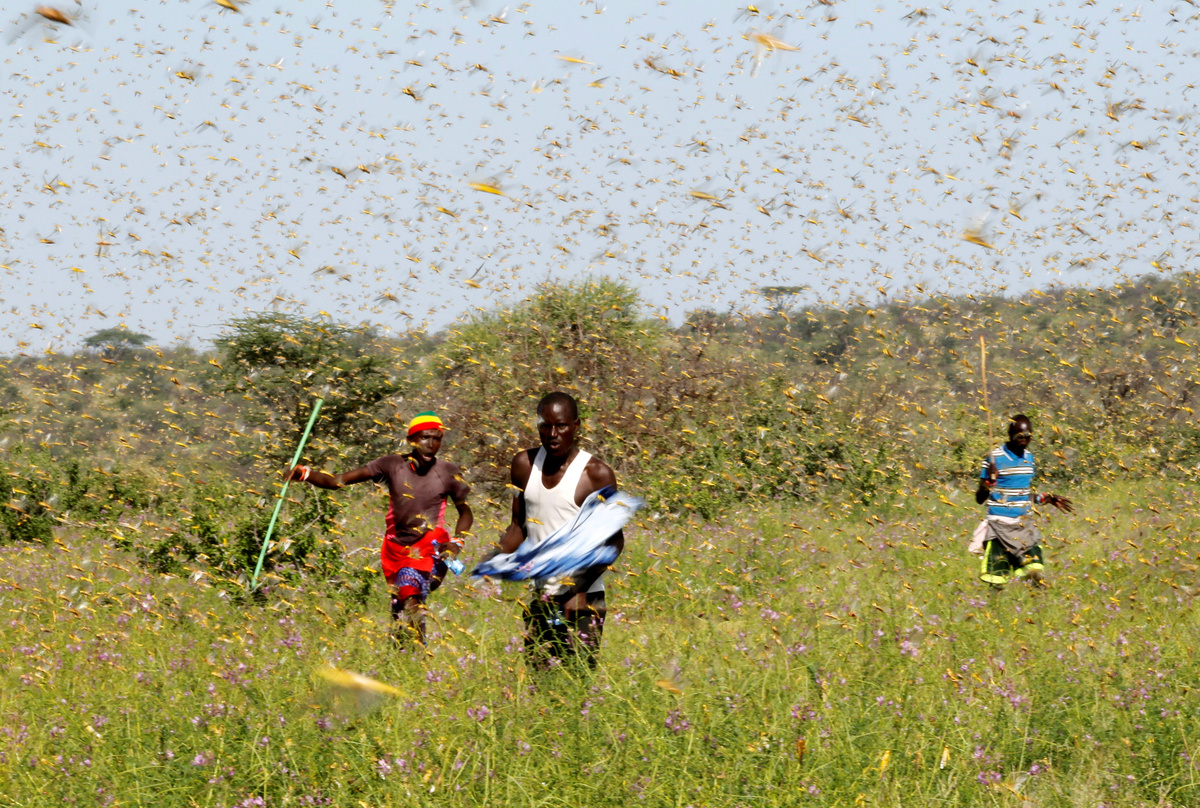
Swarms of locusts ravaging crops and grazing land across east Africa have reached South Sudan, already reeling from widespread hunger and years of civil war, the country's agriculture minister said on Tuesday.
The locusts crossed into southern Magwi county, on the border with Uganda, Minister Anyoti Adigo Nyikwach said.
Kenya, Somalia, Eritrea and Djibouti are battling the worst locust outbreak in decades, and swarms have also spread into Tanzania, Uganda and now South Sudan.
Desert locusts can travel up to 150 km (95 miles) in a day and eat their own body weight in greenery, meaning a swarm just one kilometer square can eat as much food as 35,000 people in a day, the United Nations says.
The invasion is worsening food shortages in a region where up to 25 million people are suffering from three consecutive years of droughts and floods.
Meshack Malo, South Sudan's representative for the U.N.'s Food and Agriculture Organization, said the locusts were mature and looking for breeding grounds that will form the basis of the next major infestation.
“These are deep yellow, which means that they will be here mostly looking at areas in which they will lay eggs,” he said.
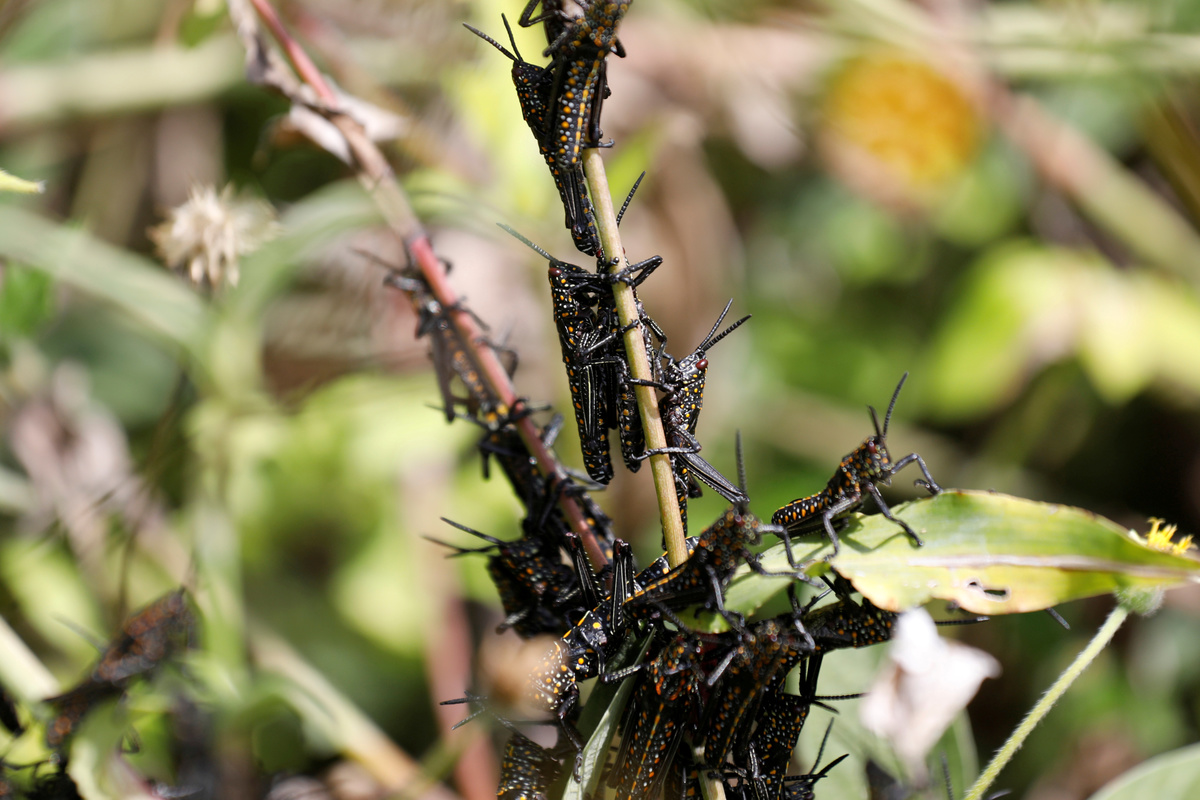
Teams planned to mark the place where they lay eggs and then come back to kill the young insects in 14 days, he said, since poisoning the eggs in the ground could damage the soil.
At least 2,000 locusts had crossed the border, he said. During each three month breeding cycle, a single locust can breed 20 more, giving rise to the massive swarms that are now threatening crops on either side of the Red Sea.
Oil-rich South Sudan is recovering from five years of civil war that plunged parts of the country into famine in 2017 and forced a quarter of the population to flee their homes. In December, the U.N.'s World Food Programme said the food security outlook was dire after floods affected nearly a million people.
(Writing by Katharine Houreld; Editing by Mark Potter)








.png?w=600)